
Reviews & Guides · Kitchen & Dining
BOOKOO Motto80 with Omni80 burrs: sieve results at 500 and 600 µm
Reviewed: BOOKOO Motto80Regional reference: BOOKOO Motto80 (US); BOOKOO Motto80 (EU); BOOKOO Motto80 (UK)
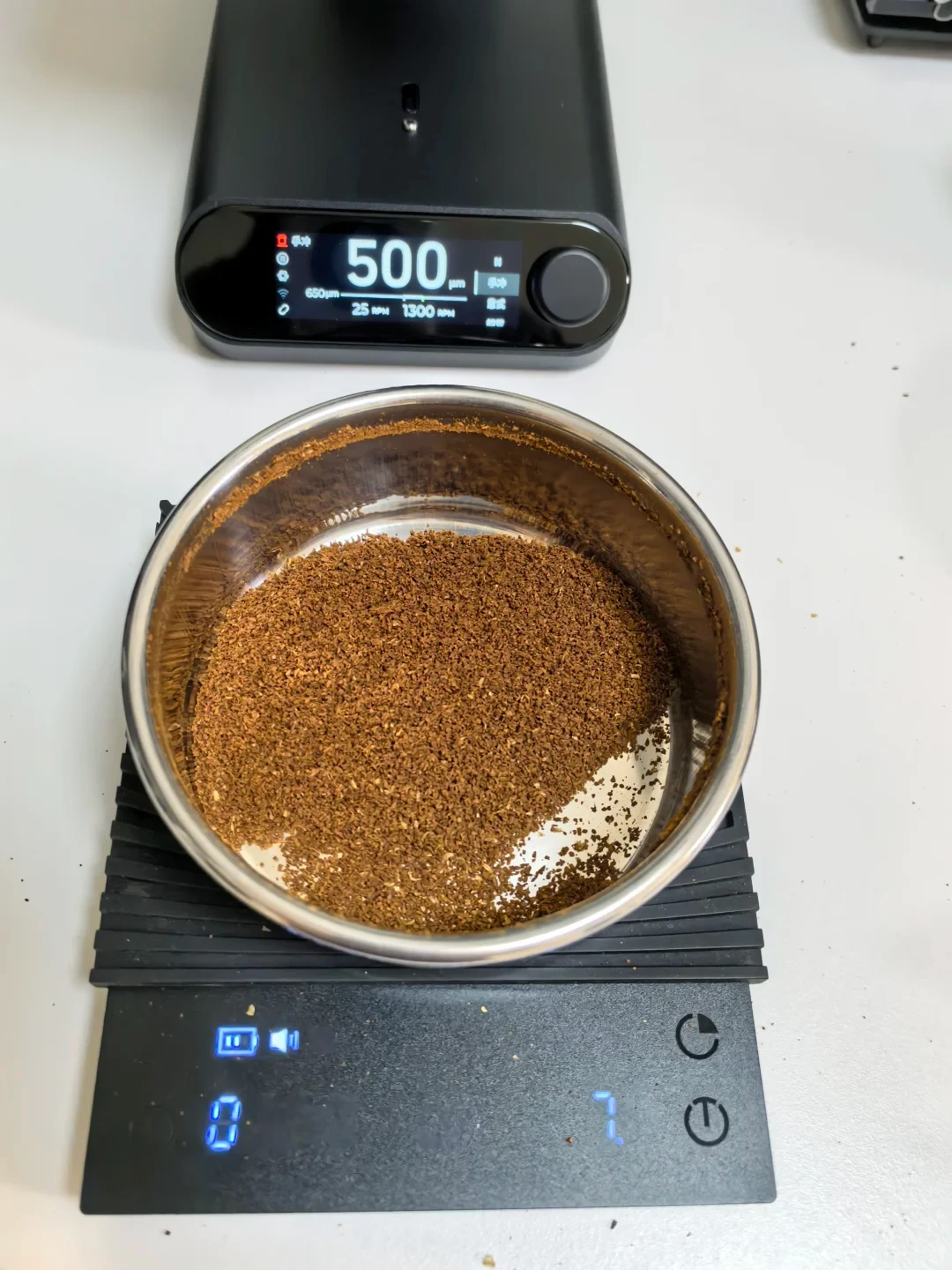
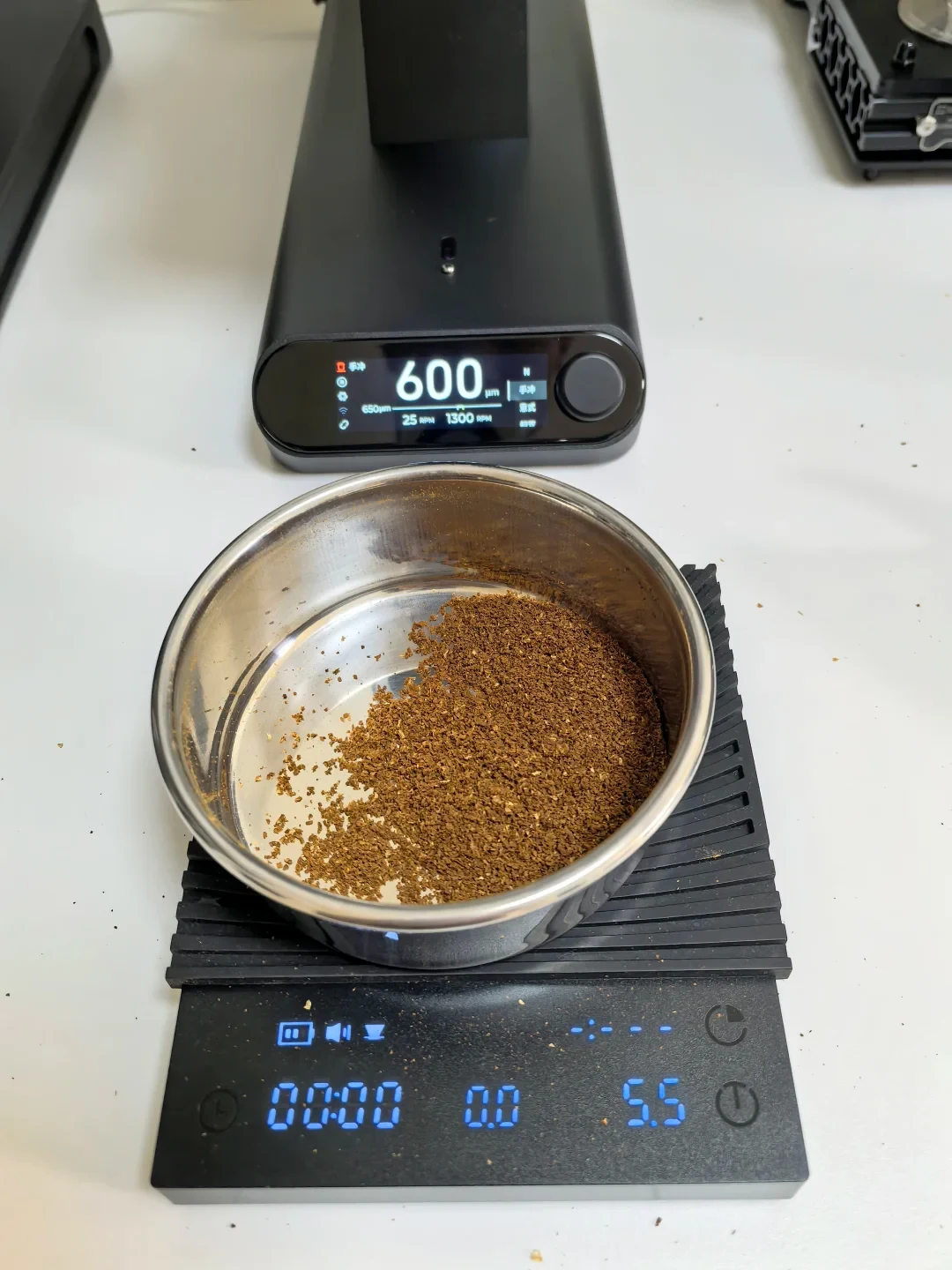
I tested two burr gaps on my BOOKOO Motto80 with Omni80 burrs. My sieve passed 70–75% of the grounds at 500 µm and 50–55% at 600 µm.
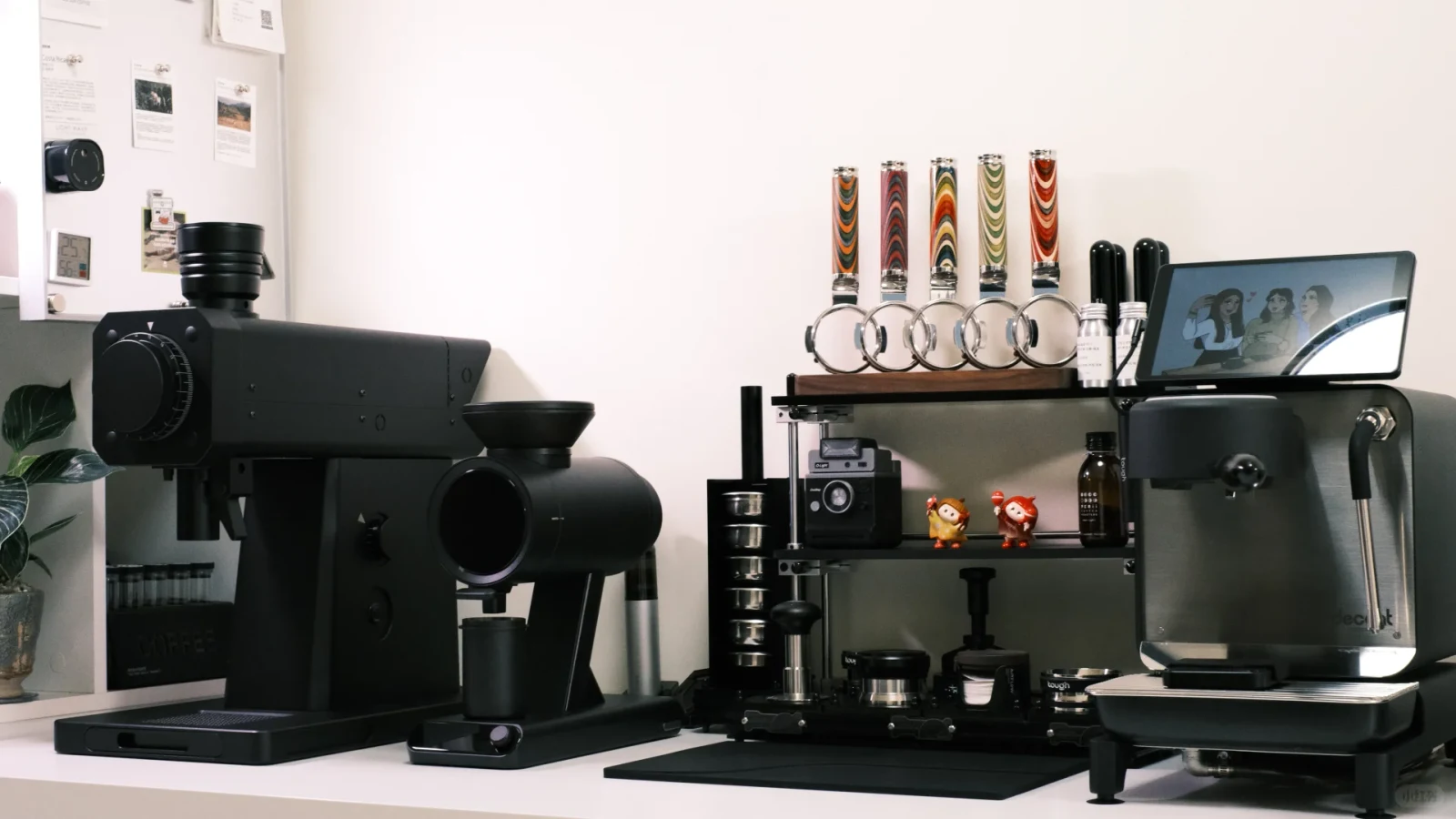
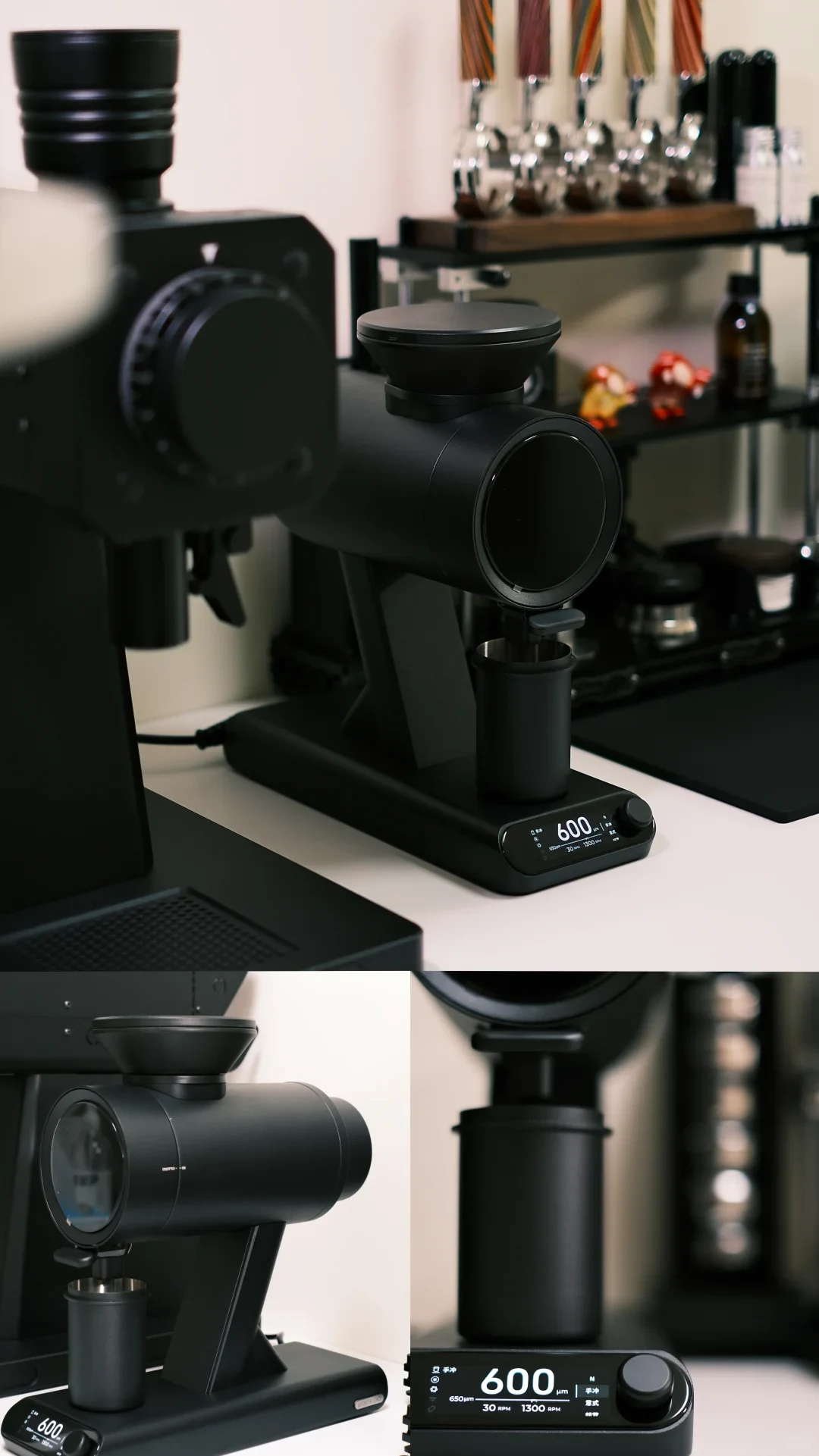
There are already plenty of excellent unboxing videos from fellow coffee enthusiasts, so I’ll skip the machine’s exterior and get straight to what’s inside.
The first thing I did after getting the grinder was test a set of cupping grind settings. Here are the results; pour-over fans may want to save them for reference.
Test conditions
Bean feed speed: 25 RPM (the setting BOOKOO recommends for pour-over grinding)
Motor speed: 1,300 RPM
Sifting method: For both samples, I sifted until no more grounds would pass. This differs from the approach online of sifting for only a minute or two.
Measured results
Grind setting 500 µm: 70–75% passed through the sieve.
Grind setting 600 µm: 50–55% passed through the sieve.
A note on bean feed rate
People often say that feeding beans more slowly helps make the grind more uniform. I haven’t seen a professional particle-size chart to back that up, though the reasoning makes sense. For now I’ve stuck with the recommended setting of 25, and I’ll see how the coffee tastes.
I did my best to make this test rigorous. More precise particle-size distribution would probably require professional equipment, but these results should provide a useful reference point for future pour-over adjustments.
Source: Tiantian美式! · Xiaohongshu · 2026-10-20 · 不苦 Motto80/omni刀盘 杯测研磨度分享. Search this Chinese title in Xiaohongshu to find the original post.
Before You Buy
Models in your region
The sieve test used the Motto80 with Omni80 burrs. BOOKOO lists the same grinder in the US, EU and UK with a choice of Omni80 or SweetCore. The tested unit’s electrical configuration is unspecified.
| Model in this review | Related regional model | What to know |
|---|---|---|
| BOOKOO Motto80 with Omni80 burrs | BOOKOO Motto80 (US) | Select Omni80 to match the tested burrs and check the 100–120 V and Type B options for your outlet. |
| BOOKOO Motto80 with Omni80 burrs | BOOKOO Motto80 (EU) | Select Omni80 to match the tested burrs and check the 220–240 V and Type F options for your outlet. |
| BOOKOO Motto80 with Omni80 burrs | BOOKOO Motto80 (UK) | Select Omni80 to match the tested burrs and check the 220–240 V and Type G options for your outlet. |
- Model in this review
- BOOKOO Motto80 with Omni80 burrs
- Related regional model
- BOOKOO Motto80 (US)
- What to know
- Select Omni80 to match the tested burrs and check the 100–120 V and Type B options for your outlet.
- Model in this review
- BOOKOO Motto80 with Omni80 burrs
- Related regional model
- BOOKOO Motto80 (EU)
- What to know
- Select Omni80 to match the tested burrs and check the 220–240 V and Type F options for your outlet.
- Model in this review
- BOOKOO Motto80 with Omni80 burrs
- Related regional model
- BOOKOO Motto80 (UK)
- What to know
- Select Omni80 to match the tested burrs and check the 220–240 V and Type G options for your outlet.
What the two sieve results show
At a 500 µm burr gap, 70–75% of the grounds passed through the sieve. At 600 µm, 50–55% passed. The author sifted both samples until no more grounds passed. The coffee, starting dose and sieve opening are unspecified, which limits how closely another setup can reproduce the figures.
The motor ran at 1,300 RPM and the feeder at 25 RPM for both samples. With feed speed held constant, the test leaves open how slower feeding might affect particle uniformity or taste.
How to interpret the displayed micrometer setting
BOOKOO calibrates the display to show the physical gap between the burrs. Record that number along with the burr set, feed speed and motor speed when revisiting a grind setting. Use the sieve pass rate as a separate measure for the grounds from that run.
Check burr and electrical configuration
The Motto80 lets you vary the motor from 300 to 1,500 RPM and adjust the bean feed separately. To revisit these settings with Omni80 burrs, start from the recorded 1,300 RPM motor speed and 25 RPM feed. Changing one setting at a time makes it easier to compare what passes through your sieve.
Voltage and plug type are separate choices on BOOKOO’s regional pages. Match both to your outlet when ordering the Omni80 configuration.
Related Reading
Reviews & Guides · Kitchen & Dining
Breville Bambino after three and a half years: why I switched to Gaggia Classic E24
After three and a half years, my Bambino seemed to run cooler; I switched to a Gaggia Classic E24 for the beans we buy and roast at home.
Reviews & Guides · Kitchen & Dining
Gaggia Classic E24 daily routine: 18 g in, 36 g out
I make two coffees most mornings with my Gaggia Classic E24, weighing 18 g in and 36 g out. Pairing it with a Sculptor 064S helped me dial in.
Reviews & Guides · Kitchen & Dining
Gaggia Classic E24: 16-second shots and a changed temperature routine
I pulled roughly 26 g shots from 16 g of dark-roast coffee in my Gaggia Classic E24; a new flush routine seemed to slow them slightly, but I did not measure the change.