
Reviews & Guides · Kitchen & Dining
Breville Barista Express Impress 876: first-week espresso and a month of latte practice
Reviewed: Breville Barista Express ImpressRegional reference: Breville Barista Express Impress BES876 (US); Sage Barista Express Impress SES876 (UK)
I dialed in my 2022 Breville 876 with about 18 g of coffee, then spent a month practicing latte art. The shots came together before the foam did.
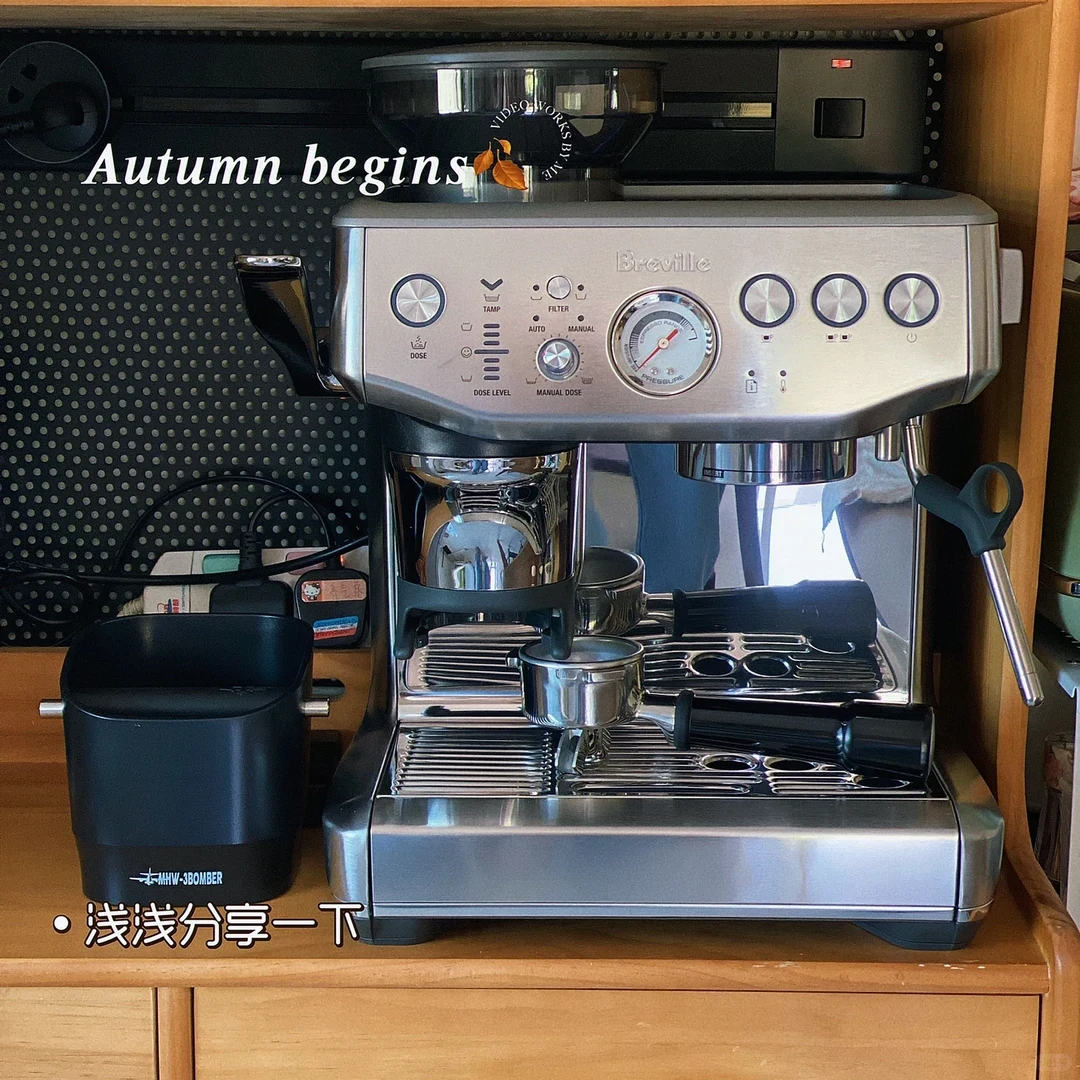
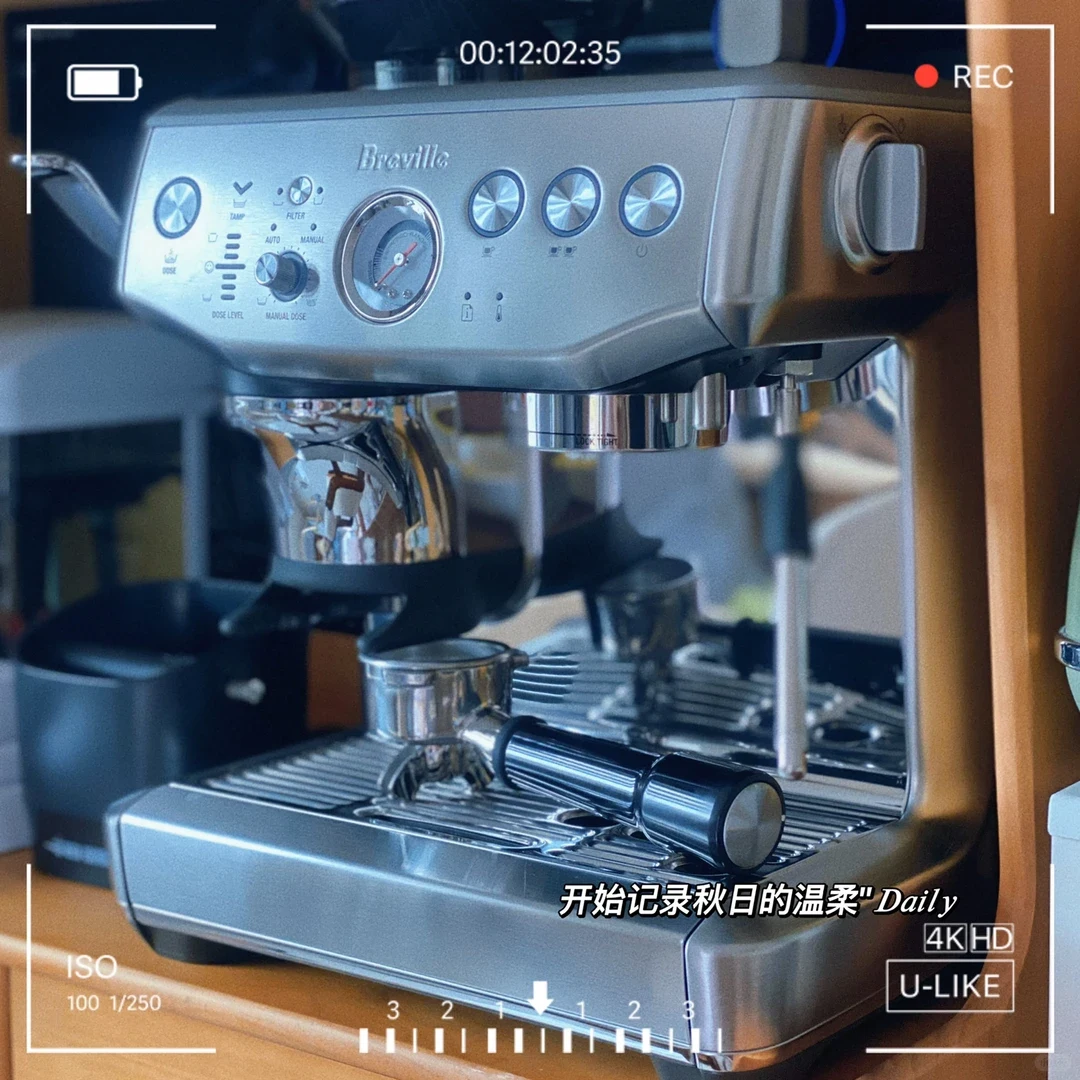
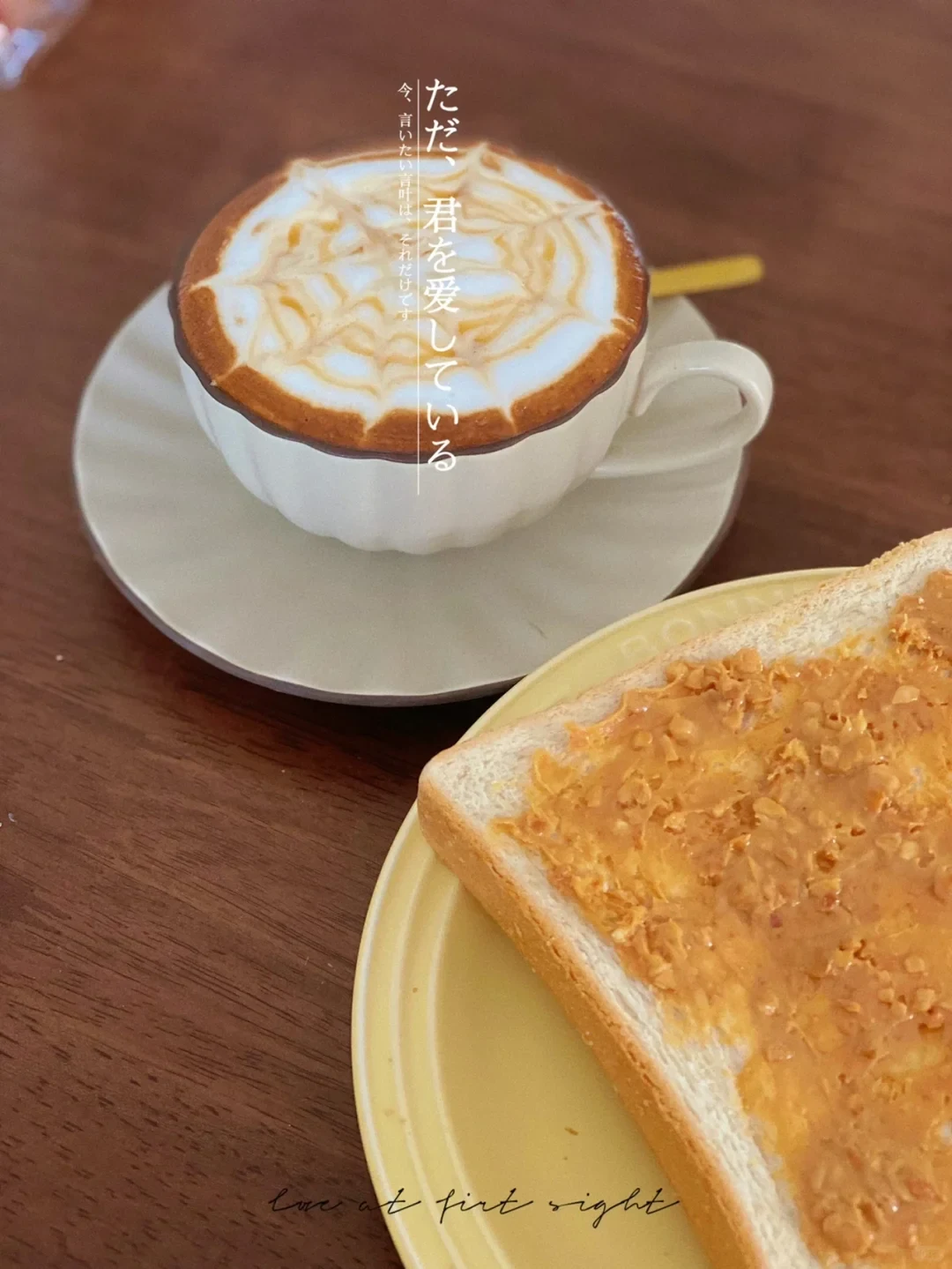
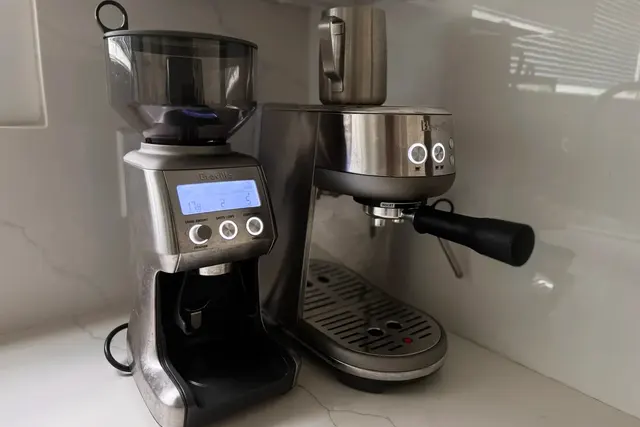
I had been researching coffee machines for six months, wavering between fully automatic, semi-automatic, and capsule machines. In the end, I calmed down and chose the 2022 Breville 876 based on what I actually needed in daily life, rather than following a trend. I really didn’t want to tamp and distribute coffee grounds myself and make a mess, and a good set of distribution tools isn’t cheap either.
The machine had been here for a week, and I’d used half a bag of beans to test the grind setting. I’d done some research beforehand, so I’d say it was going well so far. My method is to keep the dose fixed and adjust the grind. I’m currently using a Giraffe espresso blend at grind setting 4, with about 18 g of coffee; I can get around 26–30 g of espresso in 25 seconds, with plenty of crema. Personally, I don’t think you need to chase exact parameters too hard. As long as the numbers are within a reasonable range and the flow is right, that’s fine. Either way, it tastes a thousand times better than coffee from a chain like Starbucks!
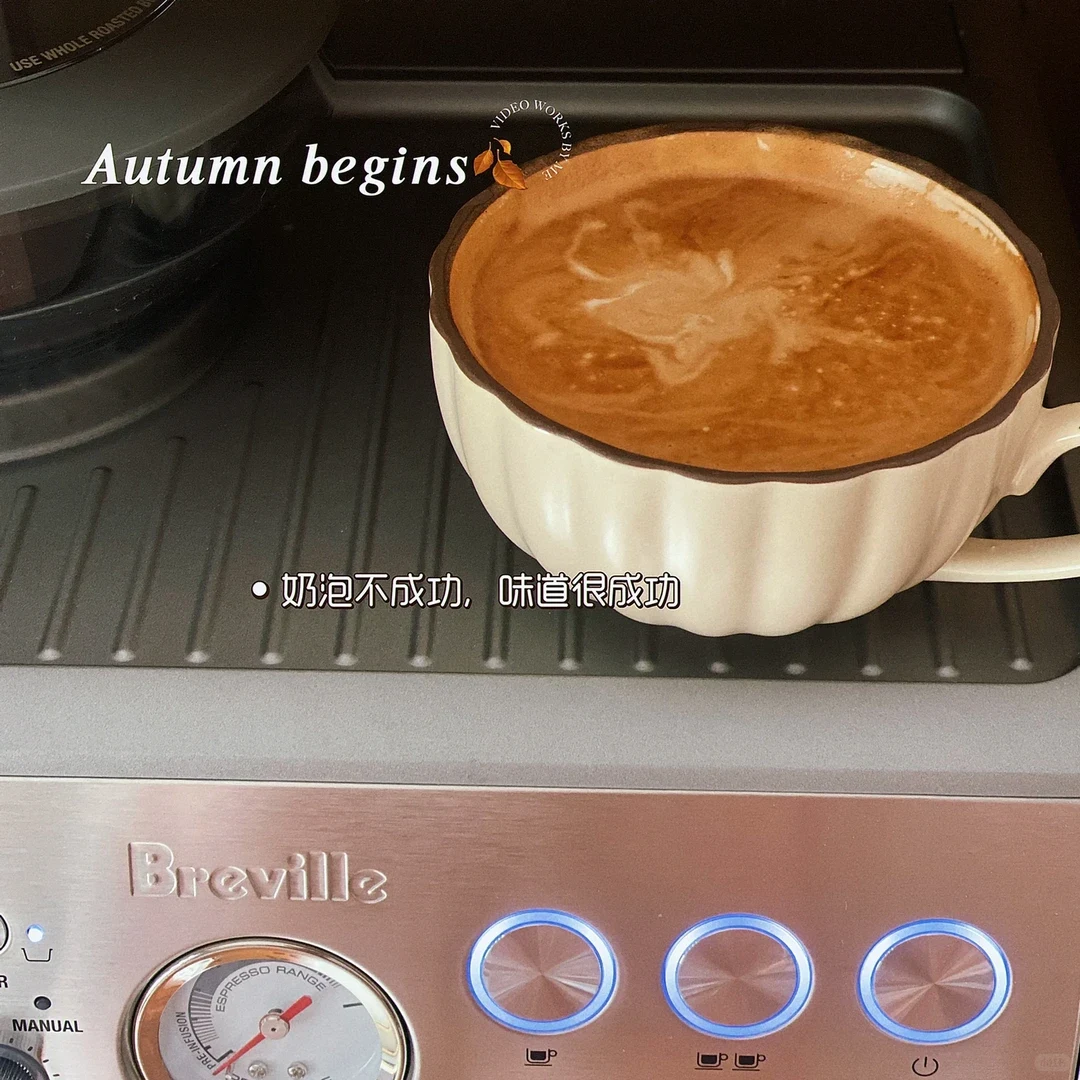
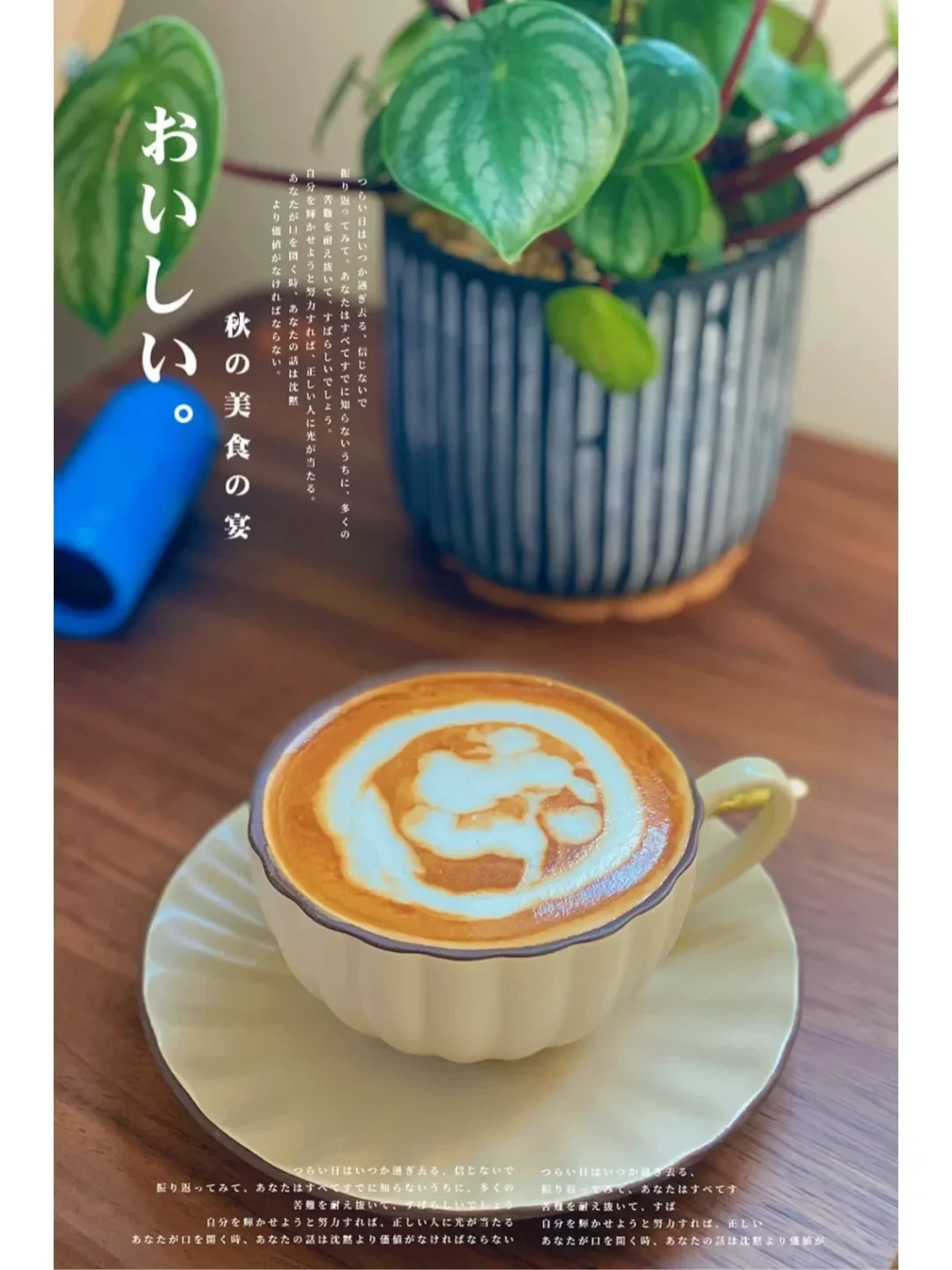
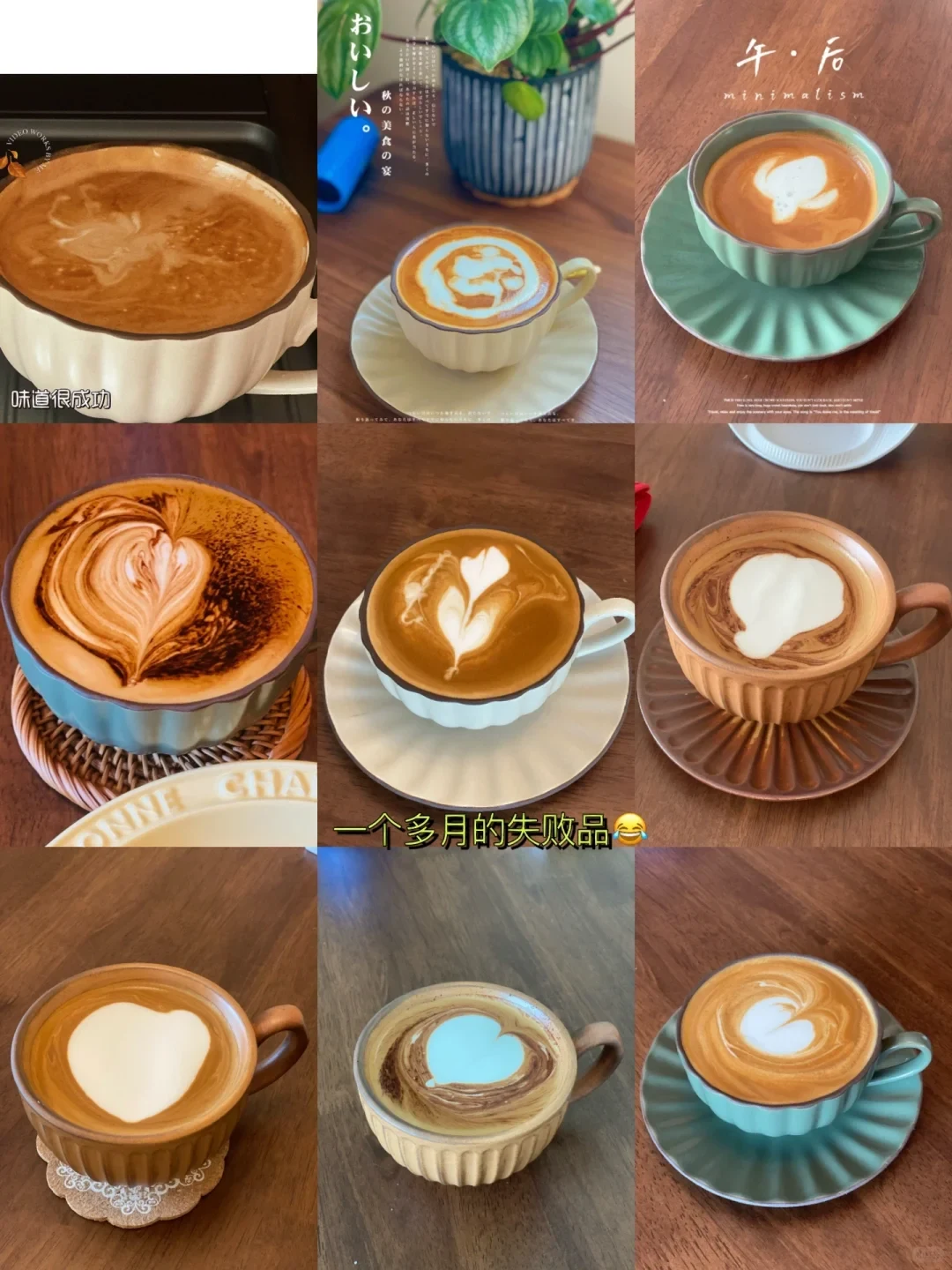
As for latte art, see the pictures. It’s a skill, and I still need to study and practice regularly.
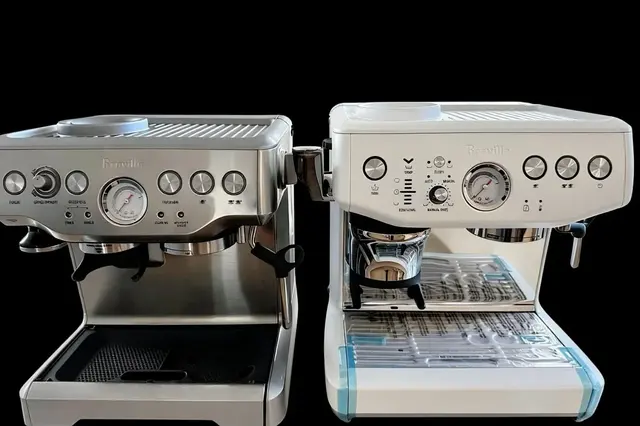
A lot of friends are deciding between the De’Longhi 9355 and the Breville 876. After looking into them, I feel like there doesn’t seem to be much difference between the two, so it comes down to which style you prefer. I pay attention to details, and I personally preferred the Breville’s build, materials, and details, so I chose it.
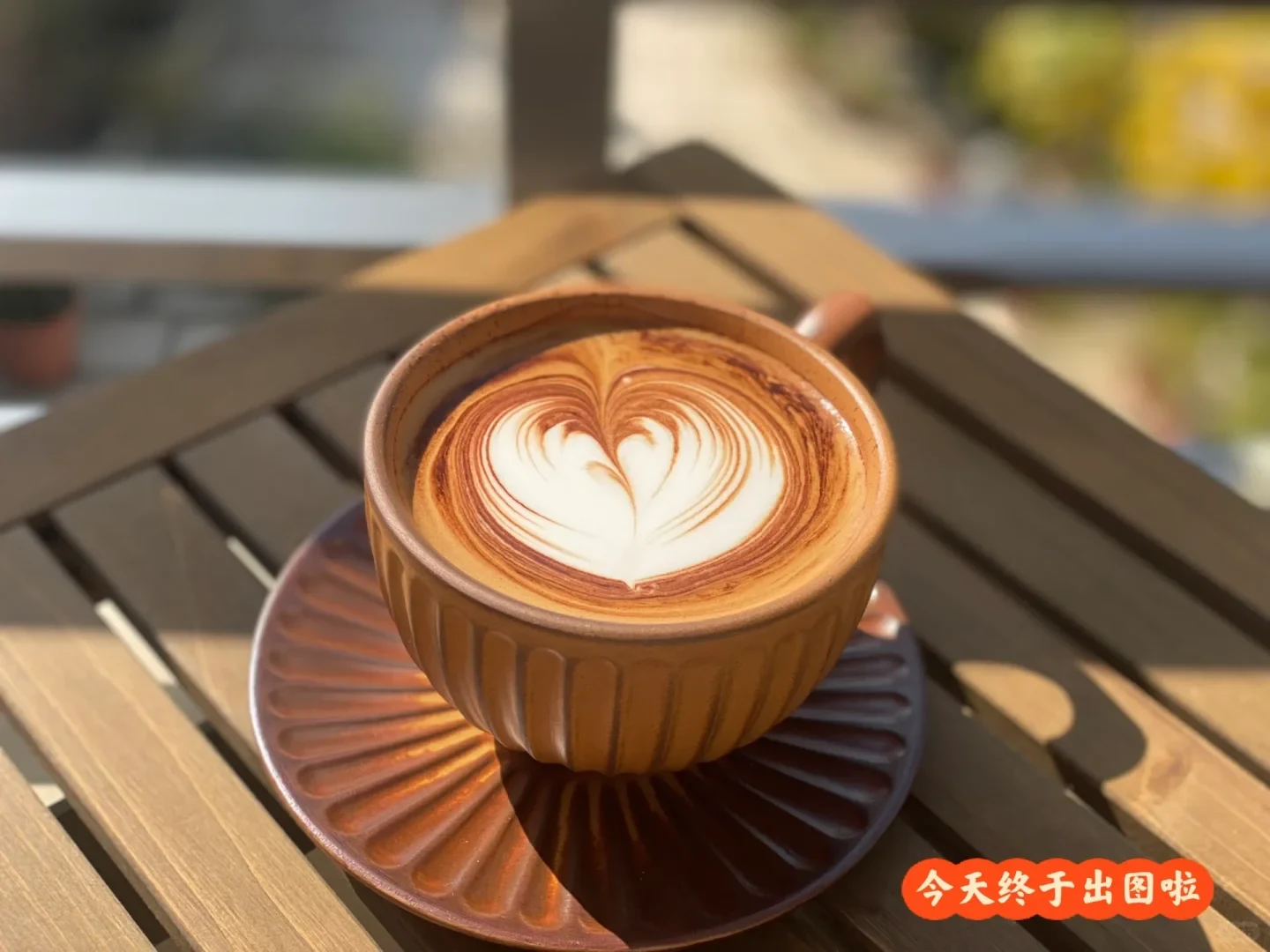
Update: I’d been working on latte art for more than a month, and I finally got a design in the cup. I was so excited!
Source: 嘟嘟小🐷 · Xiaohongshu · 2022-10-17 · 新玩具:铂富breville 876. Search this Chinese title in Xiaohongshu to find the original post.
Before You Buy
Models in your region
The source identifies the machine as a 2022 Breville 876 but does not establish its full regional SKU or electrical rating. The US Breville BES876 and UK Sage SES876 are official regional versions of the Barista Express Impress; the author’s espresso and practice results apply to the source machine, not automatically to every regional configuration.
| Model in this review | Related regional model | What to know |
|---|---|---|
| Breville Barista Express Impress 876 (2022 model; exact regional SKU unknown) | Breville Barista Express Impress BES876 (US) | The US BES876 is an official regional version of the Barista Express Impress. Its listed features include an integrated 25-setting grinder, assisted tamping, automatic dose feedback, PID Thermocoil heating, and manual milk steaming. The post confirms the 876 family, but not that the author’s unit has US electrical specifications. |
| Breville Barista Express Impress 876 (2022 model; exact regional SKU unknown) | Sage Barista Express Impress SES876 (UK) | The UK model is sold as the Sage Barista Express Impress SES876, an official regional version with a 25-setting grinder, assisted tamping, dosing feedback, and manual milk steaming. Its assisted tamp is specified at 10 kg; the post does not establish the author’s unit’s regional configuration or UK support coverage. |
- Model in this review
- Breville Barista Express Impress 876 (2022 model; exact regional SKU unknown)
- Related regional model
- Breville Barista Express Impress BES876 (US)
- What to know
- The US BES876 is an official regional version of the Barista Express Impress. Its listed features include an integrated 25-setting grinder, assisted tamping, automatic dose feedback, PID Thermocoil heating, and manual milk steaming. The post confirms the 876 family, but not that the author’s unit has US electrical specifications.
- Model in this review
- Breville Barista Express Impress 876 (2022 model; exact regional SKU unknown)
- Related regional model
- Sage Barista Express Impress SES876 (UK)
- What to know
- The UK model is sold as the Sage Barista Express Impress SES876, an official regional version with a 25-setting grinder, assisted tamping, dosing feedback, and manual milk steaming. Its assisted tamp is specified at 10 kg; the post does not establish the author’s unit’s regional configuration or UK support coverage.
Assisted dosing and tamping
The Barista Express Impress is designed to reduce hands-on puck preparation: the official US listing describes assisted tamping and automatic dose feedback, alongside its integrated grinder. That fits the author’s reason for choosing the 876—avoiding manual tamping and distribution—but their post does not describe or verify how those features worked on their individual machine.
Breville describes the assisted tamp as 22 lb and Sage as 10 kg—approximately equivalent forces. These are regional product specifications, rather than measurements of this owner’s machine.
Dialing in espresso with a fixed dose
A fixed coffee dose and grind adjustment gave the author a clear starting routine: with an espresso blend, grind setting 4, and about 18 g of coffee, they reported 26–30 g of espresso in 25 seconds after the first week. This is one setup and an individual result, not a guaranteed recipe; the post does not specify the grinder’s regional calibration or provide controlled measurements.
The US and UK versions both list a 25-setting integrated grinder, so the author’s focus on adjusting grind has practical relevance to those models. The post does not explain how their setting 4 maps to either regional machine, so treat it as a record of their own dial-in rather than a transferable setting.
Manual milk steaming and latte-art practice
Milk steaming is manual on both the US BES876 and UK SES876, so latte art remains a hands-on skill rather than an automatic drink program. The author described needing more practice after the first week, then celebrated getting a design in the cup after working on it for more than a month; that progress reflects their practice, not a measured comparison between regional models.
Related Reading
Reviews & Guides · Kitchen & Dining
Breville 876 after upgrading from the 870: cleaner tamping, early grind tweaks
I upgraded from the Breville 870 to the 876 for its sea-salt-white finish and assisted tamping. My first shots needed finer grind adjustments.
Reviews & Guides · Kitchen & Dining
Breville Barista Express Impress after five uses: fast, tidy, less hands-on
I made five coffees with the Barista Express Impress in a day and a half: it was quick and tidy, but left me missing the hands-on workflow.
Reviews & Guides · Kitchen & Dining
Breville Barista Express Impress 876 descaling: two rinse tanks
I thought descaling my Breville 876 might be complicated, but the steps were straightforward. I flushed two tanks of clean water before making coffee.