
Reviews & Guides · Kitchen & Dining
De'Longhi ECO310 Icona: learning to make espresso and steam milk
I chose the De'Longhi ECO310 on a beginner's budget. I can make a latte I'm happy with, but getting the grind and milk foam right takes practice.



Introduction
In 2020, because of the pandemic, my income decreased. As someone who had only recently started getting into coffee, I went from Starbucks to Costa and then to Luckin Coffee (the “little blue cup”), while my wallet began loudly protesting. By then, I had completely fallen into the mindset of “put up with the taste for now; staying alive is more important”! Working from home finally made me understand the importance of owning a coffee machine. I became determined to buy a semi-automatic espresso machine.
The reason was that a semi-automatic machine lets you adjust the water temperature, amount of coffee grounds, water volume and other variables to find the coffee that suits you, and make a wider range of coffee drinks. After doing a great deal of research online, I learned that espresso extraction uses high-temperature, high-pressure steam to pass quickly through coffee grounds and extract aromatic hydrocarbons. During extraction, changes in pressure and temperature have a major effect on the taste of espresso. Therefore, stable pressure and temperature output are the most important things in a coffee machine.
Espresso also requires at least 9 bar of pressure and a water temperature of 90°C. Maintaining that standard steadily during the 25-second extraction is somewhat difficult for an ordinary coffee machine. The semi-automatic machines most often recommended online were the following three.
Around RMB 1,000: The De'Longhi ECO310 has a fresh, retro appearance and a standard 15-bar pump pressure that can produce coffee crema, but its steam pressure is reportedly unstable, so its milk frothing is not especially good. Its 1.4-litre water tank can hold about 16 cups of coffee, making it quite suitable for home use.
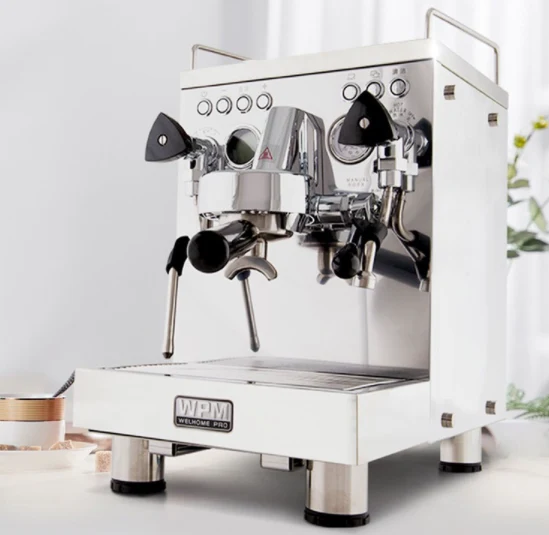
Above RMB 5,000: The Welhome semi-automatic espresso machines KD-310/KD-320 use a thermoblock design and are generally up to a certain standard, without any obvious shortcomings. They have a 2.5-litre water tank and an additional PID temperature-control heating block, making continuous extraction more stable. They also have a built-in LCD showing temperature control, extraction time and other statuses. They are more intelligent in terms of functions. These specifications belong to Welhome, not the De'Longhi ECO310.
Above RMB 10,000: The EXPOBAR Crem One home-use semi-automatic espresso machine with a dual boiler and pressure control.
The new Crem One is an upgraded single-group E61 model. It has dual boilers and a vibration pump; the higher-specification model has dual boilers, variable pressure and a rotary pump. Compared with the older version, the relative sizes of the dual boilers have been adjusted, improving both extraction and steaming to some extent. It also adds an LCD screen for displaying water temperature, extraction time and other information. However, I heard that connecting the water inlet and drainage lines externally is somewhat troublesome.
Numbers two and three were good, but I could not afford them. After struggling back and forth for several days, I finally persuaded myself that I would buy a machine as long as it met three conditions: it made coffee that basically satisfied my daily needs, had an attractive price, and looked good enough for my own taste.
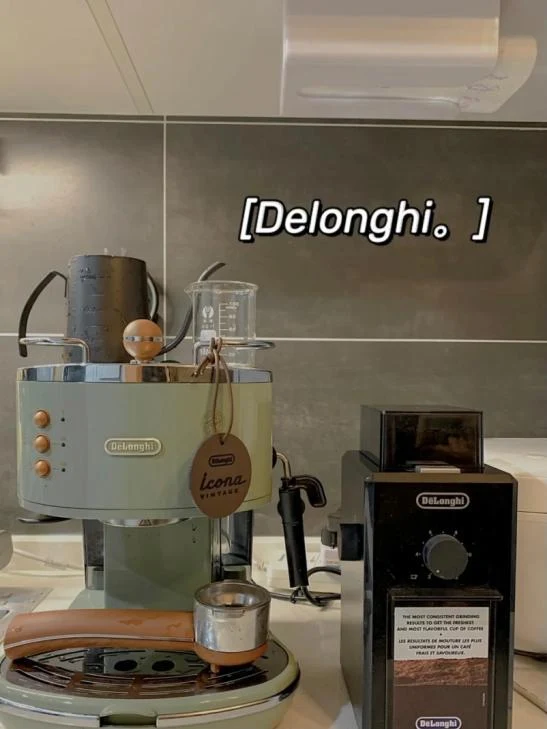
I was also a beginner and wanted to start with a machine to play around with—really, because I was short of money—so in the end I chose the De'Longhi ECO310 . Fortunately, after receiving it and using it several times, I thought it was well worth it. As a toy, it has a high-end appearance and plenty of room for experimentation; as a coffee machine, it is also very competent and lives up to its name.
This article mainly discusses the appearance, price, extraction, milk frothing, choice of coffee grounds, machine cleaning and usage feedback, to explain whether the De'Longhi semi-automatic ECO310 is worth buying.
Appearance
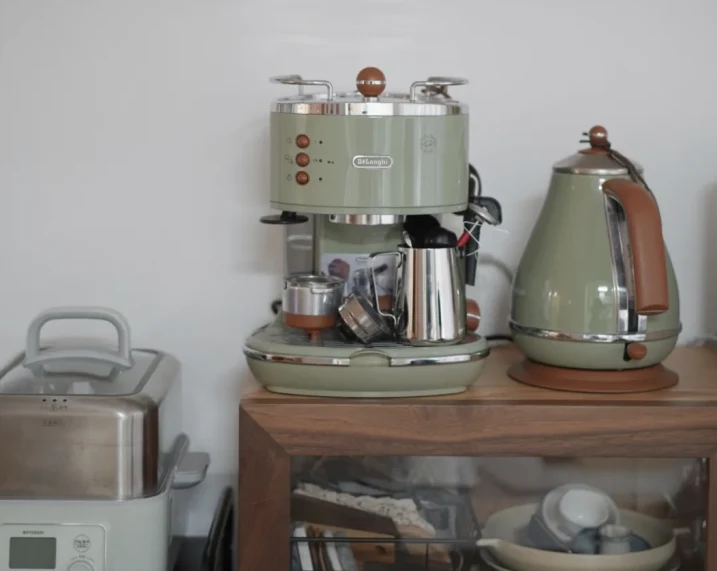
I used to like minimalist black, white and grey, but in recent years I have preferred a retro style, which feels refined and warm rather than cold. The ECO310's colour scheme comes from the green and brown of an olive tree. The official description says it represents the colours of the Italian countryside in spring, bringing to mind a leisurely bicycle ride through the countryside and resting in the shade under the sunshine when tired.
That description is slightly exaggerated, but the colour combination really is excellent. My imagination probably stops at enjoying the ease and relaxation of coffee in the sunshine.
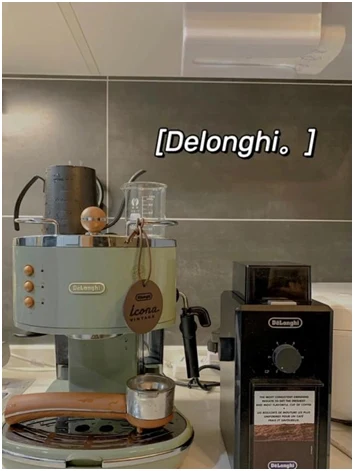
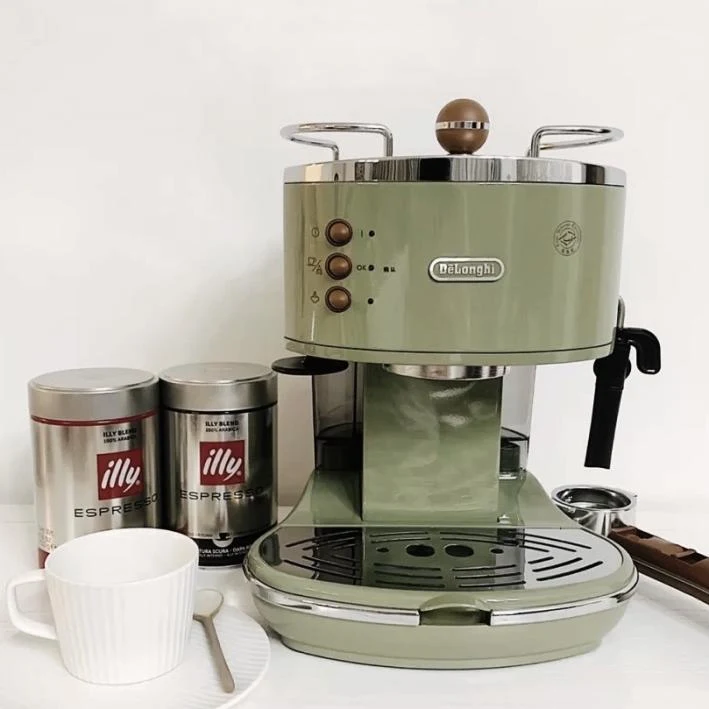
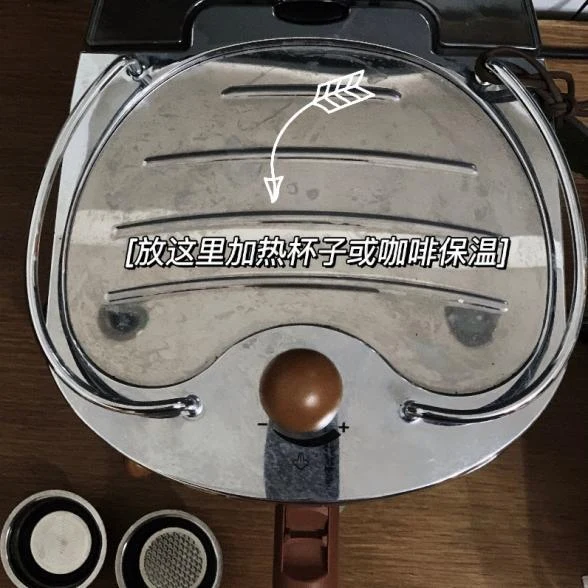
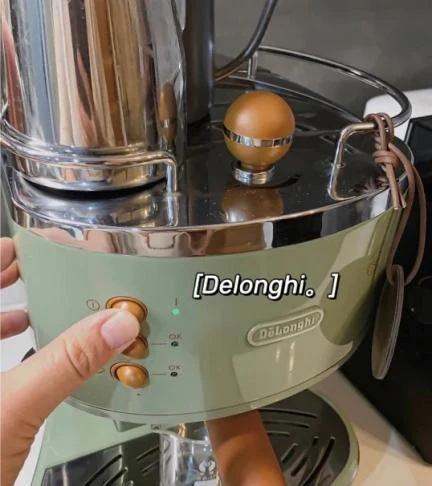
The actual machine is small, refined and does not take up much space . The body has a pastel polished finish that looks refined and retro, without seeming cheap. The top is stainless steel and has two small handles, mainly to make the machine easier to move. More thoughtfully, this area becomes warm while coffee is being brewed, so you can place a prepared coffee there to keep it warm .
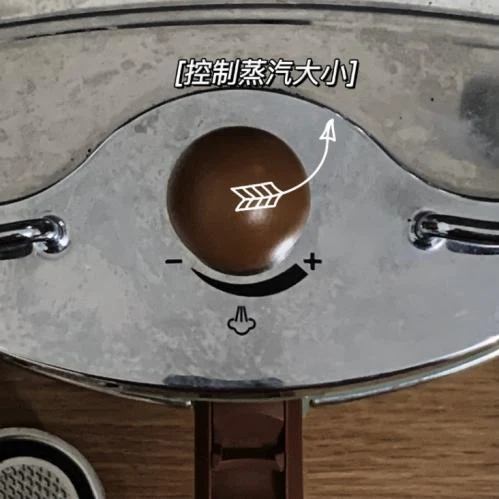
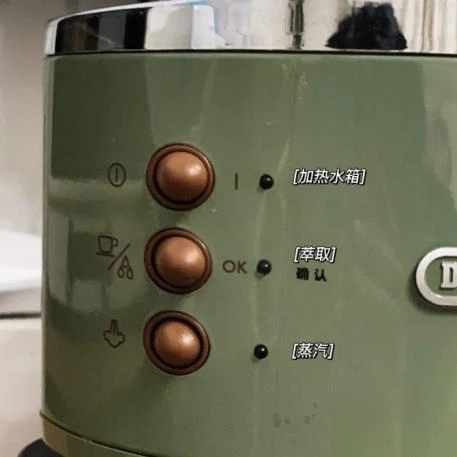
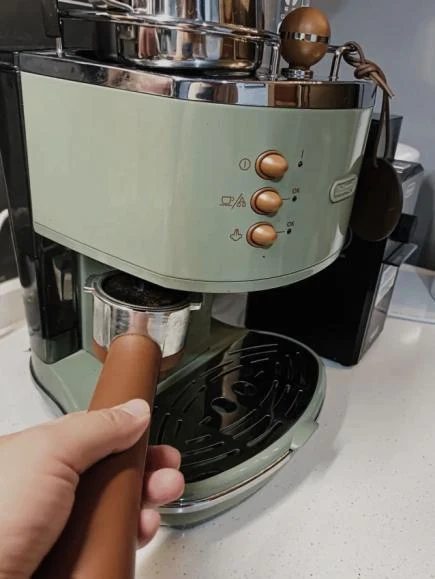
There is also a round knob on top with plus and minus symbols beside it . Rotating the knob controls the amount of steam and therefore the fineness of the milk foam; I will explain the specific method later. The control panel has three buttons: one for heating the water tank, one for extraction and one for steam . A green light means that a function can be used or is operating; if the light is off or red, that function is not yet available or is still preparing. The controls are fairly intuitive.
Price and value
On domestic e-commerce platforms, the machine sells for just over RMB 1,000, offering very good value. Calculated over a year, it costs just over RMB 2 a day, and you can smell wonderful coffee every day, which is pretty great.
This coffee machine is a popular De'Longhi product. It is often called a “toy machine” online, and people say that its milk frothing is not very good. I hesitated before buying it too, but then I thought: at this price, what more could I ask for? After actually using it several times, I found that with the right method and proportions, it can still make a satisfying latte .
As a beginner's machine, it is absolutely sufficient. Its appearance is especially appealing; even if it were left unused and gathered dust—which it will not—it would still be a beautiful decoration.
Extraction performance
Overall performance: four stars.
Before extraction, the filter needs to be cleaned. If the machine is new, the cleaning process needs to be performed at least three to five times before it can be used normally.
Next comes the actual coffee-making process. First add water and press the first button to start heating . At this point, keep the portafilter attached to the machine's group head and do not remove it. Once the water has boiled, press the second button. When the second button turns green, the machine is ready for extraction.
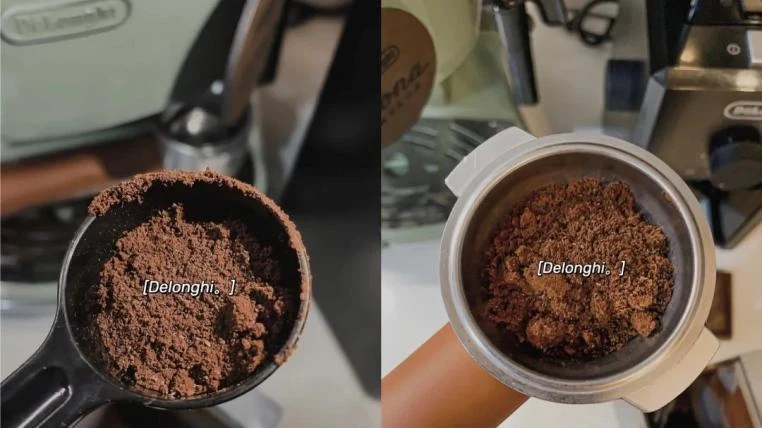
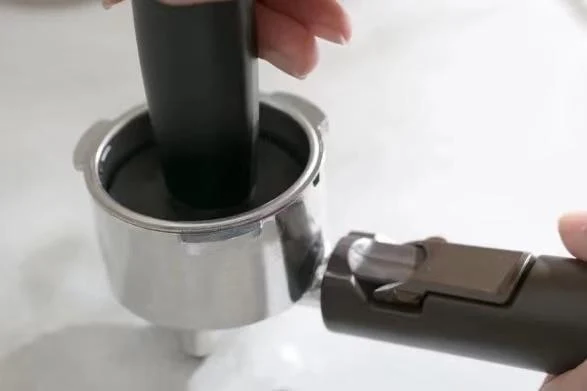
Here is a secret tip: I recommend using the larger filter basket, adding 10g of coffee grounds and extracting 20g of coffee, with an extraction time of about 28 seconds. Then remove the portafilter and fill it with coffee grounds . Use the tamper to press the grounds firmly . Some people say that household coffee machines do not have enough pressure, so the grounds need to be tamped more tightly; otherwise, water will pass through too quickly, leading to under-extraction and less crema.
Personally, I feel that as long as you use good-quality coffee grounds, it is enough to level and compact them. They should not be too tightly or too loosely packed; you can adjust it by feel.
Next attach the portafilter . If it is overfilled, it will be difficult to turn the handle back to the centre and it may remain slightly off-centre. While doing this, place your cup on top of the machine to warm it. If the cup is cold, the coffee will quickly become sour.
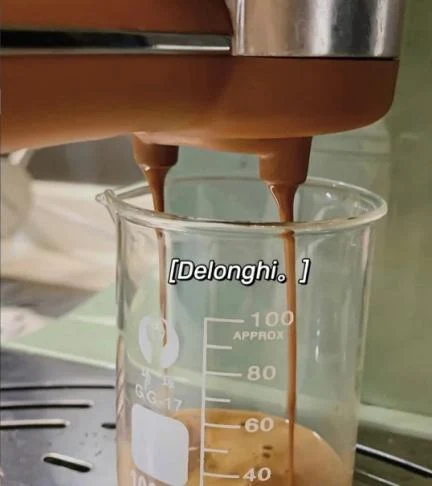
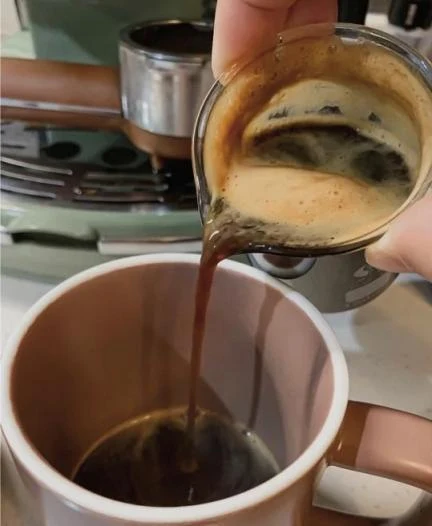
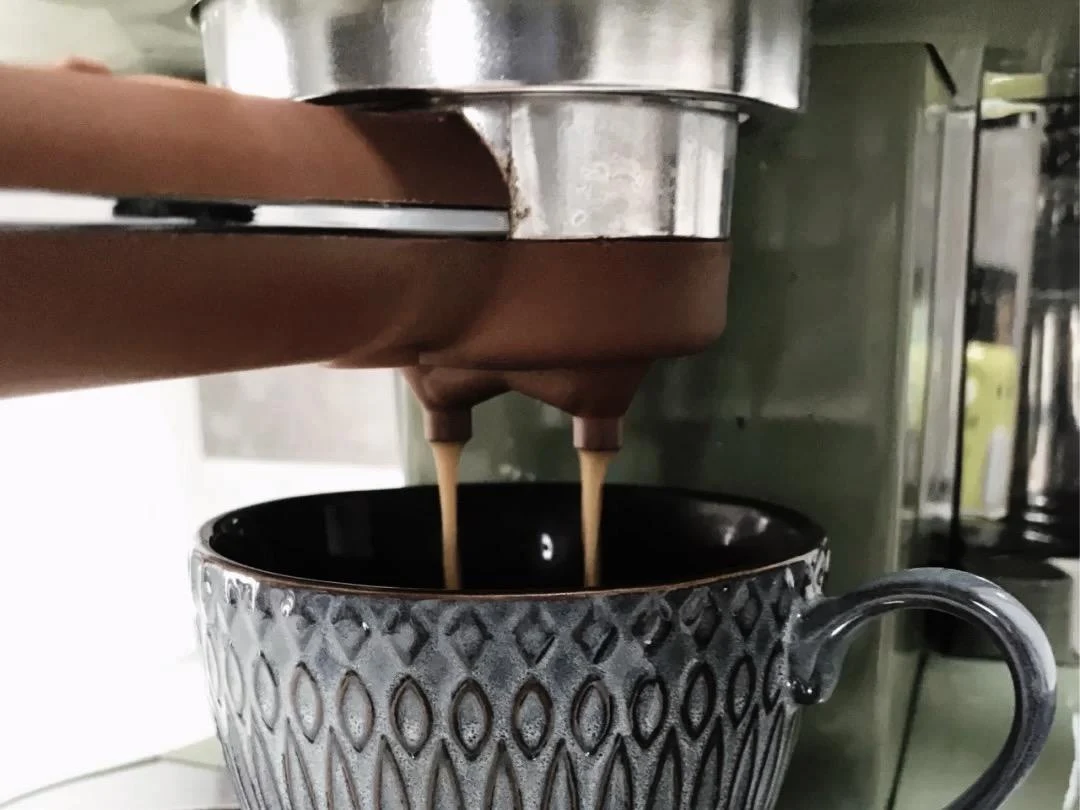
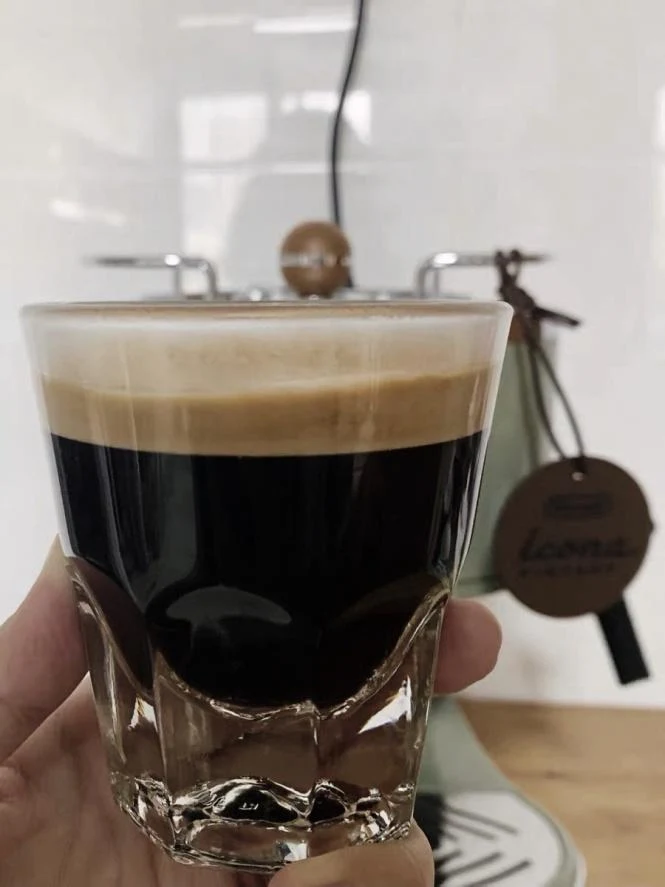
Once the portafilter is attached, press the second button and wait for extraction . One extraction can make two cups of espresso. Separate temperature-control devices control the water and steam temperatures. With this extraction method, the sour, sweet and bitter notes are balanced, and the mouthfeel is smooth. I tried this countless times and found this to be the best ratio for the machine. You can see that the crema is still quite rich . The extracted coffee can also be placed on top of the machine to keep warm.
There is also the issue of noise. Leaving aside factors such as the cup, spoon and the flatness of the surface underneath, the machine's noise is within an acceptable range, at about 40–50 decibels.
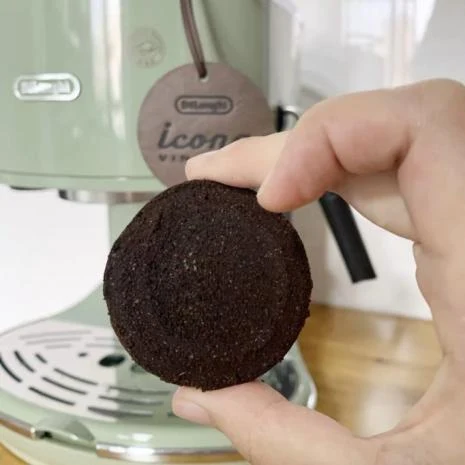
One more thing to note: if you remove the portafilter too early, pressure may cause it to release suddenly—do not ask me how I know. Wait until after frothing the milk before removing it; the coffee grounds are also easier to empty then. If you remove it immediately after extraction, there will still be residual water in the filter and the grounds will be wet. Used coffee grounds do not need to be thrown away ; they can be placed in the refrigerator as a deodorizer.
Milk frothing
Overall performance: three stars.
Press the third button and open the black knob on top. Slowly turn it towards the plus sign. At first, the steam is unstable and water comes out. Use an empty cup to catch the water from the steam nozzle and discard it. Once the steam is stable, you can begin frothing the milk properly.
At first I thought the machine was going to explode, but after seeing it many times I got used to it and calmly continued. The ECO310's steam wand has a double-layer sleeve. A friend of mine who is a barista said that keeping the sleeve on is better for producing the thicker foam suitable for a cappuccino; removing it is better for making a latte.
Remember to wait until the steam is stable before bringing over the milk pitcher and beginning to froth. I recommend using full-fat milk with a fat content of at least 3.5%, chilled in the refrigerator beforehand, because this makes it easier to produce dense, fine foam.
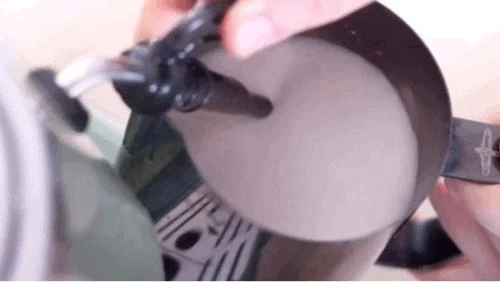
Tilt the milk pitcher so the milk rolls around inside it. Then use the spout as the support point and find the halfway point of the radius—approximately one-third of the way into the pitcher. Hold the pitcher tilted, keep the steam wand as close to the surface of the liquid as possible , and turn the steam knob on top to inject air into the milk. The liquid will expand as the foam forms.
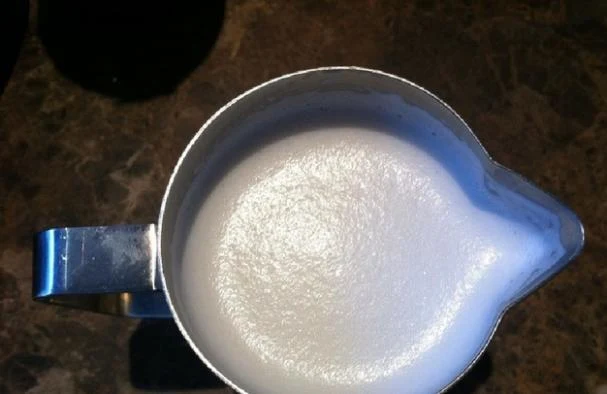
Because the pressure is unstable, you need to use both hands to adjust the position. Let the milk rotate, cut and become silky. Place your hand on the bottom of the milk pitcher to feel its temperature. When it reaches approximately 65°C, turn off the steam valve and the third button. Because of the pressure, there may still be some larger bubbles .
If the milk foam is a little too coarse, tap the pitcher twice on the table to break up the large bubbles. A rich and smooth latte is then ready .
I recommend treating the first three cups as practice and not drinking them; consider them a way of cleaning the inside of the coffee machine.
Coffee grounds recommendations
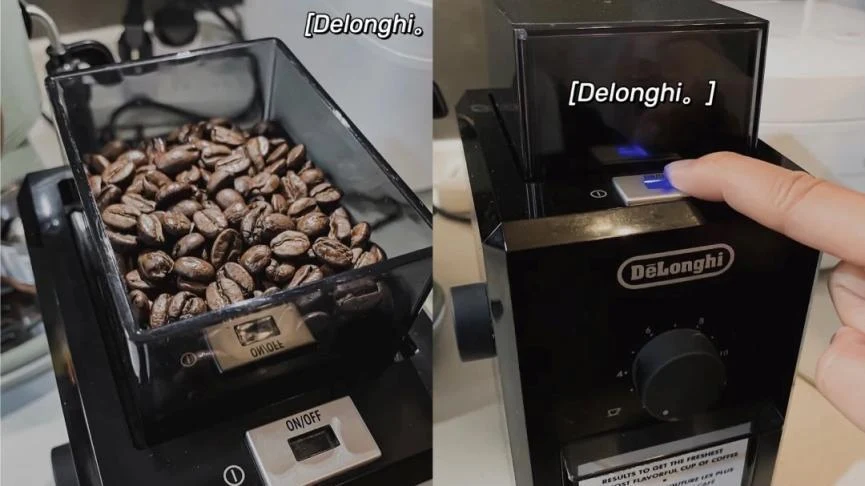
Espresso extraction is fast, and it places very high demands on coffee grounds, including particle size, uniformity and packing density. I bought a grinder separately . Sometimes, when I grind the beans too coarsely, there is too much foam; when I grind them more finely, the crema appears and the flavour improves. This takes several attempts, but practice makes it possible to find the right setting.
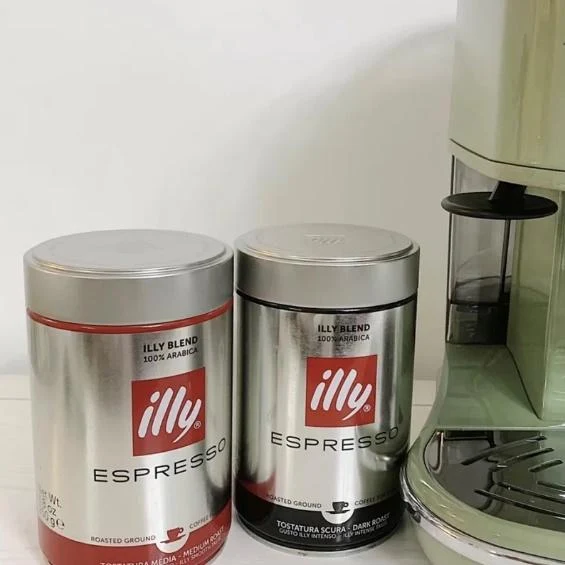
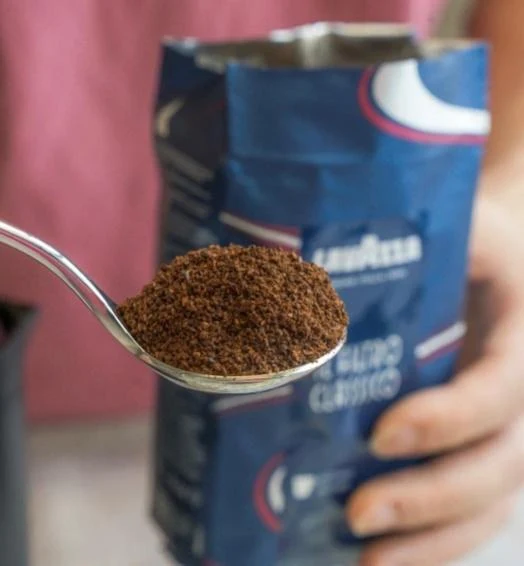
If you have not bought a high-quality grinder, I recommend buying ground coffee directly. I particularly recommend illy or Lavazza; both produce relatively good Italian coffee grounds. illy is common, so I will not say more about it. Lavazza is less common, but I strongly recommend it because it offers excellent value. Several of my Italian clients strongly recommended it to me.
Coffee extracted with it has a slight bitterness hidden within thick crema and coffee's distinctive fragrance. The rich coffee aroma is very addictive.
Machine cleaning
After a coffee machine has been used for a long time, coffee residue can leave unpleasant smells. A relatively damp environment can also encourage bacteria to grow and affect the taste of the coffee it makes.
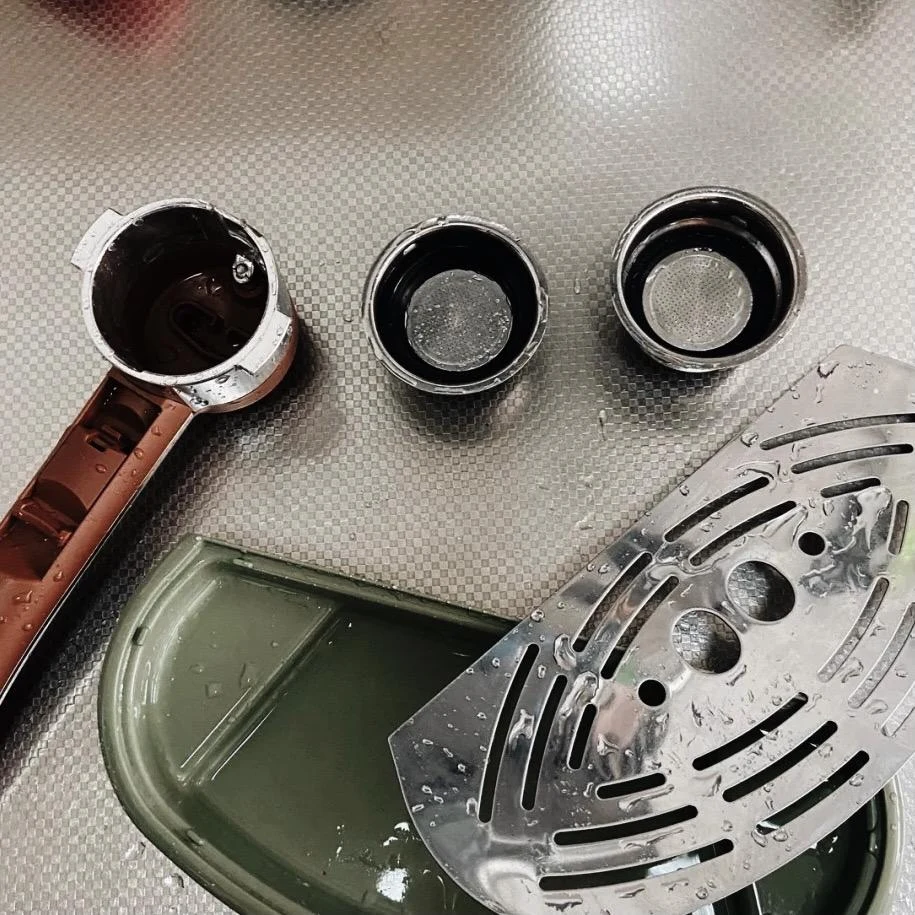
This machine is fairly easy to clean. The water tank is removable, and the cup tray and drip tray at the bottom can also be removed for cleaning .
Practical tips
Do not be afraid if the sound is enormous the first time you vent the machine; it will be fine afterward. The second button is for coffee extraction and the third controls steam; do not press them at the same time.
Venting takes about 10 minutes or less. If it does not work, do not panic; repeat the venting process and it will definitely work.
Coffee recommendations: illy Arabica medium roast and Lavazza medium roast. Personally, I feel these are more fragrant than Starbucks coffee. They are not sour or bitter, have rich crema and a strong coffee flavour; with a little sugar, they taste sweet and smooth.
Summary
The machine sacrifices stability and convenience but adds fun and a sense of ceremony.
When I first used it, I discovered that the machine could not accommodate a normal-sized cup, only a shorter coffee cup. Later, a friend told me that I could simply remove the silver cover underneath. That immediately solved the problem.
Advantages: It is highly enjoyable to experiment with and can basically satisfy coffee lovers who want to make Italian-style coffee at home. It heats up very quickly: from starting the warm-up to completion takes only one or two minutes, so it is easy to switch the machine on and make coffee.
The built-in 1.4-litre water tank is very suitable for home use, and the plug does not need modification before it can be used at home. Cleaning is convenient because all the parts that need washing can be removed.
The value is good: for around RMB 1,000, you can make fresh lattes at home. The machine is compact and attractive, and if you learn to operate the extraction and milk frothing properly, it fully meets basic beginner needs.
Disadvantages
- The extraction pressure is low, which means the concentration of the espresso may be relatively low.
- The steam output varies and is not very stable. Sometimes the milk foam may not be fine and dense enough.
Recommendations for buyers
For anyone planning to buy a home coffee machine, if you are certain that you want to make Italian coffee at home with a semi-automatic machine, my advice is to buy, within your budget, one that you like enough. That is the best way to maintain a good experience and use it frequently.
Try to choose according to your coffee preferences. If you usually like Americanos, a machine that can extract good espresso is especially important. If you like lattes, you must pay attention to the milk-frothing function.
As a single-purpose coffee-extraction machine, a semi-automatic machine offers a great deal of room for experimentation, but it also requires a certain level of personal skill. You need to keep exploring and practising before you can make coffee that suits your taste.
Conclusion
If I had to summarise today's article in one sentence, it would probably be this: choosing the De'Longhi ECO310 began with its appearance and ended with being loyal to the coffee-filled little home that fuels my daily work routine.
There are a thousand Hamlets in a thousand people's eyes. Even when using the same machine, everyone makes coffee with a different taste. That is probably why I was determined to buy a semi-automatic machine in the first place.
It is like a lucky dip, full of unknown pleasure. It releases dopamine and magically magnifies happiness. The De'Longhi ECO310 has genuinely brought me a happy experience. My taste buds are surrounded every day by a smooth, light mouthfeel, a long aftertaste and a substantial texture, and that really is a source of happiness.
If you are also a coffee lover and a beginner, you can first learn more, experiment more and taste more varieties of coffee. That will help you understand your needs more clearly and choose the coffee machine that suits you best.
I hope every coffee-loving enthusiast can make the coffee they are most satisfied with and find their own golden extraction.
Initial setup and venting guide
- Press the first button to start heating the water. Before doing so, add some purified water to the water tank at the back, then attach the empty portafilter and wait for the second light to turn on.
- Wait a few minutes for the second light to turn on. The sound is usually enormous at this point—so loud that it feels as if the machine is about to explode. Do not be afraid. I was genuinely frightened at the time; it took me back to an old-fashioned popcorn maker from my childhood.
- No coffee will come out at this point because the machine needs to be vented the first time it is used.
- Return the second button to its original position, then press the third button while adjusting the small round knob on top of the machine. Rotate it left or right to adjust the amount of steam. After venting for about 10 minutes, it should be fine.
- Return the third button to its original position, then press the second button. If coffee comes out, venting is complete. If it does not, repeat the venting process.
Source: 美厨来电 · Zhihu · 2021-02-18 · 德龙半自动ECO310咖啡玩具机测评, 从此戒掉星巴克,真香! ——入门玩家的黄金萃取之路. Original post
Before You Buy
Models in your region
The owner’s coffee preferences and setup routine describe their ECO310 experience. For the regional ECO-310.BK or another local version, use the corresponding manual for initial setup. If water still does not flow, consult authorised support before repeating the procedure. The owner’s assurance that repeated venting will always work is not established by this account.
The owner identifies the machine as the De'Longhi ECO310 but does not give a complete regional suffix. The US equivalent listed here is the Icona ECO-310.BK, identified by De'Longhi as a 15-bar manual espresso machine. A separate US red variant is rated for 120 V, so buyers should confirm the local voltage and exact suffix before purchase.
| Model in this review | Related regional model | What to know |
|---|---|---|
| De’Longhi ECO310 | Icona ECO-310.BK (US) | The owner does not provide a full suffix or exact market variant. De’Longhi’s US Icona ECO-310.BK is identified as the same ECO310 model family and lists a 15-bar pump, stainless steel boiler, dual thermostats, a 3-in-1 filter holder and a manual milk frother; colour, plug and electrical specifications may differ by market. |
- Model in this review
- De’Longhi ECO310
- Related regional model
- Icona ECO-310.BK (US)
- What to know
- The owner does not provide a full suffix or exact market variant. De’Longhi’s US Icona ECO-310.BK is identified as the same ECO310 model family and lists a 15-bar pump, stainless steel boiler, dual thermostats, a 3-in-1 filter holder and a manual milk frother; colour, plug and electrical specifications may differ by market.
What the owner's experience means for beginners
The owner describes the ECO310 as a hands-on beginner machine rather than a convenience-focused appliance: the reported routine involves warming up, preparing the grounds, controlling extraction, waiting for stable steam and learning through repeated attempts. That fits the US ECO-310.BK's manual format, which includes a manual milk frother and a 3-in-1 filter holder for ground coffee or E.S.E. pods. Buyers should expect technique to affect the result rather than automatic consistency.
The owner's most useful practical warning is that milk frothing demands patience. The report describes unstable early steam, purging water before frothing and occasional larger bubbles, while the official US listing confirms that frothing is manual. Choose this type of machine if you want to practise espresso and milk texture; choose differently if one-button convenience matters more.
Regional model and electrical checks
For US buyers, De'Longhi lists the Icona ECO-310.BK as a 15-bar manual espresso machine with a stainless steel boiler, dual thermostats, a 3-in-1 filter holder and a manual milk frother. These listed features help identify the regional product, but they do not prove that every market's ECO310 has identical hardware or controls.
Electrical compatibility is a separate buying decision. The US red ECO-310.R is rated at 120 V, 60 Hz and 1100 W, while the China and European Icona ECO310 versions use 220–240 V. Do not import the US model based only on its appearance; verify the exact suffix, voltage, frequency and plug for your market.
Related Reading
Reviews & Guides · Kitchen & Dining
Breville 870: seven-step espresso guide with Barista Express and Breville BES870 buying context
I share a seven-step Breville 870 espresso guide covering preheating, dosing, tamping, grind changes and channeling, rather than a long-term test.
Reviews & Guides · Kitchen & Dining
Breville 876 Barista Express Impress: cleaner grounds beside my computer, weaker milk foam
I found Breville 876’s automatic tamping kept grounds from flying beside my computer, but its milk frother produced less satisfying foam.
Reviews & Guides · Kitchen & Dining
Breville 876 Barista Express Impress: one year of daily care and milk-foam practice
I’ve used my Breville 876 espresso machine daily for a year: careful cleaning keeps it looking new, while practice has made steaming milk and latte art easier.