
Reviews & Guides · Kitchen & Dining
Gaggia Classic E24: making room in a shared family coffee corner
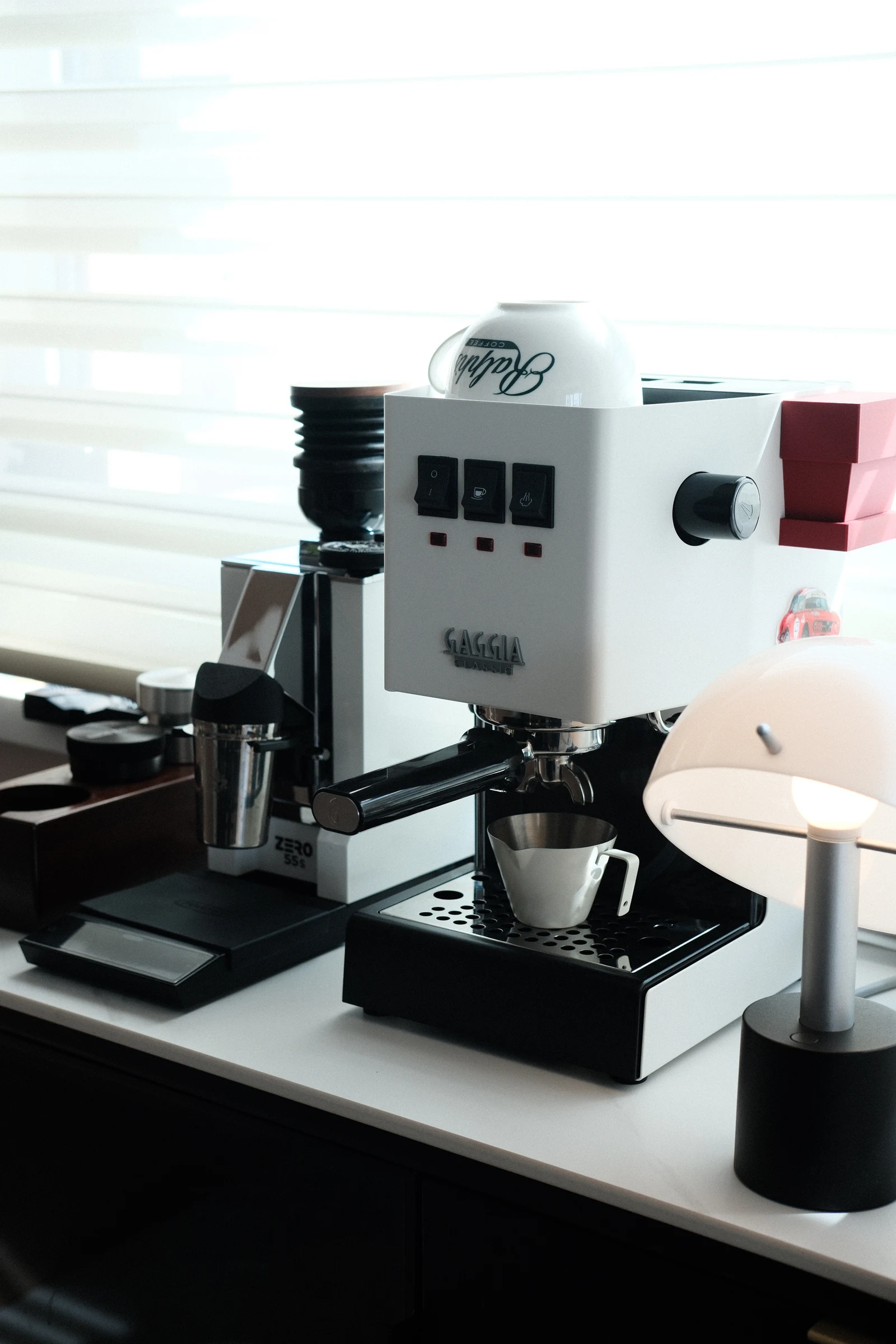
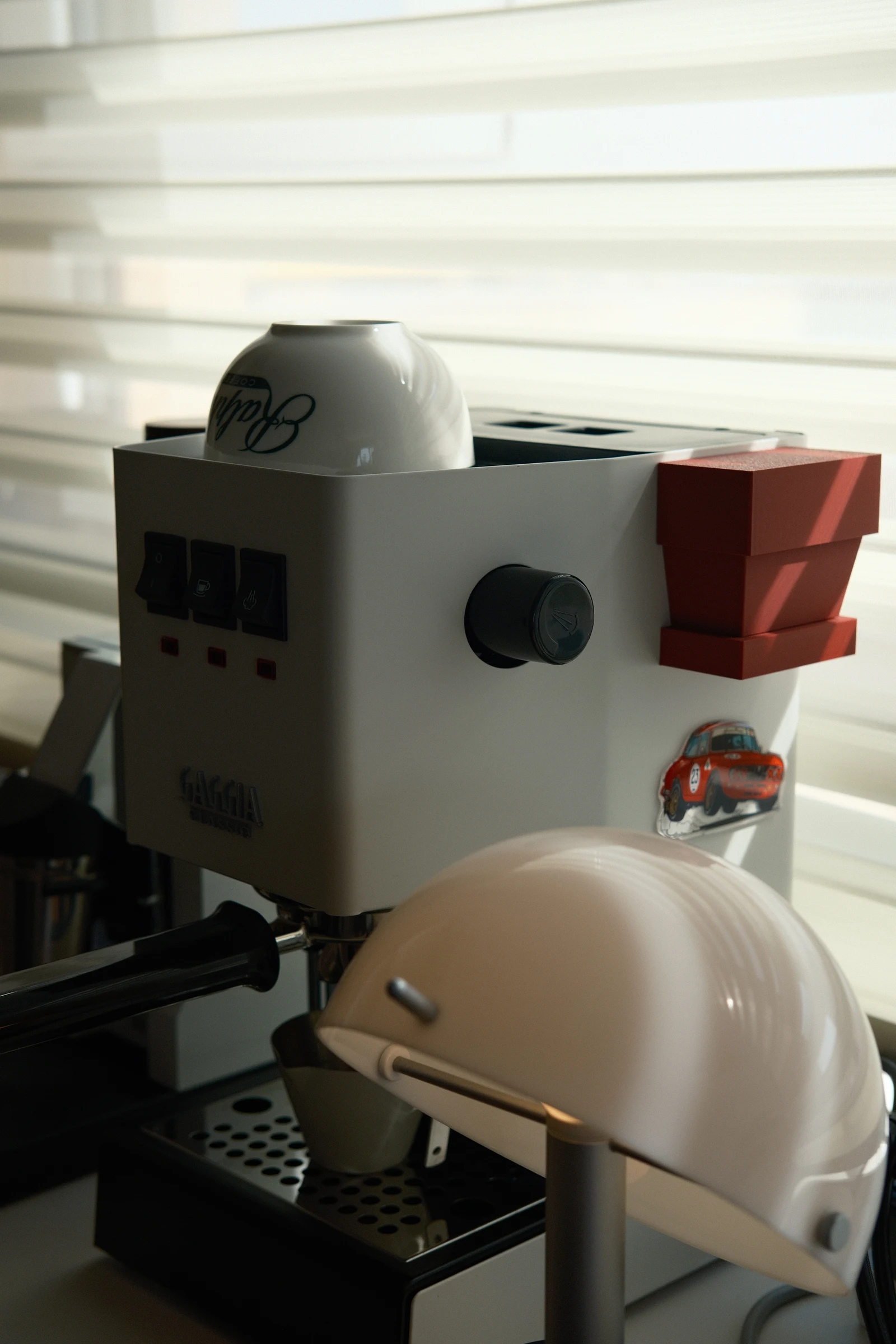
I chose the Gaggia E24 to fit beside baby-care equipment on a small sideboard. Paired with a Eureka 55s, it's my move away from tiring hand grinding.
A smaller setup for the sideboard
A Gaggia E24 with a Eureka 55s: a proper entry-level setup.
Replacing the old machine
My previous machine was a Welhome KD130 bought six years ago. This year it finally stopped producing steam, which made me think about replacing the setup.
The sideboard has limited space. Since having a child, it also has to handle formula preparation and sterilising, so the coffee machine has to be small. I eventually settled on the E24. I see it as a machine dating to 1991, updated several times while retaining its retro look.
In my terms, it’s the Fiat 500 of coffee machines: relatively inexpensive among imported machines, compact and reduced to the basics.
From hand grinding to the 55s
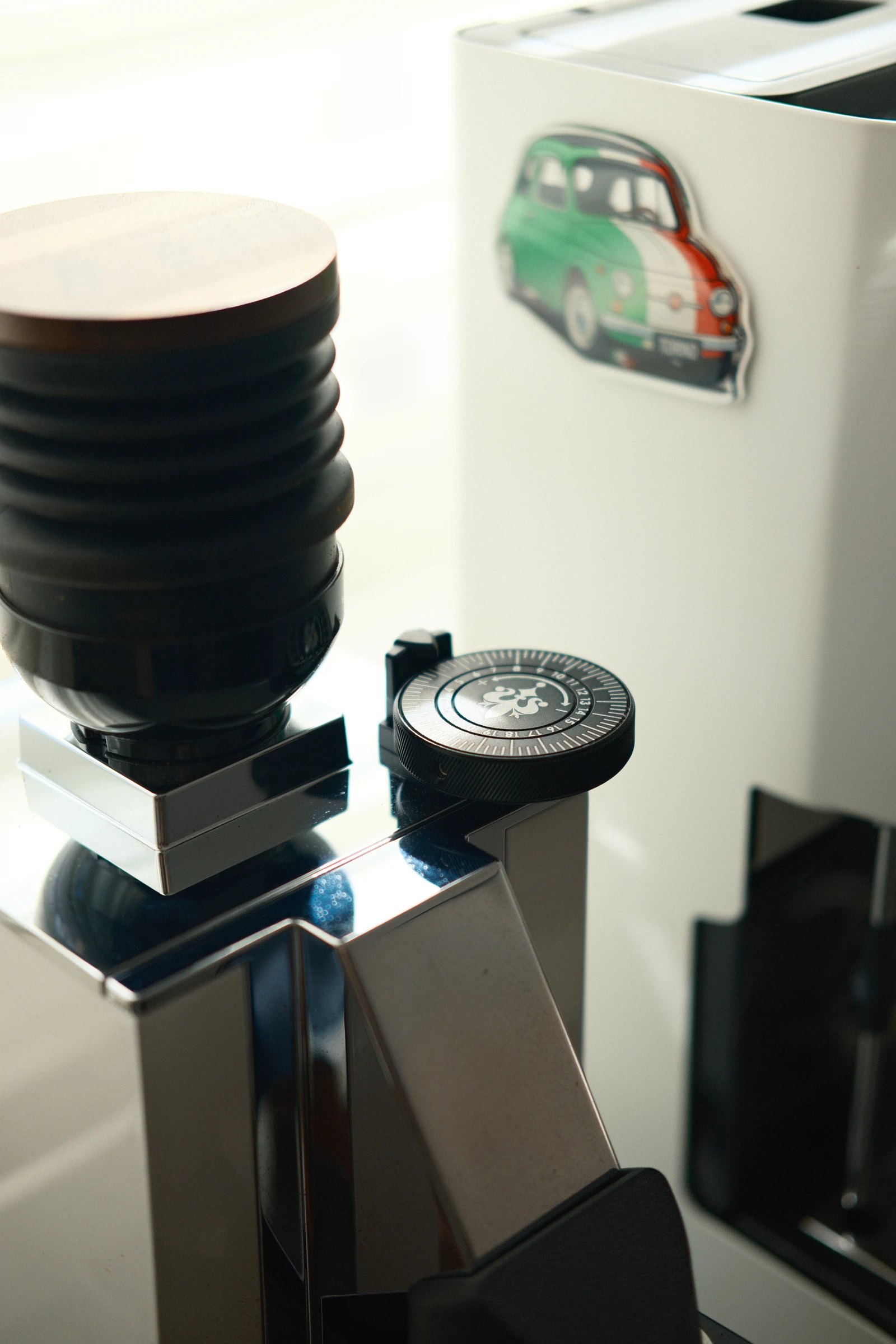
My previous grinder was an M47 hand grinder. Apart from being tiring, I thought it was quite good, and I understood its grind settings well. When the 55s arrived, I replaced the hopper with a smaller one and added a cover to contain the grounds. I’m still adapting and dialling it in.
Keeping it simple for now
The E24 has scope for upgrades. But I’ve already lost the urge to keep experimenting with pour-over gear; I mostly use a V60 and a three-pour method now. With espresso, I also just want a straightforward cup, so I have no plans to upgrade yet.
I don’t think this is the best first coffee machine for someone with no experience. It makes more sense to someone with a little foundation. At this price and specification, it may not appeal much to a beginner anyway.
Source: Error99 · Xiaohongshu · 14 August 2026 · 家庭咖啡角更新. Search this Chinese title in Xiaohongshu to find the original post.
Before You Buy
Models in your region
Gaggia publishes separate US and European manuals for the Classic E24 family. The owner’s modifications and accessories are separate from the factory machine.
| Model in this review | Related regional model | What to know |
|---|---|---|
| Gaggia Classic E24 | Gaggia Classic E24 (US) | US manual for the E24 family. Match the full rating-label version to your supply. |
| Gaggia Classic E24 | Classic E24 (Europe) | European regional E24 documentation. Check the local rating label and electrical specification before purchase. |
- Model in this review
- Gaggia Classic E24
- Related regional model
- Gaggia Classic E24 (US)
- What to know
- US manual for the E24 family. Match the full rating-label version to your supply.
- Model in this review
- Gaggia Classic E24
- Related regional model
- Classic E24 (Europe)
- What to know
- European regional E24 documentation. Check the local rating label and electrical specification before purchase.
Choosing for everyday use
The owner’s Classic E24 fits into a shared family coffee corner. When planning space for the Gaggia Classic E24 (US) or Classic E24 (Europe), confirm the local model’s dimensions and rating label, and include everything around the machine. The owner also needs a grinder, tools and room for baby-care equipment.
Gaggia lists the E24 body as 20 × 35.5 × 27 cm, width × height × depth. Allow additional space for the portafilter, steaming jug and water access. The E24 is a current generation of the Classic line; the owner’s 1991 reference concerns that lineage, not the release year of E24.
The owner calls the grinder “Eureka 55s,” and the photograph shows a Mignon Zero-marked body with a bellows hopper. That does not establish the full electrical or burr version. Eureka’s Mignon Zero 55s listing identifies 55 mm flat burrs and an anti-retention Blow Up System. The owner’s replacement hopper and cover remain part of this owner’s setup, rather than assumed contents of every local bundle.
The decision is driven by two everyday constraints: hand grinding was tiring, and the sideboard had to remain shared. The owner’s choice reflects those everyday constraints rather than a current plan for further upgrades.
Related Reading
Reviews & Guides · Kitchen & Dining
Gaggia Classic E24: one month in, already modifying it
I've barely brewed a few coffees with my Gaggia E24, yet I've taken it apart several times. I love the modification potential; the stock steam disappoints.
Reviews & Guides · Kitchen & Dining
Modified gagg3028a: pressure profiles, with Gaggiuino and Gaggia Classic E24 context
My modified Gaggia gagg3028a lets me try different pressure curves. Learning what changes in the cup—and finally pulling a successful shot—is the fun part.
Reviews & Guides · Kitchen & Dining
Breville 870: seven-step espresso guide with Barista Express and Breville BES870 buying context
I share a seven-step Breville 870 espresso guide covering preheating, dosing, tamping, grind changes and channeling, rather than a long-term test.