
Reviews & Guides · Kitchen & Dining
Mijia Capsule Coffee Machine after a year: falling output and hot overflow
Reviewed: Xiaomi Mijia Capsule Coffee Machine (China model; exact SKU unspecified)Regional reference: Xiaomi Mijia Capsule Coffee Machine (current European model) (Netherlands)
I used my Mijia capsule machine almost daily for a year. When coffee output fell and hot wastewater overflowed, I declined a paid replacement and considered repair.
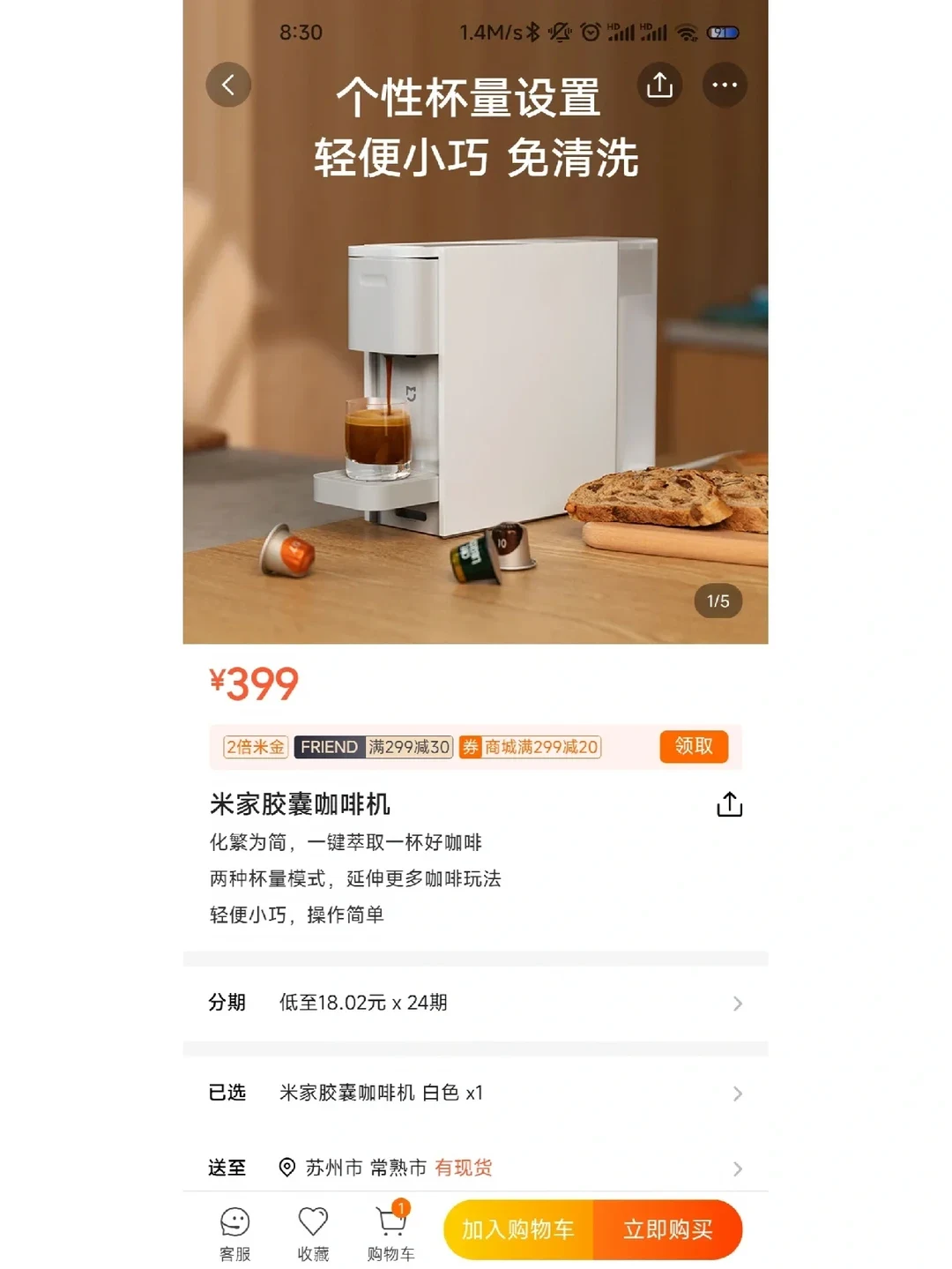
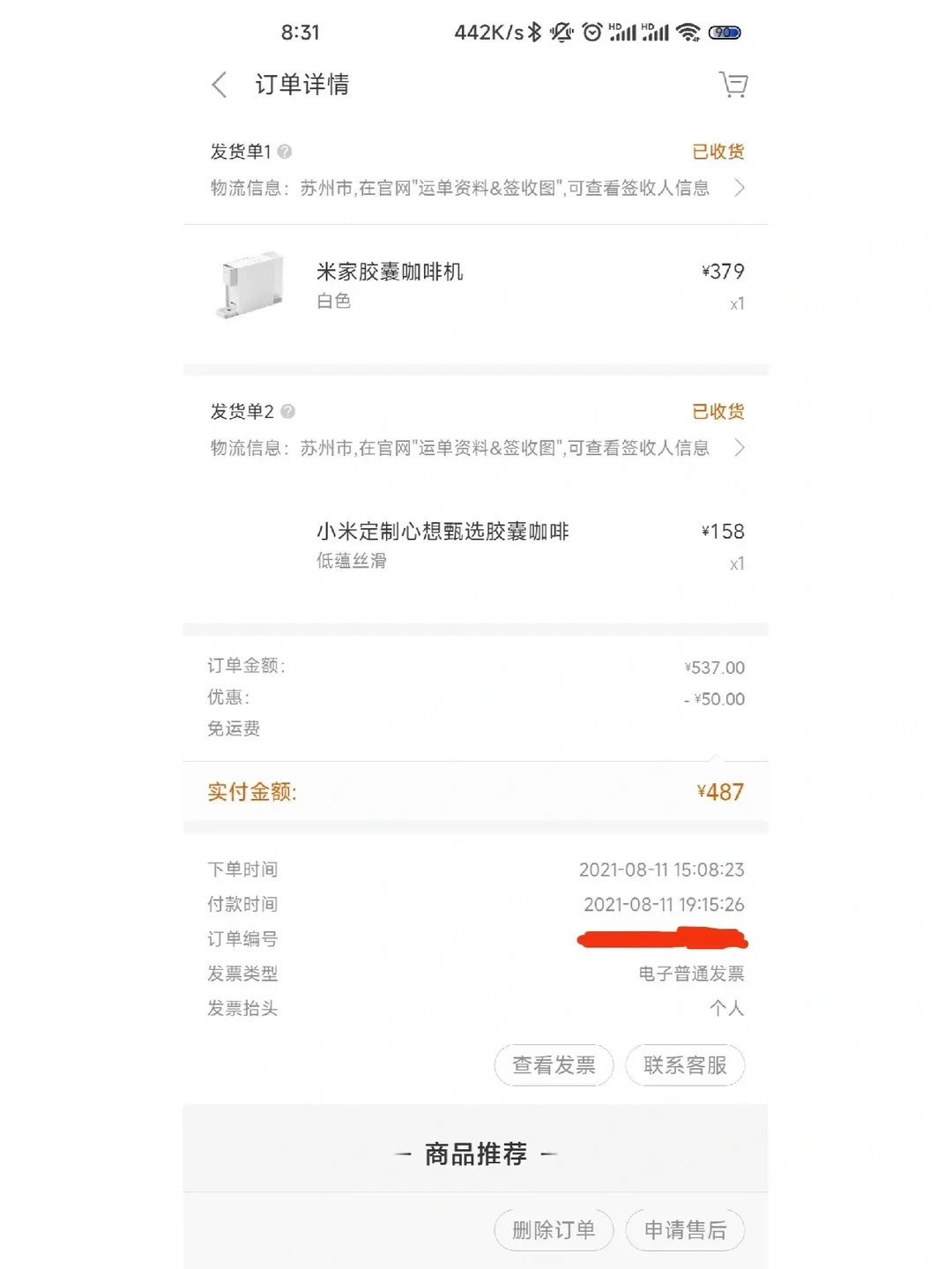
I don’t want to condemn it outright and say nobody should buy it, because when it worked well, I really loved using it. I used it almost every day during the year I owned it. When comparing several capsule-machine brands, I only considered retro-looking or white models to suit my home décor. I chose this one because I was wholeheartedly fond of Xiaomi. During that year, I did get to enjoy using it.
Around the beginning of August this year, the amount of coffee it dispensed dropped sharply and the wastewater increased. I used the capsule variety I called “底蕴丝滑,” on the large-cup setting. To get the amount I used to get in one cup, I pressed the large-cup button twice. I cleaned the machine after brewing, and by then there may already have been quite a lot of wastewater, but I hadn’t thought much of it. It wasn’t until I switched to the capsule I called the “199” one and no coffee came out that I realized how serious it seemed. I tried several times, and the wastewater overflowed. I switched back to the “159” one; coffee came out, but I had to run the large-cup setting three times for one cup. The wastewater had already risen past the capsule compartment, and it was painfully hot to empty. I looked through posts on Xiaohongshu and other channels and found many people describing situations like mine; some even joked that it was a “one-year machine.” I contacted customer service in a hurry. I had bought it through the Xiaomi Store, where it wasn’t easy to reach a human agent, so I called after 8 p.m. The after-sales team treated me very well. They suggested I send it in for inspection and wait for them to contact me. I had already read other people’s accounts saying that repairs were expensive after the warranty expired, and that replacing the machine might make more sense, so I asked what the service quote would be. The agent helpfully checked for me: including shipping, it would be more than 300 yuan, which I would have to pay because the warranty had expired. The service representative stressed that this was a paid replacement, essentially a new machine, not a repair. I was uneasy about replacing it. As a consumer, I could see why replacing a broken machine might be better than repairing it, but at a price so close to buying another, and with the effort involved, I’d rather buy a new one myself. I suspect the problem might simply be wear to a sealing ring inside the coffee machine, because many people seem to have trouble just after the warranty expires. I don’t think it’s necessary to replace the whole machine and create more waste. I declined the service offer. Since it was out of warranty, I decided to see if I could repair it myself.
I had been thinking of buying another one once my home renovation was finished, so now I may have to reconsider. I still have plenty of capsules left, so I might buy a Nespresso machine.
Xiaomi’s after-sales staff were actually very helpful. I suspect it may be difficult to repair products made by an outsourced manufacturer. I had a Mijia bulb made in collaboration with Philips that made an electrical humming noise, and getting after-sales help for it was difficult too. By contrast, Xiaomi’s service for my phone while it was under warranty was excellent.
If you’re thinking of buying this machine, my advice is to choose carefully. There may be a small chance that it really will become a “one-year machine,” but if you can accept replacing it after about a year, you could take the risk. A coffee machine costs about the same as two boxes of coffee capsules, so that may be acceptable; at this price, it’s still an option.
Source: [Pup] · Xiaohongshu · 2022-08-26 · 米家胶囊咖啡机可以选吗?慎选. Search this Chinese title in Xiaohongshu to find the original post.
Before You Buy
Models in your region
The owner’s 2021-era white China-market machine is identified as a Mijia capsule coffee machine, but its exact SKU is unknown. The official Netherlands listing and UK support FAQs cover a current European Mijia model; the supplied evidence identifies it as a related product, not as the same machine or a confirmed regional version of the owner’s unit.
| Model in this review | Related regional model | What to know |
|---|---|---|
| Xiaomi Mijia Capsule Coffee Machine (China model; exact SKU unspecified) | Xiaomi Mijia Capsule Coffee Machine (current European model) (Netherlands) | The owner’s white China-market machine cannot be matched to the current European product as the same model: its exact SKU is unknown, so the European model is only a related product reference. The owner’s output and overflow experience applies to the source machine, not automatically to the European model. |
- Model in this review
- Xiaomi Mijia Capsule Coffee Machine (China model; exact SKU unspecified)
- Related regional model
- Xiaomi Mijia Capsule Coffee Machine (current European model) (Netherlands)
- What to know
- The owner’s white China-market machine cannot be matched to the current European product as the same model: its exact SKU is unknown, so the European model is only a related product reference. The owner’s output and overflow experience applies to the source machine, not automatically to the European model.
Reduced coffee output and hot wastewater
The owner says that after almost daily use for about a year, the source machine began dispensing less coffee and producing more wastewater. The owner initially needed two large-cup cycles to get their usual amount. After the “199” capsule produced no coffee, they switched back to the “159” one and needed three cycles; hot wastewater overflowed into the capsule compartment. The owner did not report a teardown, inspection, or repair result, so the cause remains unconfirmed; their suspicion that a seal had worn is not a diagnosis.
Xiaomi’s UK FAQ for the current European Mijia machine describes small amounts of residual water after brewing and coffee flowing back into used capsules. It also describes a dual-layer wastewater collection arrangement. Those explanations do not establish that the much larger, hot overflow was normal, diagnose its cause, or show that the two machines share the same configuration.
Xiaomi UK FAQ: residual water · Xiaomi UK FAQ: coffee backflow
The service offer was a replacement, not a repair
After the warranty had expired, the owner was quoted more than 300 yuan including shipping for a paid replacement machine; the service representative told them it would not be a repair. The owner declined because the cost and effort made buying another machine seem preferable, and the owner considered attempting to repair it themselves. The post does not say that the owner carried out that repair or resolved the fault.
Her account supports a specific service outcome for their out-of-warranty case, not a general claim about repair costs, failure rates, or how long these machines last. The current European product listing does not establish the China-market machine’s warranty terms or service arrangements, so buyers should check the terms for the specific model and market they are considering.
What the European model evidence can—and cannot—tell buyers
The official Netherlands listing identifies a current European Mijia Capsule Coffee Machine, while Xiaomi’s UK FAQs discuss residual droplets and coffee backflow for that product. The supplied evidence does not identify the exact China-market SKU or establish that the source machine is the same model, so those regional specifications and support explanations should not be used to attribute features or a fix to the low-flow unit reviewed here.
The owner also considered a Nespresso machine because the owner still had many capsules, but the owner did not report buying or testing one. That is a possible next purchase, not a firsthand comparison. If you are choosing an alternative, check that your remaining capsules are compatible with the machine you plan to buy.
Related Reading
Reviews & Guides · Kitchen & Dining
Breville Bambino after three and a half years: why I switched to Gaggia Classic E24
After three and a half years, my Bambino seemed to run cooler; I switched to a Gaggia Classic E24 for the beans we buy and roast at home.
Reviews & Guides · Kitchen & Dining
Gaggia Classic E24 daily routine: 18 g in, 36 g out
I make two coffees most mornings with my Gaggia Classic E24, weighing 18 g in and 36 g out. Pairing it with a Sculptor 064S helped me dial in.
Reviews & Guides · Kitchen & Dining
Gaggia Classic E24: 16-second shots and a changed temperature routine
I pulled roughly 26 g shots from 16 g of dark-roast coffee in my Gaggia Classic E24; a new flush routine seemed to slow them slightly, but I did not measure the change.