
Reviews & Guides · Kitchen & Dining
My John Lewis Thermacore pan: a better second try at frying tofu
Reviewed: John Lewis 5-Ply Thermacore Stainless Steel Uncoated Frying PanRegional reference: John Lewis 5-Ply Thermacore Stainless Steel Uncoated Frying Pan (UK)
I struggled with tofu sticking in my John Lewis Thermacore stainless steel pan, then improved release after cleaning the pan and blotting the tofu dry.
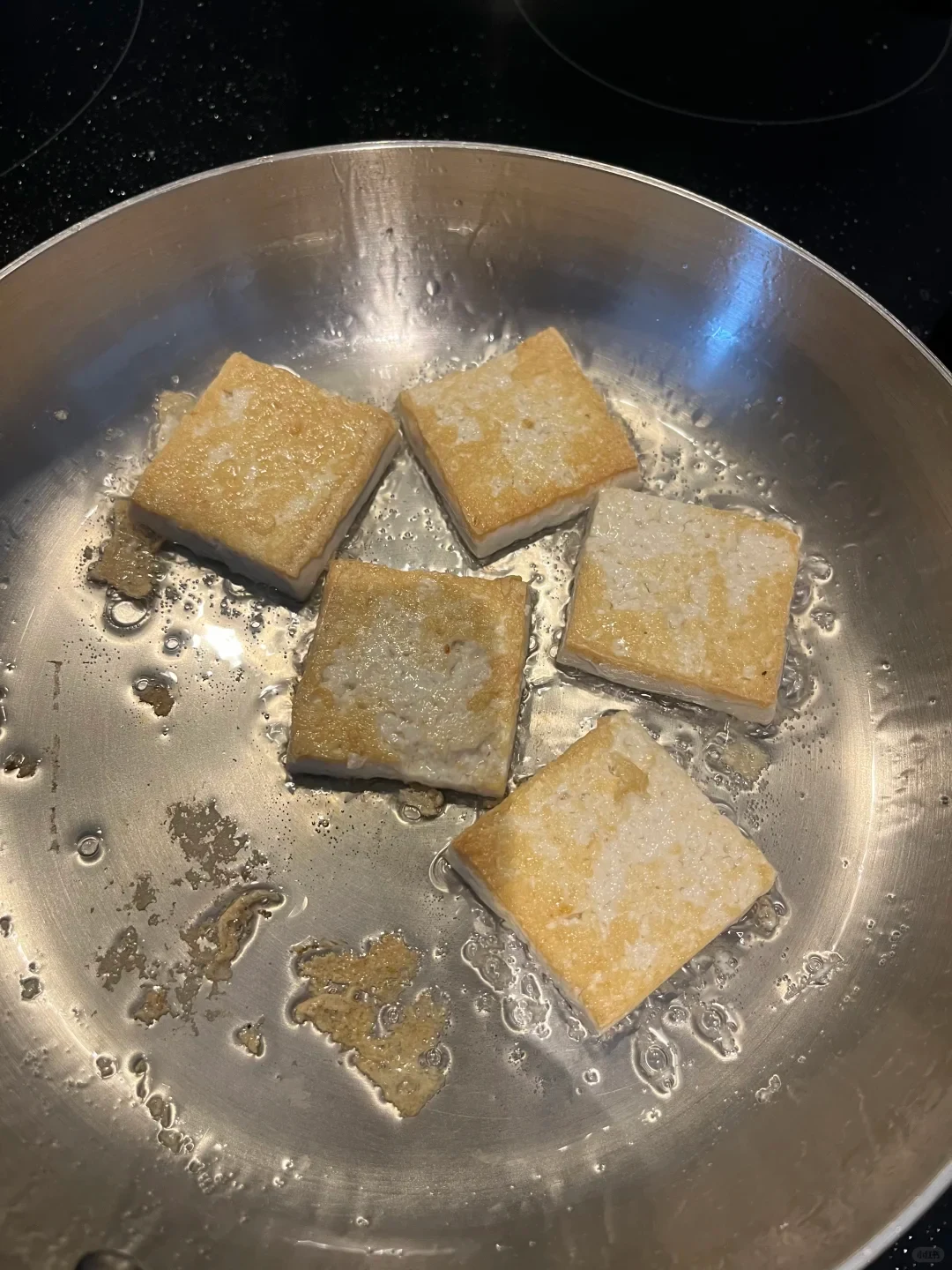
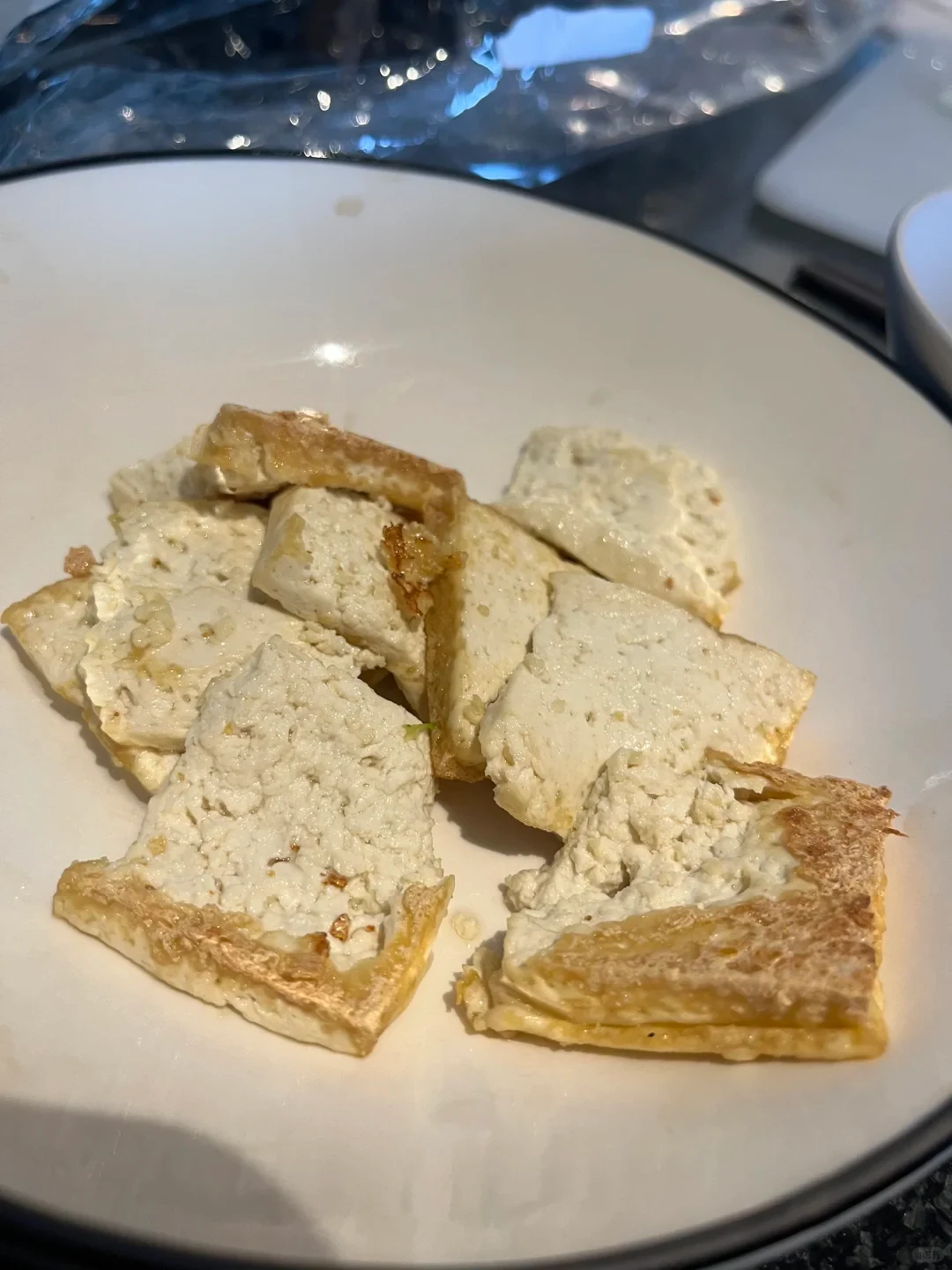
After several days of trying to fry eggs, I thought I had conquered stainless steel cookware. But yesterday, when I fried tofu, it initially did not stick and then suddenly stuck wildly to the pan.
I looked through Xiaohongshu and Google and had a long conversation with ChatGPT. In the end, I found that the problem was that the surface of the food was not dry enough.
Tofu is soaked in brine, and I did not dry it immediately after taking it out. After frying it for a while, I felt that it had mostly set and tried to move it, only to find that the entire underside had stuck, as shown in image 2.
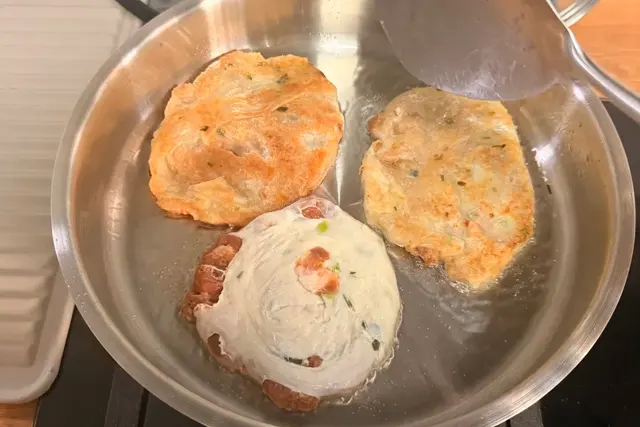
After reflecting on the failure, I scrubbed the pan clean and dried the surface of the tofu. This time it was much better: the edges stuck slightly, but the pieces could slide overall, as shown in image 1.
📒 My personal summary of general stainless-steel-pan tips. Feel free to discuss them in the comments!
Preheating:
I used to start with a cold pan and cold oil, heat it until it smoked slightly, turn off the heat and wait for the smoke to disperse, then add the food after the oil film had stabilised. Once the sizzling became quieter, I turned the heat back on.
The drawback is that if your pan and worktop are not perfectly level, the oil will not spread evenly and the pan can heat unevenly. One area may begin smoking while other areas have not reached the temperature needed to form an oil film.
I still recommend the traditional water-droplet test: heat the pan until a water droplet rolls freely, then add the oil. It should start smoking almost immediately; turn off the heat and wait for the smoke to stop, then add the food normally and turn the heat back to medium once the sizzling becomes quieter. Medium heat can prevent the part of the pan not touching the food from overheating and smoking, which could damage the oil film and make it unstable.
The key point: hot pan, cold oil; once it smokes, turn off the heat, wait for the smoke to disperse, then add the food and turn the heat back on.
Adding the food:
I never used to deliberately dry the surface of the food. In my experience, fried eggs almost never went wrong, but I had two particularly serious failures with starch-coated meat strips and northern-style tofu. They stuck so badly that I wanted to throw the pan away. But a pan this expensive could not possibly be the problem—it had to be me!
When adding food, you should take care to dry off as much surface moisture as possible, especially with foods that are prone to sticking. Examples that come to mind include tofu, fried rice and fish.
In principle, if the food contains a lot of moisture, evaporation can create small steam explosions between the underside of the food, the oil film and the pan. The steam carries away heat and damages the oil film, causing the local temperature to become too low. Once the oil film has already been damaged, the food can come directly into contact with the pan and stick.
The key point: pay particular attention to drying the surface of starchy foods and fish as much as possible.
- My personal view: stainless steel pans are not suitable for high-heat stir-frying. Excessive pan and oil temperatures—the wok hei we are seeking—can damage the oil film we worked so hard to create.
However, with foods that do not tend to stick, such as leafy vegetables, the pan and oil can actually be hotter, as long as the minced garlic does not stick or burn.
I hope everyone can conquer their beautiful stainless steel pans. Feel free to discuss this!
Source: 昆鹅 · Xiaohongshu · 2025-08-22 · 🇬🇧 不锈钢锅上岸的人不会告诉你的事. Search this Chinese title in Xiaohongshu to find the original post.
Before You Buy
Models in your region
The owner identified a John Lewis 5-Ply Thermacore Stainless Steel Uncoated Frying Pan in a reply showing the UK product listing. Its size was not selected in that screenshot. The official page below covers the same family.
| Model in this review | Related regional model | What to know |
|---|---|---|
| John Lewis 5-Ply Thermacore Stainless Steel Uncoated Frying Pan | John Lewis 5-Ply Thermacore Stainless Steel Uncoated Frying Pan (UK) | Uncoated five-layer stainless-steel and aluminium pan. Suitable for all hobs including induction, dishwasher-safe and oven-safe to 200°C. Metal handles can become hot. |
- Model in this review
- John Lewis 5-Ply Thermacore Stainless Steel Uncoated Frying Pan
- Related regional model
- John Lewis 5-Ply Thermacore Stainless Steel Uncoated Frying Pan (UK)
- What to know
- Uncoated five-layer stainless-steel and aluminium pan. Suitable for all hobs including induction, dishwasher-safe and oven-safe to 200°C. Metal handles can become hot.
The tofu result changed after two practical adjustments
The first batch of brine-wet tofu stuck across its underside. After cleaning the pan and blotting the next batch dry, the owner found better release, with slight sticking at the edges. The two LIVE items show the improved batch in the pan and torn pieces from the failed batch on a plate.
This retry changed at least two conditions: pan cleanliness and surface moisture. Oil quantity, temperature and cooking time were not measured, so the result does not isolate a cause.
What the owner recommends—and what remains personal advice
Eggs had seemed straightforward after several days of practice; tofu and starch-coated meat were more difficult for this owner. Drying fish and other starch-rich foods is their suggested extension, rather than a reported test of each food.
The steam-and-oil-film explanation comes from the owner’s reading and conversation with ChatGPT. The account contains no measurement establishing that mechanism.
Their preheating routine includes waiting for smoking oil to stop smoking. It is one owner’s routine, rather than a temperature specification from John Lewis for every oil or hob.
Before you buy the UK Thermacore pan
John Lewis specifies all-hob compatibility, dishwasher cleaning and oven use to 200°C. It warns that the metal handle can become hot and recommends a glove, mitt or pot holder.
The pan has an uncoated stainless-steel cooking surface. This account is useful as a food-preparation learning case, with some sticking still present after the retry.
Related Reading
Reviews & Guides · Kitchen & Dining
My MUJI nonstick pan after a month: light to handle, quick to heat
I used my MUJI nonstick pan almost daily for a month. It felt light, heated quickly, and I noticed no peeling or sticking while using a wooden spatula.
Reviews & Guides · Kitchen & Dining
My Smithey No. 10 surprised me on its first cook
I used my Smithey No. 10 once and was surprised by the heat readings across the pan. I also share what stood out about my new kitchen pieces.
Reviews & Guides · Kitchen & Dining
My Fissler 24 cm stainless steel pan fits four small patties
I made eight small patties in my 24 cm Fissler stainless steel pan, fitting four at once, and found it manageable to toss one-handed.