
Reviews & Guides · Kitchen & Dining
Le Creuset black-enamel pan: cooking and cleaning after two months
Regional reference: Le Creuset Signature Deep Sauté Pan (US)
I used my Le Creuset enameled pan almost daily for over two months: stews worked well, but frying eggs and pancakes often stuck and needed extra oil.
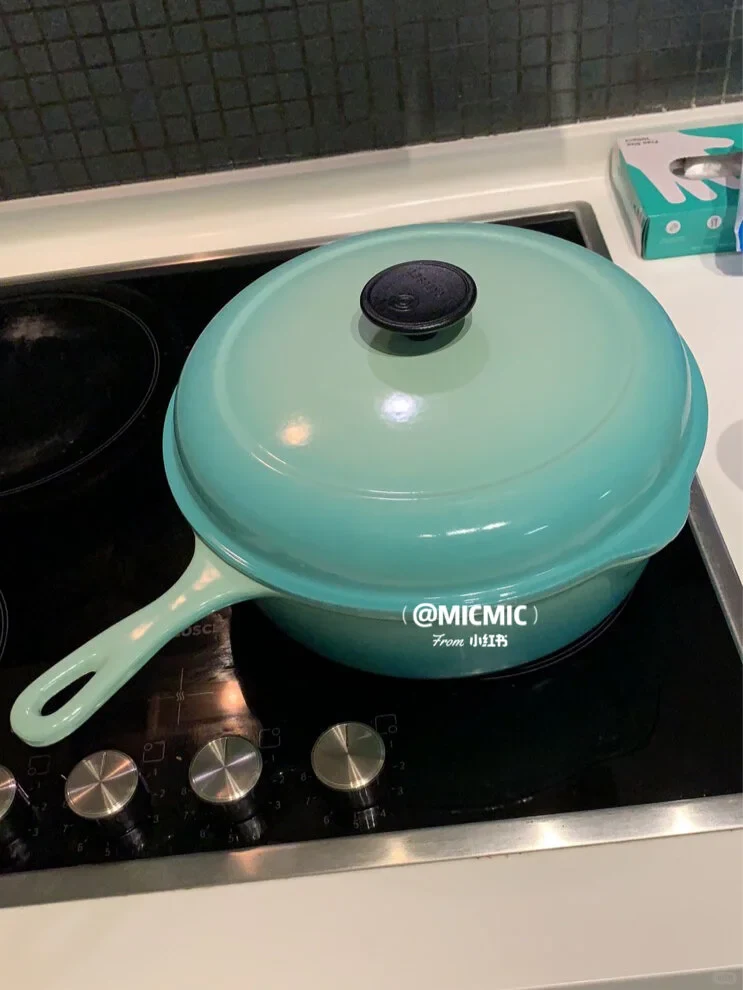
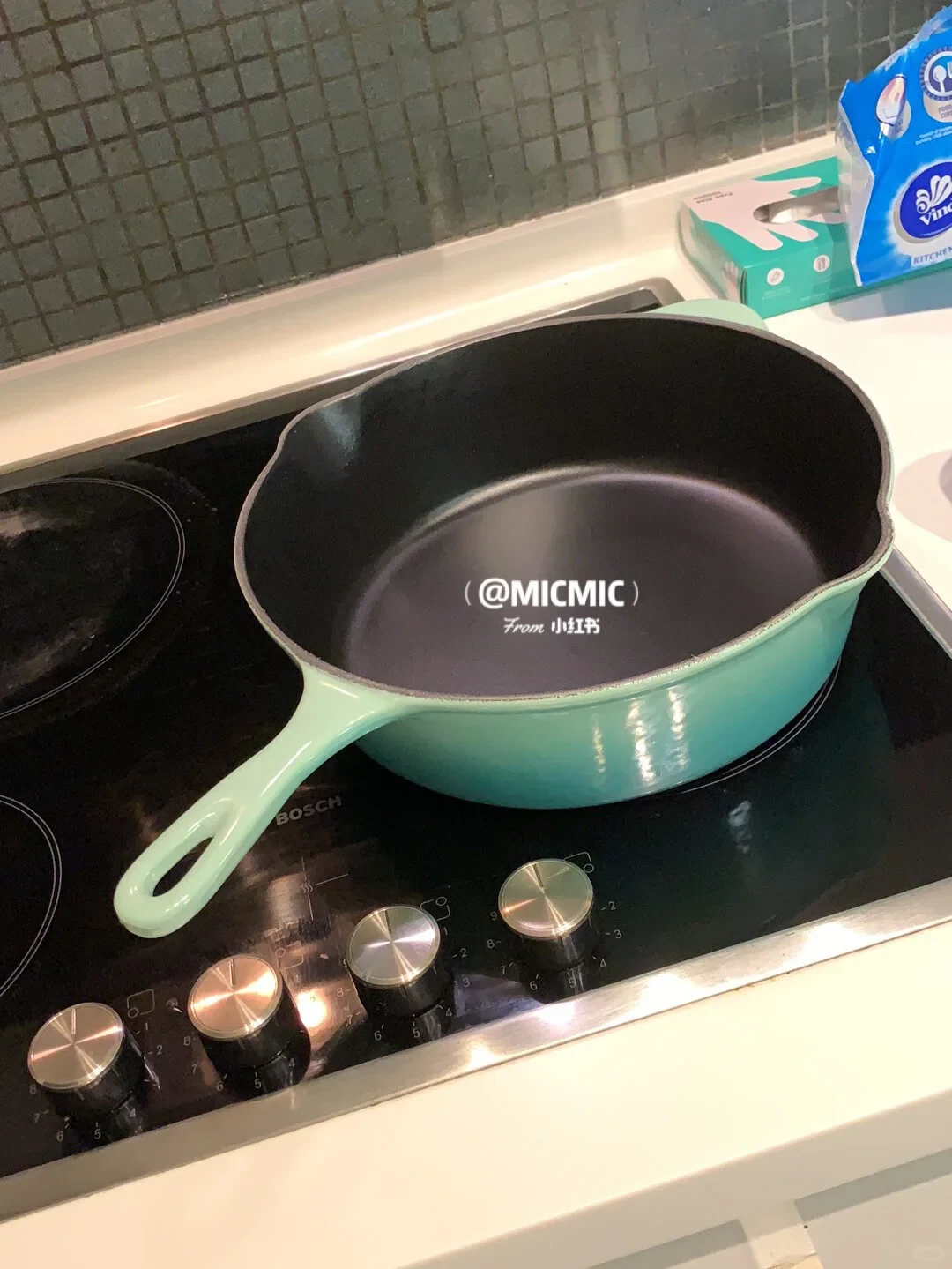
I previously shared that I bought the multi-purpose version of a Le Creuset enameled pan at Christmas last year.
I have now used it for more than two months, almost every day. I use this one pan for stewing, stir-frying, frying and deep-frying, so I want to share my experience: food sticks to it—it definitely does. This has nothing to do with how the pan was seasoned. Users who say that proper seasoning makes it nonstick are probably only using enameled cookware for stewing, because stewing does not cause serious sticking, and food stuck to the bottom usually loosens during the cooking process.
Sticking is especially serious when stir-frying or frying. To reduce it as much as possible, we usually add plenty of oil while the pan is still cold and then start heating it. That means skipping the step of blooming the aromatics first: we add the oil, scallions, ginger, garlic, vegetables or meat, and only then turn on the heat.
If there is only a small amount of sticking after stir-frying or frying, I add a little water to the pan, cover it and let the residual heat soften the residue before washing it. If the bottom is badly burned, I add water and baking soda, boil it and let it soak; after doing that two or three times, the residue comes off.
I have now decided to buy a frying pan to use alongside it, because this cast-iron pan is genuinely difficult for frying. Eggs and pancakes at room temperature are already difficult, and frozen hand-torn pancakes and refrigerated eggs are even harder.
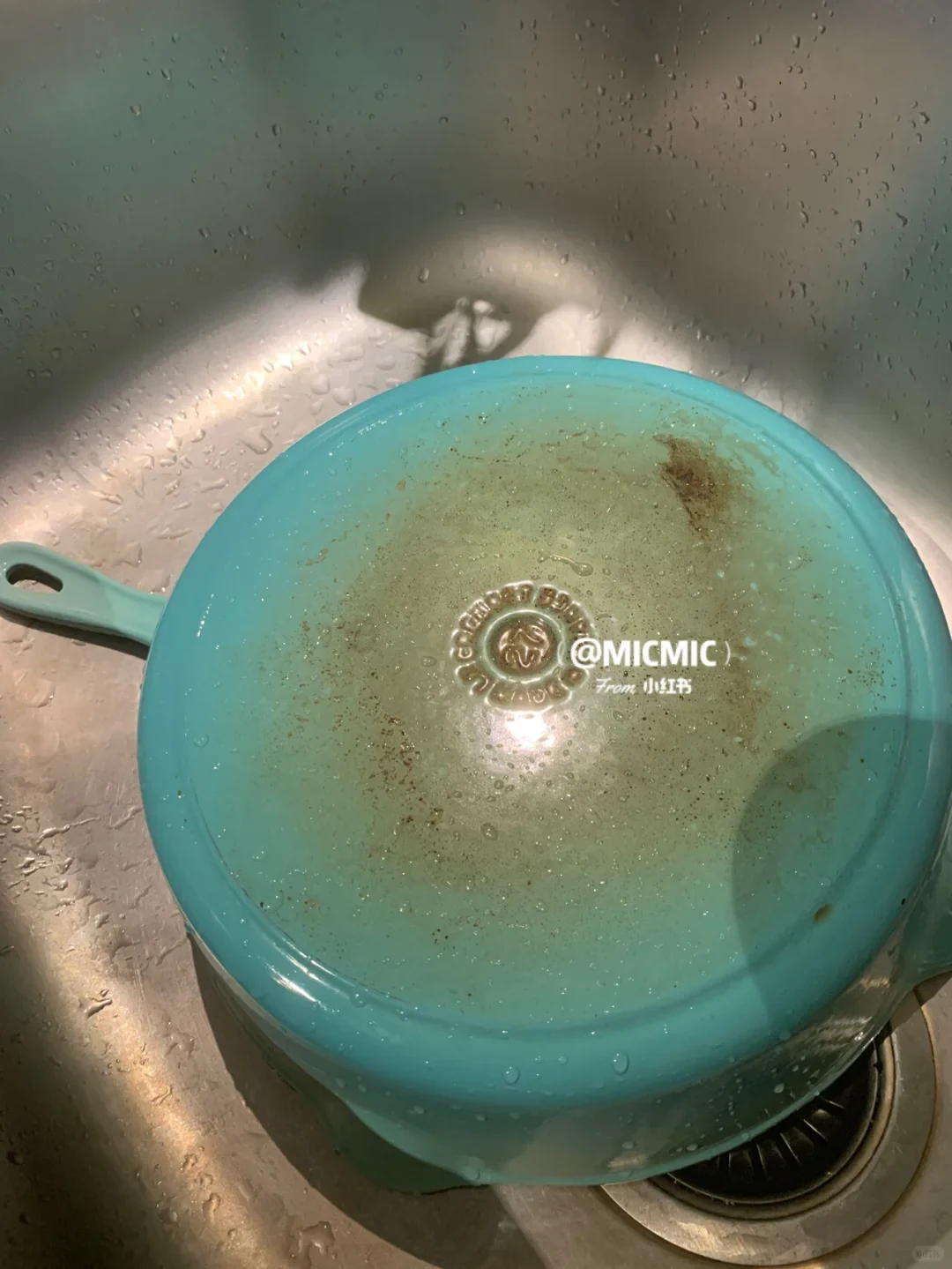
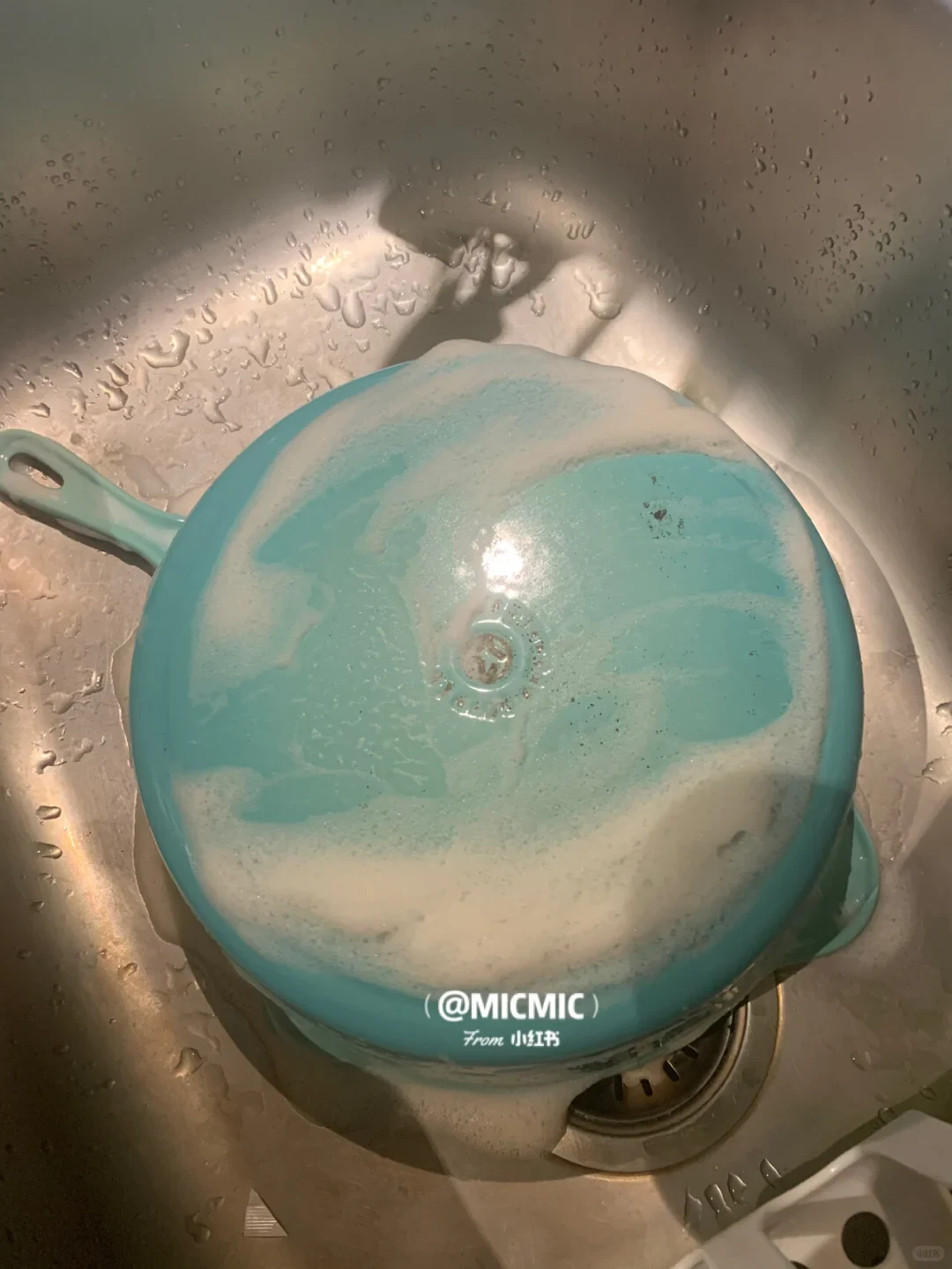
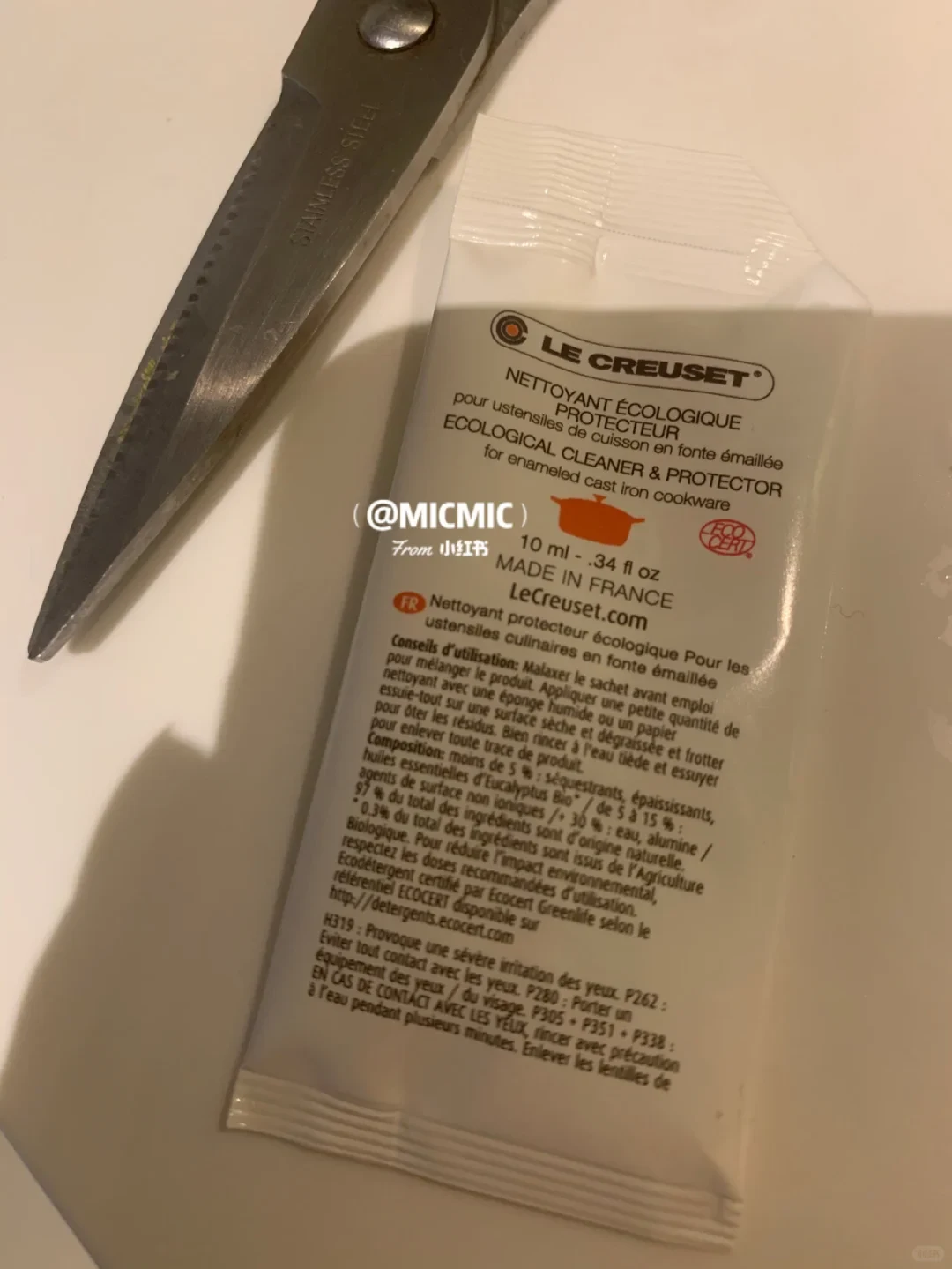
Today I used the official cleaner that came with the pan when I bought it to wash the bottom, shown in photo 5. We use an electric stove, so after more than two months only the base had changed colour, developing the kind of staining that would not come off no matter how much I washed it.
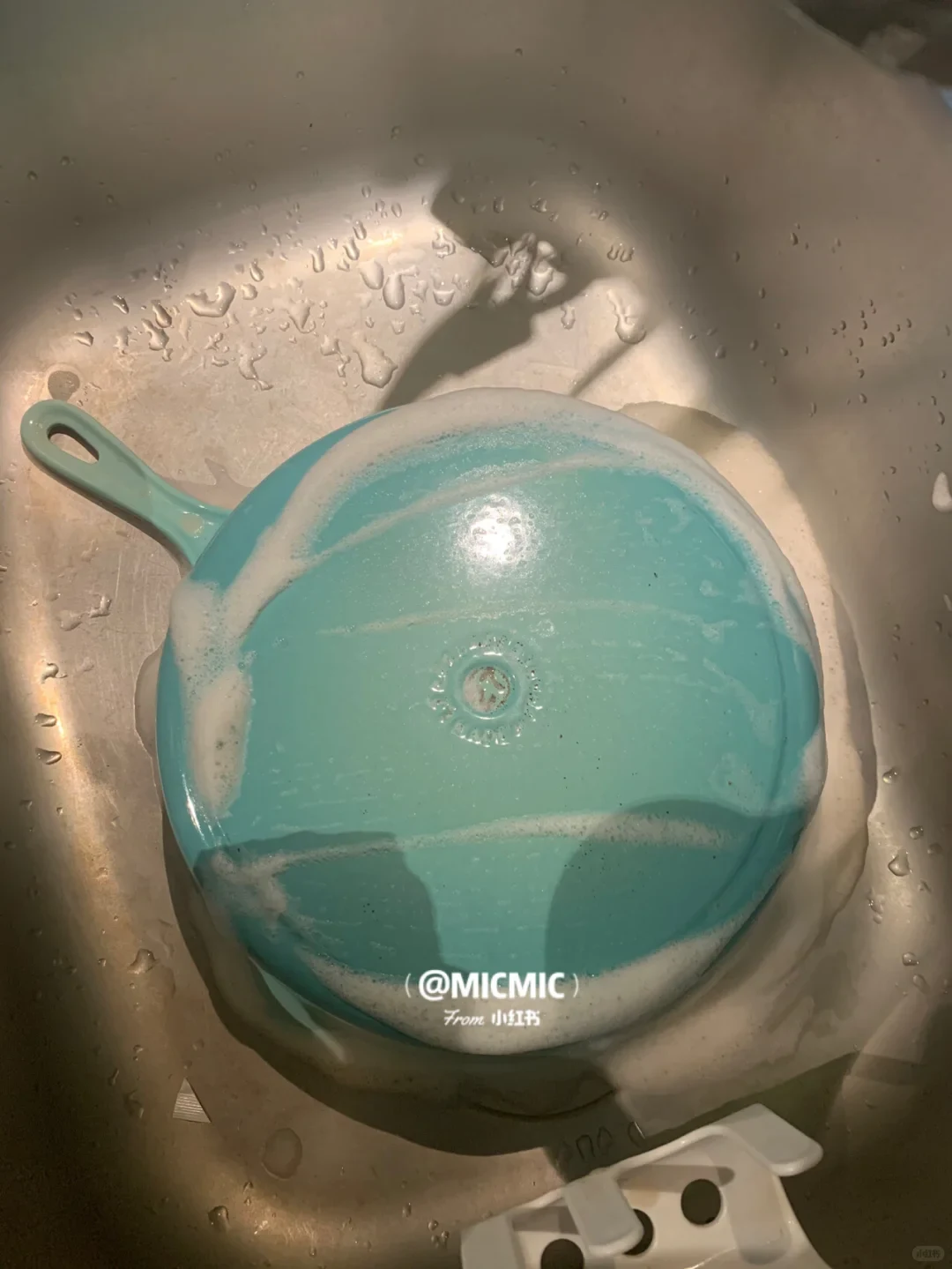
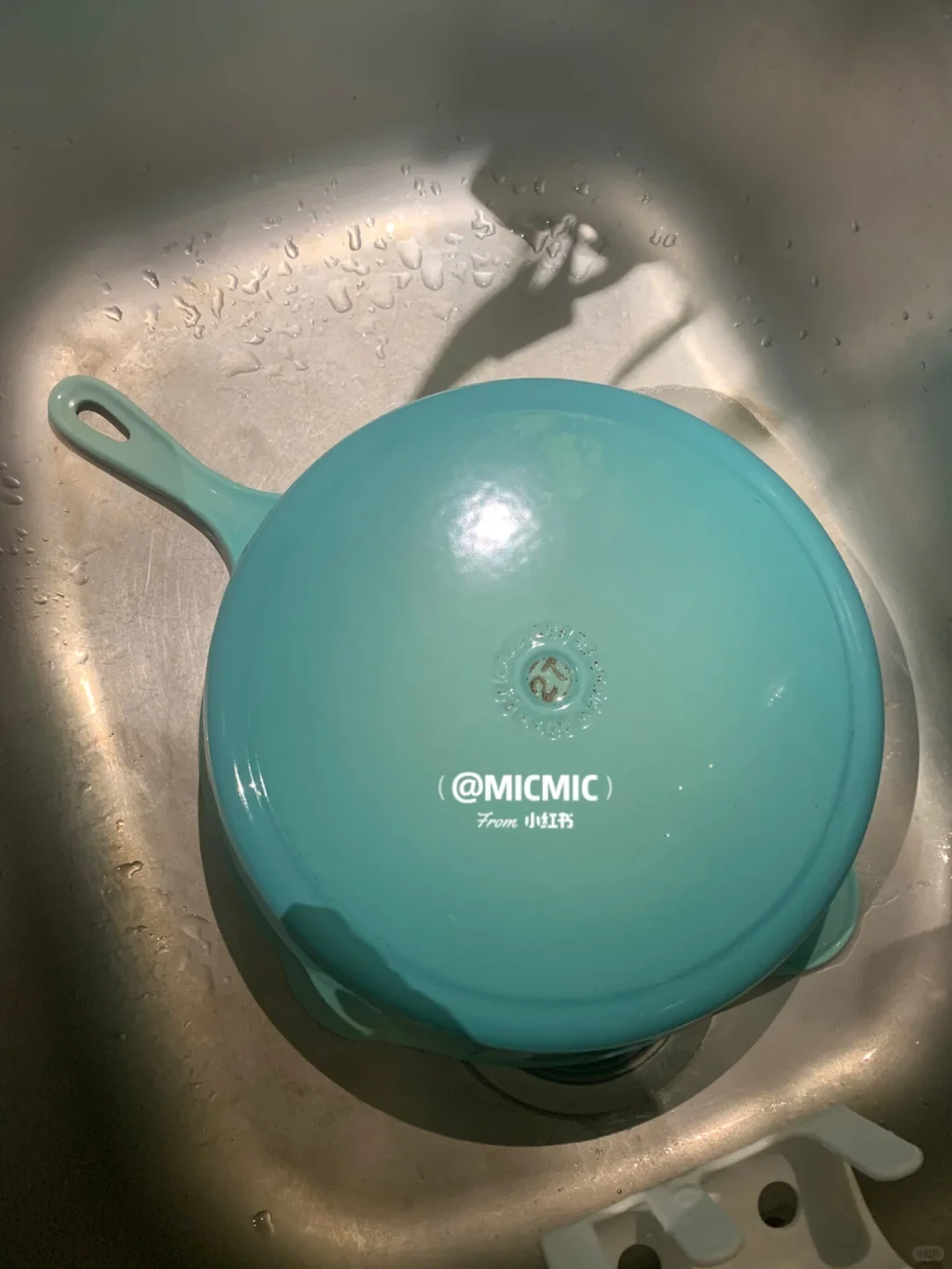
I did not expect the official cleaner to work so well. Although I had to scrub with a dishwashing sponge for about half an hour, I eventually removed all the staining without damaging the enamel finish.
I am considering buying a bottle the next time I go shopping. The small sachet that came with the pan should be enough for two or three uses.
My conclusion is that the pan works well for boiling and deep-frying. It can also stir-fry, but that requires technique and an adjustment period; since I started using it for stir-frying, the amount of oil we use at home has increased sharply.
It is also good for boiling and stewing, but it is not as extraordinary as many people online claim. You still need to add water; the difference is simply that water evaporates more slowly than it does in an ordinary pan.
As for whether spending one or two thousand on this old-school European cooking pan is worthwhile, I will leave that question to everyone else.
Source: 俩萌-在大马 · Xiaohongshu · 2020-03-06 · 酷彩珐琅锅的使用和维护体验. Search this Chinese title in Xiaohongshu to find the original post.
Before You Buy
Models in your region
The owner used a turquoise Le Creuset covered deep pan with a black enameled interior. The US Signature Deep Sauté Pan provides a related covered-pan option with a light interior; it is not the same confirmed model.
| Model in this review | Related regional model | What to know |
|---|---|---|
| Le Creuset multi-purpose enameled cast-iron pan | Le Creuset Signature Deep Sauté Pan (US) | Both are covered, long-handled enameled cast-iron pans. The current US reference has a light interior, a 4.25-quart capacity and a listed weight of 13 pounds. The owner’s pan has a black interior; its exact dimensions are not given. |
- Model in this review
- Le Creuset multi-purpose enameled cast-iron pan
- Related regional model
- Le Creuset Signature Deep Sauté Pan (US)
- What to know
- Both are covered, long-handled enameled cast-iron pans. The current US reference has a light interior, a 4.25-quart capacity and a listed weight of 13 pounds. The owner’s pan has a black interior; its exact dimensions are not given.
What the owner’s cooking experience shows
The owner used the black-enamel Le Creuset pan almost daily for stewing, stir-frying, frying and deep-frying. For buyers of the related US Signature Deep Sauté Pan, this account highlights the practical question of how many jobs one covered pan should handle: this owner liked boiling and deep-frying but needed more oil and practice for stir-fries.
Frying eggs and pancakes was the deciding drawback. Even room-temperature ingredients stuck, while refrigerated eggs and frozen pancakes were harder still. The owner decided to buy a separate frying pan rather than keep relying on the covered pan for every task.
The owner found that food stuck during stewing generally loosened as it cooked, and water evaporated more slowly than in an ordinary pan. They still added water; the account offers no tested water-free cooking method.
Cleaning and heat-use context
After more than two months on an electric stove, the owner’s Le Creuset pan had stubborn exterior-base staining. A supplied cleaner and about 30 minutes of sponge scrubbing removed it, according to the owner. The photographs show the base before, during and after cleaning; this was exterior cleaning, not an interior repair or a test of the US Signature Deep Sauté Pan.
Le Creuset recommends gradual heating and cooling, low-to-medium heat, and matching the base to the heating zone. Its enameled-cast-iron cleaning guidance calls for cooling to room temperature, then warm soapy water and a soft, non-abrasive sponge. Soaking helps loosen residue, and an enameled-cast-iron cleaner can tackle stubborn stains.
Le Creuset enameled cast iron care · US
The owner also reported boiling and soaking water with baking soda two or three times for burned-on food. That is their household method. For everyday care, follow the manufacturer’s guidance above and avoid metal pads or harsh abrasives.
How the US reference compares
The US Le Creuset Signature Deep Sauté Pan has a listed diameter of 12 inches, a 4.25-quart capacity and a 13-pound weight. These are useful space and handling considerations when choosing a covered deep pan; the owner’s black-enamel pan was not measured in this account.
Its light interior is the clearest difference from the owner’s black-enamel pan. The US listing describes enameled cast iron that needs no additional seasoning and is dishwasher safe. Those details describe the regional reference, while the owner’s sticking results remain specific to their pan and cooking methods.
For frequent eggs, pancakes or quick stir-fries, consider whether a separate frying pan would suit the way you cook. This owner ultimately chose that arrangement after more than two months; buyers seeking one covered pan for everything should weigh that experience alongside the US model’s different interior and dimensions.
Related Reading
Reviews & Guides · Kitchen & Dining
My MUJI nonstick pan after a month: light to handle, quick to heat
I used my MUJI nonstick pan almost daily for a month. It felt light, heated quickly, and I noticed no peeling or sticking while using a wooden spatula.
Reviews & Guides · Kitchen & Dining
My Smithey No. 10 surprised me on its first cook
I used my Smithey No. 10 once and was surprised by the heat readings across the pan. I also share what stood out about my new kitchen pieces.

Reviews & Guides · Kitchen & Dining
My Fissler 24 cm stainless steel pan fits four small patties
I made eight small patties in my 24 cm Fissler stainless steel pan, fitting four at once, and found it manageable to toss one-handed.