
Reviews & Guides · Garden & Pool
Mammotion YUKA: nine-month signal and edge problems, with YUKA 2000 buying context
I used a Mammotion YUKA for nine months on two flat Buffalo-grass lawns, then returned it after repeated signal errors, step-edge stoppages and uncut borders.
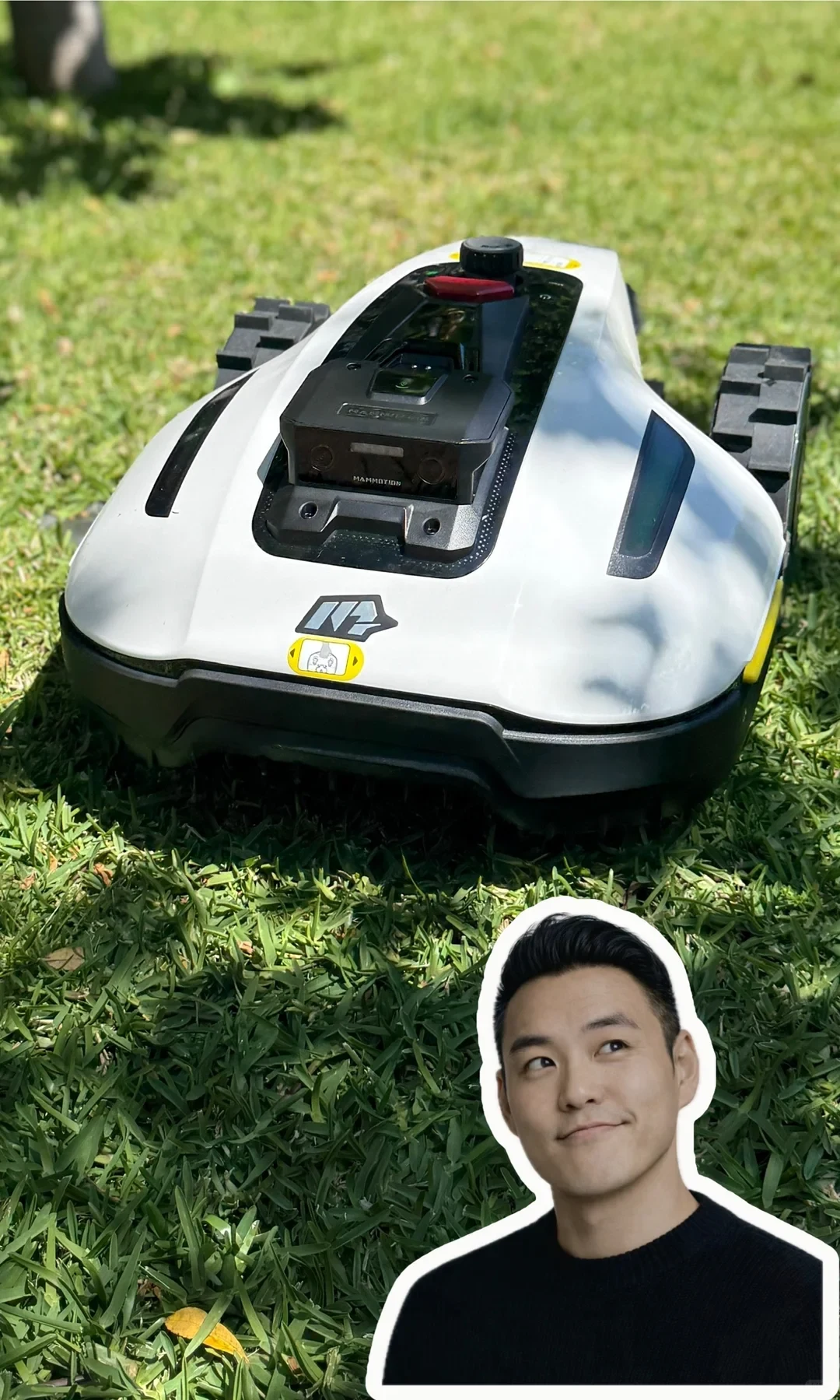
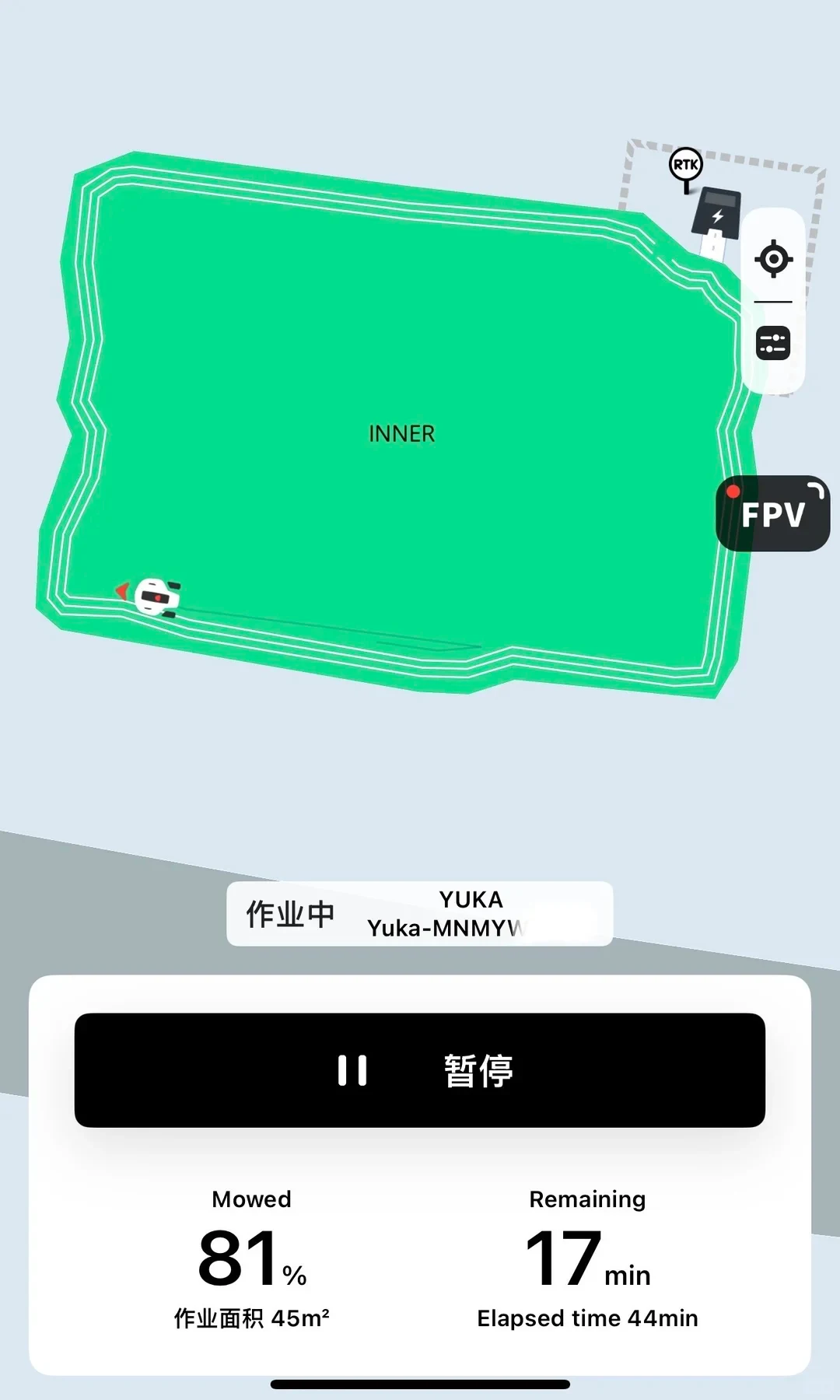
I am not here to tell you whether to avoid it or buy it. I am sharing my real experience for anyone considering a robotic lawn mower. After all, this is not an inexpensive gadget...
First, here is my usage scenario. We have two lawns measuring more than 100 square metres in total. Both are Buffalo grass, both have automatic sprinklers, and both are very flat and square. A gardening team comes every two weeks.
Why did I buy this robotic lawn mower last year?
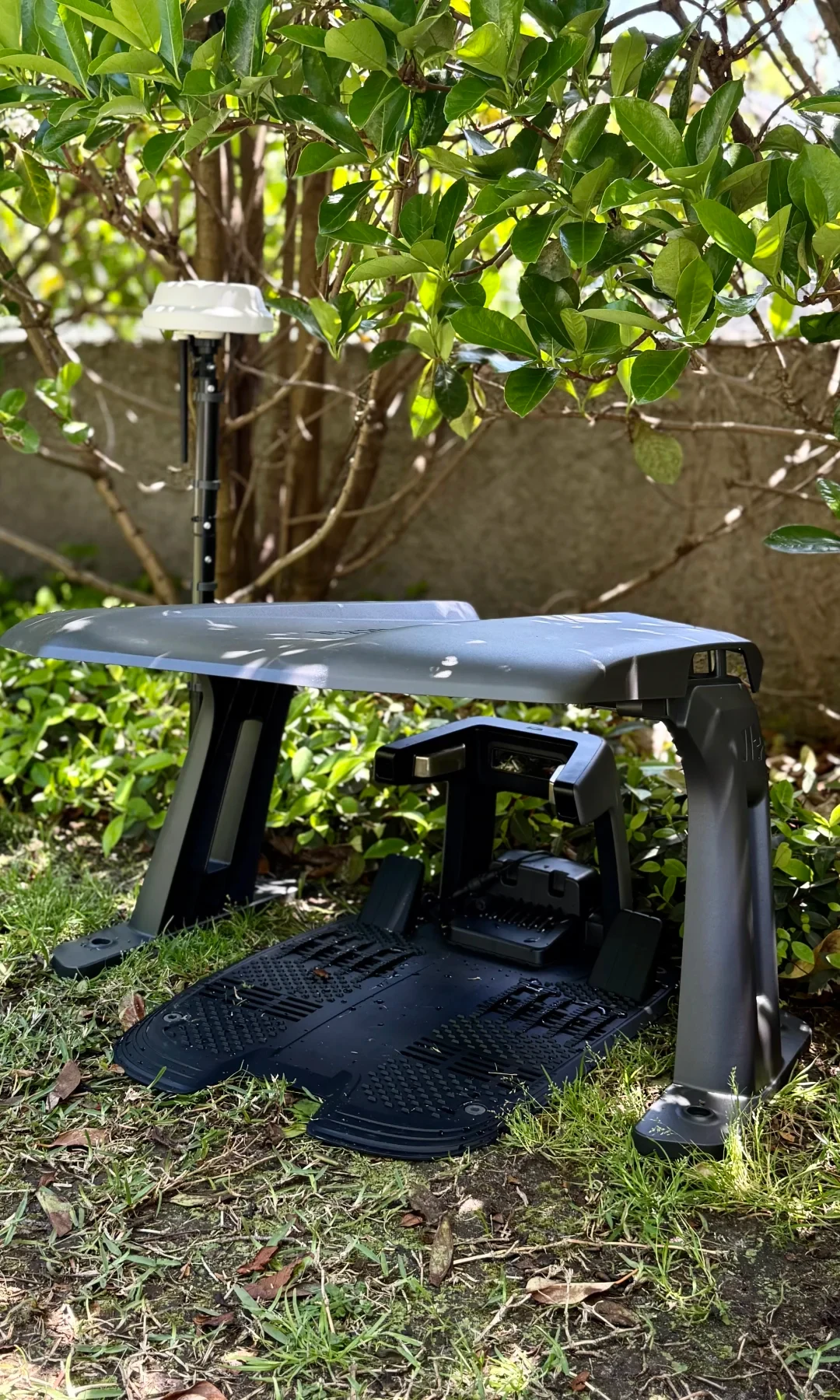
There were two reasons. First, the neighbours were making me feel competitive: the older man next door always had a perfect lawn. Second, I had heard that mowing frequently could help grass grow better and prevent weeds. So I spent nearly $2,000 on the robot, and I also bought it a little house...
Here are my real impressions from using it
It is very picky about the satellite signal. Rain is a problem, thick cloud is a problem, trees blocking the sky are a problem, and the satellite direction being off is a problem. In short, the robotic mower seemed to need perfect weather and a completely unobstructed sky to work continuously; otherwise, it kept reporting errors.
The vision module still was not sensitive enough. Several times, the robot was mowing and half of it went over the edge of a step, after which it reported an error. Someone had to go over, correct it and restart it before the task could continue. But often I had started it and then gone out; other times I was away and started it from my phone, only to find that it had become stuck. You know what I mean?
It could not mow right up to the edge. You cannot really blame it, but it was definitely a drawback. Eventually, on a calm and sunny day, it finished mowing the lawn, but there was a strip around the edge—about 10 cm—with a different grass height. If you are particular about these things, you still need to deal with it by hand.
It was too valuable to leave unattended. When it was mowing on the nature strip, I could only watch the security-camera feed on my phone because I was worried someone might somehow steal it. Security is good where we live and we have private security, so I did not see anyone showing bad intentions. But once I did see a passing dog urinate on the robot. Whatever the case, using it on the nature strip made me feel nervous, and that was a problem...
I actually started questioning the mower's reliability after using it only twice, but I kept putting off contacting Amazon. This Melbourne winter, even slightly thicker cloud seemed to mean no signal. After exactly nine months since purchase, I had to pray for a full satellite signal before every start and carefully correct it every time I used it. I completely lost patience, so I returned it last week and received 70% of the order amount back.
So there you have it: AI and robots cannot even manage a lawn...
If you are not much good at studying, learning landscaping or horticulture might be a pretty good option.
Source: CJ · Xiaohongshu · 2026-08-02 · 🤖犹豫了9个月、还是把剪草机器人退货了🪴. Search this Chinese title in Xiaohongshu to find the original post.
Before You Buy
Models in your region
The owner identifies the product through the Mammotion branding and YUKA app, but does not provide a complete model number or production year. The supplied official YUKA reference distinguishes 2024 YUKA 1500 and 2000 models with physical RTK and 3D vision; current Canadian and European YUKA 2000 listings are related references, not proof of the owner's exact configuration. The owner used it on two flat Buffalo-grass lawns totalling more than 100 square metres, with a physical RTK installation.
| Model in this review | Related regional model | What to know |
|---|---|---|
| Mammotion YUKA robotic lawn mower (exact suffix not reported) | Mammotion YUKA 1500 and 2000 (2024) (International English support) | The official 2024 YUKA reference covers YUKA 1500 and 2000 with physical RTK and 3D vision. It is a reference for the older family, while the source photos and app do not establish the owner’s exact capacity suffix or model year. |
| Mammotion YUKA (suffix not reported) | Mammotion YUKA 2000 (Canada) | This is a current Canadian same-family reference, not a verified match for the owner’s older unit. The Canadian listing advertises iNavi and NetRTK positioning without a physical reference station over supported connectivity, which differs from the physical RTK setup shown in the owner’s material. |
| Mammotion YUKA (suffix not reported) | Mammotion YUKA 2000 (EU English store) | This is a current European same-family reference, not a verified match for the owner’s mower. Its listing gives a 2,000-square-metre capacity, rear-wheel drive, slope capability up to 45% or 24 degrees, and NetRTK/iNavi positioning without physical RTK installation; these specifications should not be transferred to the owner’s unidentified unit. |
- Model in this review
- Mammotion YUKA robotic lawn mower (exact suffix not reported)
- Related regional model
- Mammotion YUKA 1500 and 2000 (2024) (International English support)
- What to know
- The official 2024 YUKA reference covers YUKA 1500 and 2000 with physical RTK and 3D vision. It is a reference for the older family, while the source photos and app do not establish the owner’s exact capacity suffix or model year.
- Model in this review
- Mammotion YUKA (suffix not reported)
- Related regional model
- Mammotion YUKA 2000 (Canada)
- What to know
- This is a current Canadian same-family reference, not a verified match for the owner’s older unit. The Canadian listing advertises iNavi and NetRTK positioning without a physical reference station over supported connectivity, which differs from the physical RTK setup shown in the owner’s material.
- Model in this review
- Mammotion YUKA (suffix not reported)
- Related regional model
- Mammotion YUKA 2000 (EU English store)
- What to know
- This is a current European same-family reference, not a verified match for the owner’s mower. Its listing gives a 2,000-square-metre capacity, rear-wheel drive, slope capability up to 45% or 24 degrees, and NetRTK/iNavi positioning without physical RTK installation; these specifications should not be transferred to the owner’s unidentified unit.
The owner's product is not fully identified
The owner's photographs show Mammotion branding, a YUKA app interface and a physical RTK reference station, while the account describes nine months of ownership. Because no full suffix or production year is supplied, readers should not assume the experience belongs specifically to YUKA 1500 or YUKA 2000.
The current Canadian and European YUKA 2000 pages are useful regional references, but they describe a related current listing. Their advertised NetRTK/iNavi setup without a physical reference station differs from the physical RTK arrangement in the owner's account, and the available evidence does not show that the owner's mower can gain identical positioning through a software update.
Positioning conditions affected this owner's routine
The owner reports repeated signal interruptions in rain, thicker cloud, under trees and when the satellite direction seemed unfavourable. This is an individual correlation, not proof of a universal hardware defect or a single confirmed cause. Official installation guidance says a physical RTK reference station needs upright placement with an open sky view and should be kept away from tree cover, building corners and narrow passages.
Mammotion physical RTK reference station · English support
The owner's photo places the RTK antenna near garden bushes, but the supplied account includes no diagnostic logs or controlled test after moving it. Buyers using physical RTK should therefore treat station placement as a setup check rather than concluding from this account alone that cloudy weather will always prevent operation.
Step edges still required supervision
On the owner's lawns, the mower sometimes ended with half of its body over a step edge and stopped with an error. The owner had to correct and restart it, including in situations where the mower had been started remotely while nobody was present. The official 2024 YUKA FAQ describes 3D vision alongside physical RTK, but that description does not show how the owner’s mower handled this particular step. The observed stranding is a reason to review the boundary near level changes before relying on remote starts.
This does not establish a failure rate for the product. It does show why a buyer with steps, terraces or abrupt level changes should inspect mapped boundaries and plan for occasional supervision rather than assuming remote start will always finish unattended.
The owner still trimmed the lawn edges
The owner observed an approximately 10 cm strip of taller grass around the lawn after a completed mowing session and said it needed manual attention. The source provides no controlled comparison between boundary types or other YUKA models, so the reported gap belongs to this lawn rather than establishing a universal edge width.
For a buyer focused on a uniformly finished border, the practical question is whether the local lawn geometry leaves a strip that still needs a trimmer. The owner's lawns were described as flat and square, but edge width was not measured across different boundary types.
What this experience means for a purchase decision
The owner's use case was relatively simple in shape—two flat Buffalo-grass lawns totalling more than 100 square metres—but still involved automatic sprinklers, a physical RTK installation, step-edge problems and outdoor security concerns. The reported return after nine months was this owner's individual outcome, not evidence of a general return rate or reliability level.
Before buying a regional YUKA model, confirm the exact suffix, positioning method, local connectivity requirements and boundary guidance for that market. Do not transfer the current YUKA 2000's listed capacity, slope rating or NetRTK/iNavi arrangement to the owner's unidentified mower without matching the model and installation conditions.
Related Reading
Reviews & Guides · Garden & Pool
Mammotion LUBA mini AWD: Seattle intervention notes for LUBA mini AWD 1500H and LUBA mini AWD 800 buyers
I run my Mammotion LUBA mini two or three times a week at 2.2 inches. The lawn looks impressive, but weak signals and edges make many scheduled tasks need intervention.
Reviews & Guides · Garden & Pool
Mammotion LUBA mini: Texas mowing notes for LUBA mini AWD 800H and LUBA mini AWD 800 buyers
I’ve run my Mammotion LUBA mini in Texas for about a year, mowing three times weekly at one inch; its positioning has rarely drifted.
Reviews & Guides · Garden & Pool
Mammotion YUKA mini 600H: first-day mowing and 10–20 minutes of edging
I found the Mammotion YUKA mini 600H left visible mowing tracks and resumed after charging, but I still spent 10–20 minutes edging corners.