
Reviews & Guides · Kitchen & Dining
MUJI nonstick frying pan after one month: scratches and handle-joint cleaning
Reviewed: MUJI Nonstick frying pan, metal-handle China model, size and SKU unspecifiedRegional reference: MUJI Aluminium Nonstick Frying Pan MCG5CC4A (current China reference; not confirmed owner SKU) (Mainland China); MUJI Ceramic Coated Frying Pan MC02Y25A 10.2-inch (US)
I used a MUJI nonstick frying pan for a month and found scratches from alloy chopsticks, stuck-on food and a handle joint that was hard to clean.
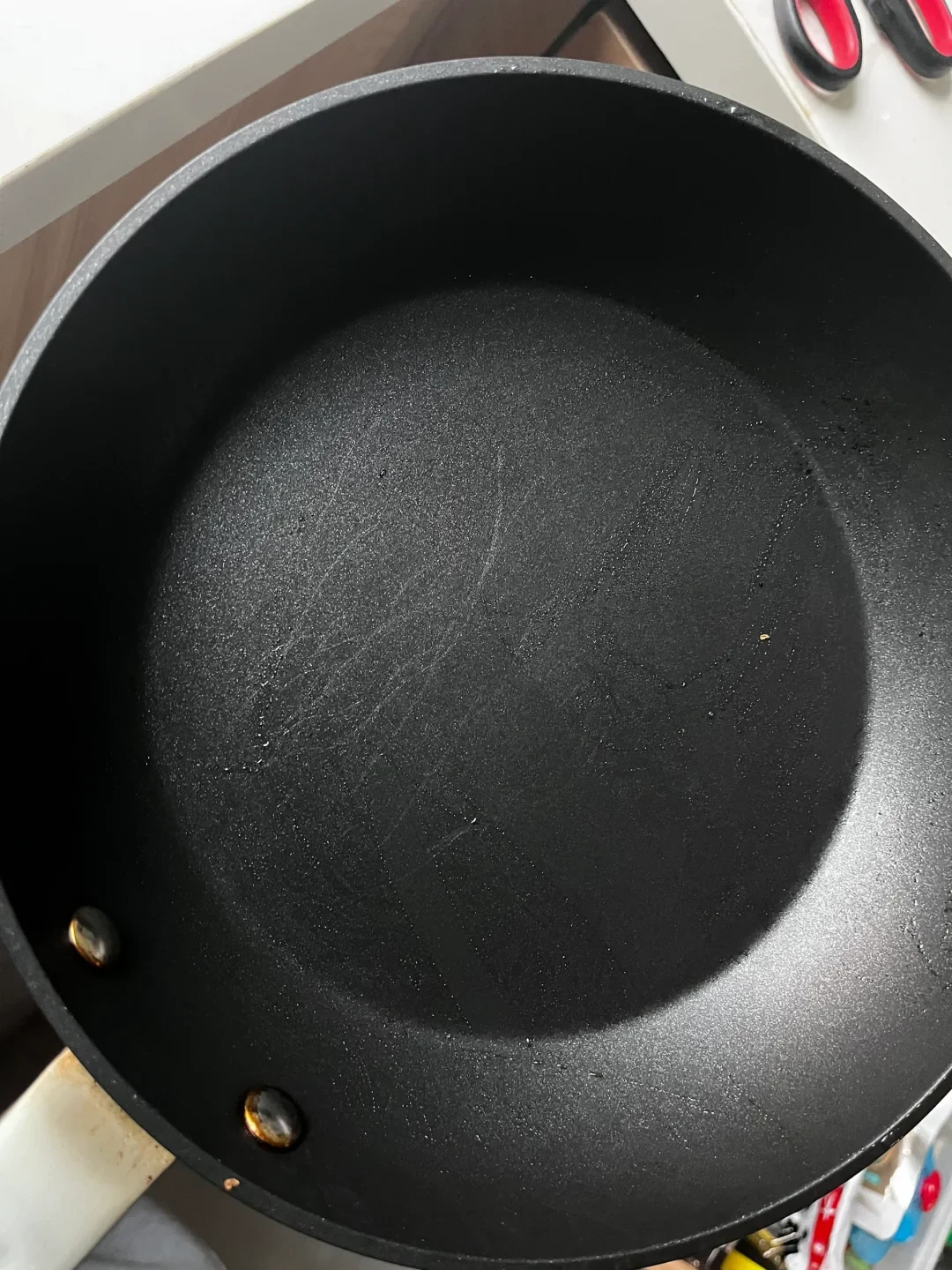
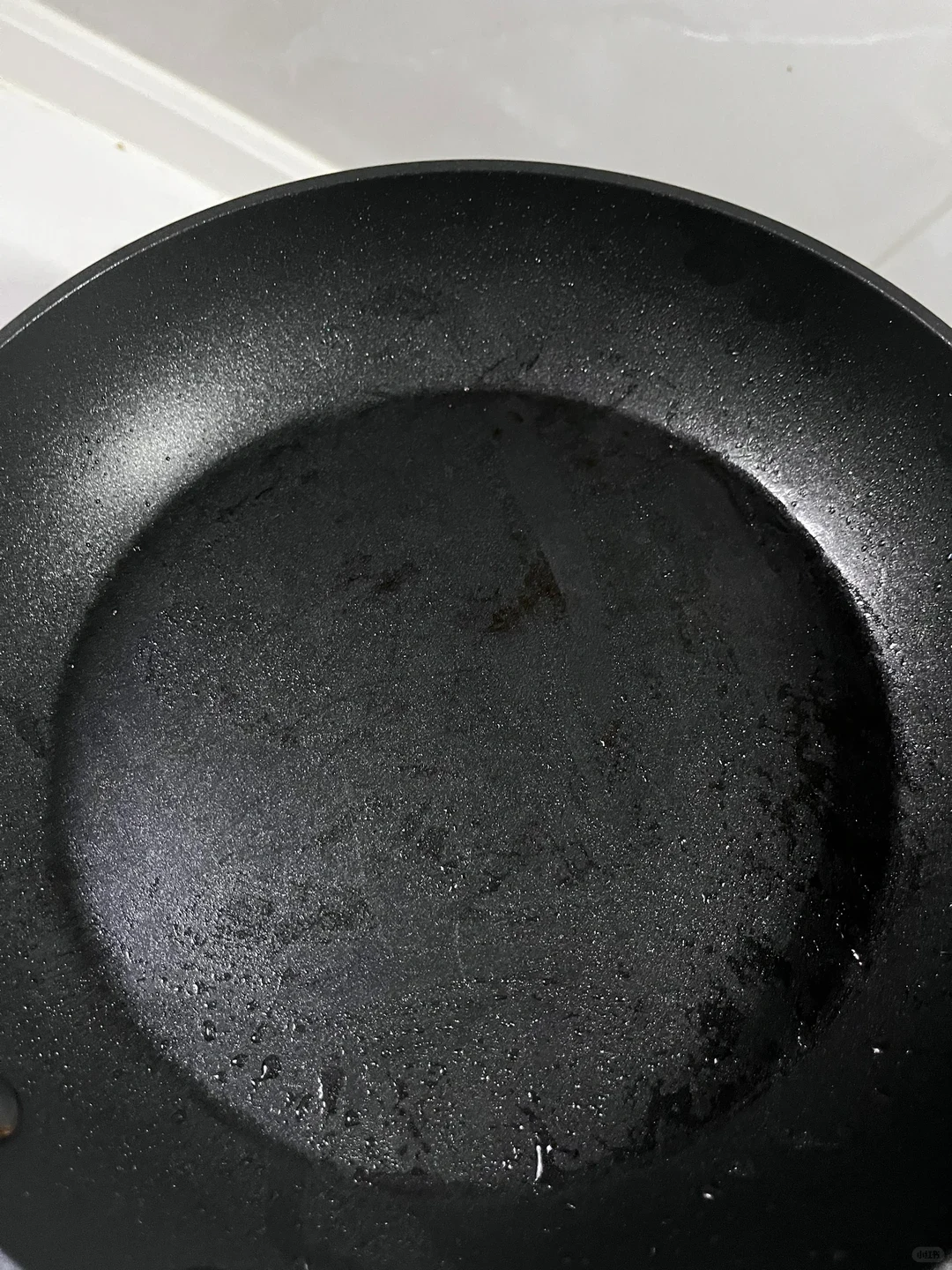
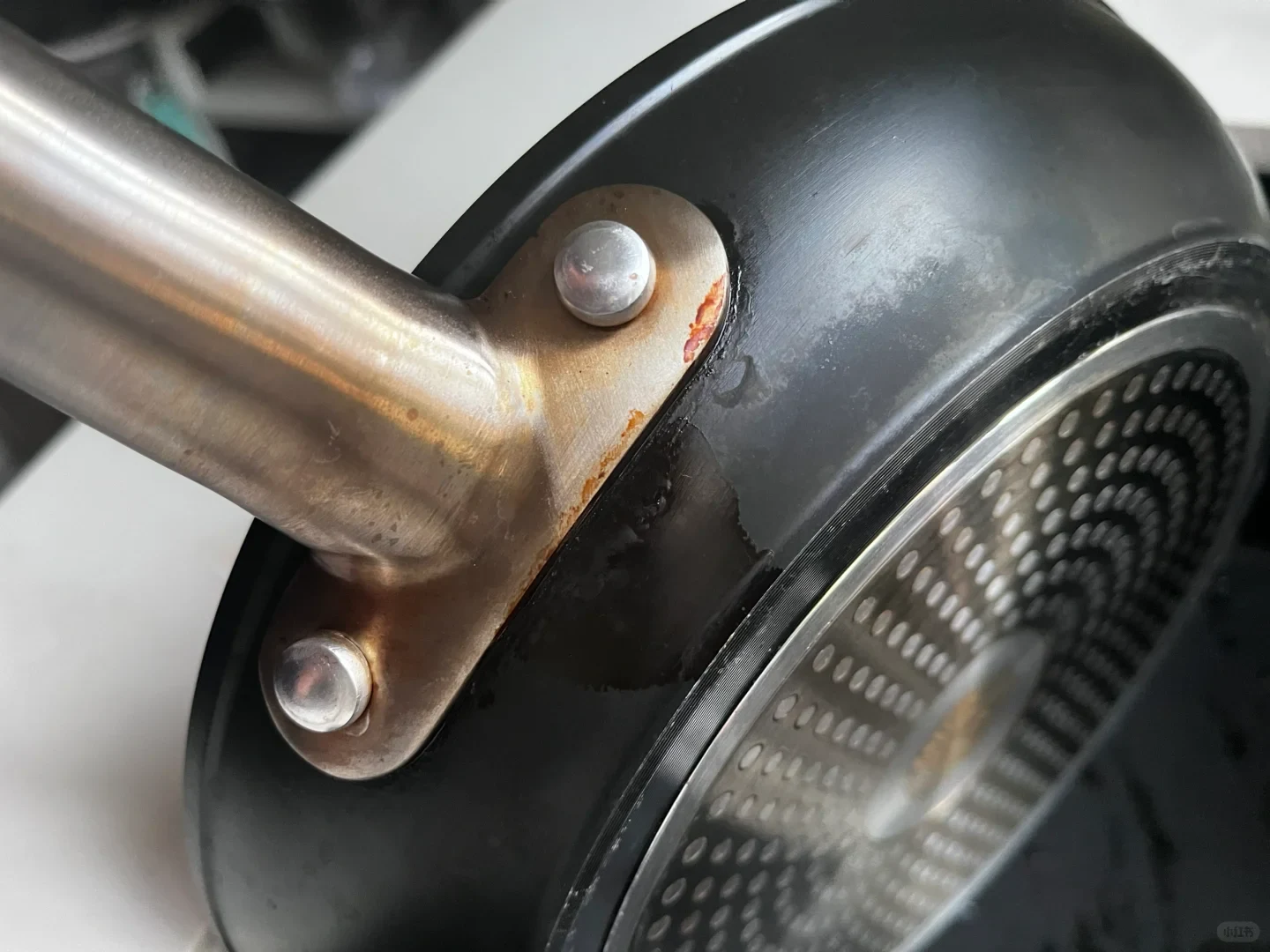
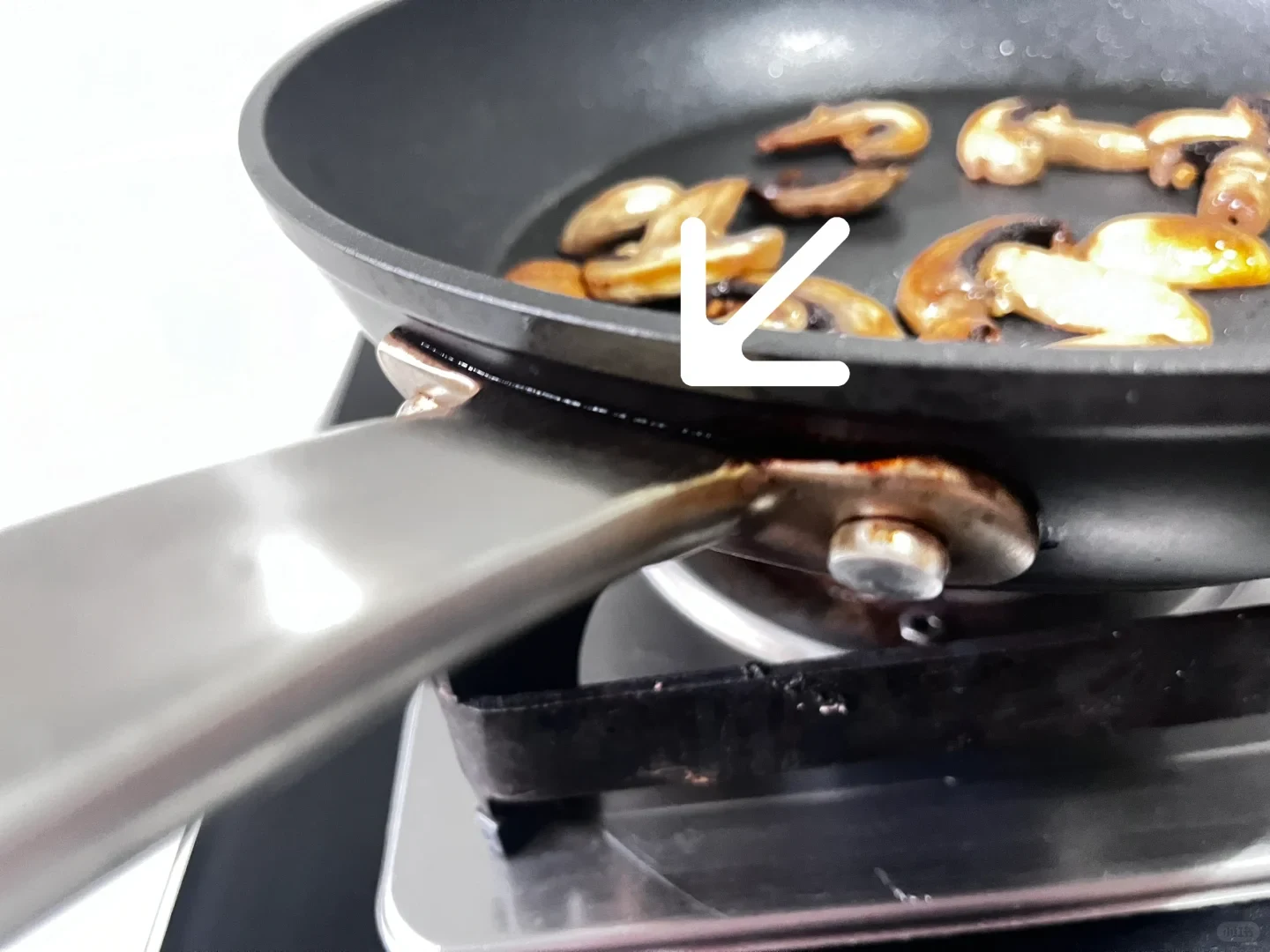
Figure 1: Scratches from alloy chopsticks: After I used alloy chopsticks to fry a beef patty, they left scratches that would not wash off. The two stainless-steel rivets where the handle joins the inside of the pan also collected the kind of greasy residue that is difficult to clean after long use.
Figure 2: Cooking mushrooms: This is what the pan looked like after I fried button mushrooms. The dark spots left behind seemed slightly stuck to the pan. When I used it to stir-fry potato slices with light soy sauce and other seasonings, the sticking was even worse. I did not photograph that result, but I may add a photo later.
- Cleaning the handle area: I am someone who takes good care of kitchenware and washes the pan with hot water after every meal, but the handle area is genuinely difficult to scrub. I expect it would need soaking in hot water and a strong degreaser such as Da Gong Ji to get clean. Sometimes, while the pan is heating, water bubbles even appear at the spot marked by the arrow in Figure 4, where the pan and handle meet.
- My conclusion: I have used it for only one month, averaging almost one or two uses every day. Cooking for one person, I use it to stir-fry food, but it is not well suited to that: first, food tends to stick; second, the pan is a little small, and if the heat is high, flames can come up around the pan. It should be suitable for pancakes and fried eggs, although alloy chopsticks can scratch it. The area where the pan body meets the handle, and the surrounding area, is very difficult to clean. That may be because I used it for stir-frying; pancakes and fried eggs might not cause the same problem. But I have only used it for a month!
- It is too fragile...
Source: 毛栗小捂狼 · Xiaohongshu · 2025-03-20 · MUJI平底锅不粘锅真实使用感受. Search this Chinese title in Xiaohongshu to find the original post.
Before You Buy
Models in your region
The owner’s pan is identifiable as a MUJI metal-handle nonstick frying pan, but its size, SKU, coating formulation and production generation are not stated. The current China MCG5CC4A is therefore a same-brand reference, while the US MC02Y25A is a related ceramic-coated model rather than a confirmed match; her results should not be transferred to either current catalog product without that identification.
| Model in this review | Related regional model | What to know |
|---|---|---|
| MUJI nonstick frying pan, metal-handle China model, size and SKU unspecified | MUJI Aluminium Nonstick Frying Pan MCG5CC4A (current China reference; not confirmed owner SKU) (Mainland China) | The owner’s pan is only confirmed as a MUJI metal-handle nonstick frying pan. The current China MCG5CC4A reference is an aluminium pan with a PTFE interior and stainless-steel handle, but the owner’s exact size, SKU, coating and generation remain unknown, so its care details cannot identify her pan. |
| MUJI nonstick frying pan, metal-handle China model, size and SKU unspecified | MUJI Ceramic Coated Frying Pan MC02Y25A 10.2-inch (US) | The US MC02Y25A is a related, not identical, product: a 26 cm stainless-steel-shell and aluminium-core pan with a sol-gel ceramic interior and stainless-steel handle. Its different construction and coating mean the owner’s reported scratches and cleaning experience are not a test of this US model. |
- Model in this review
- MUJI nonstick frying pan, metal-handle China model, size and SKU unspecified
- Related regional model
- MUJI Aluminium Nonstick Frying Pan MCG5CC4A (current China reference; not confirmed owner SKU) (Mainland China)
- What to know
- The owner’s pan is only confirmed as a MUJI metal-handle nonstick frying pan. The current China MCG5CC4A reference is an aluminium pan with a PTFE interior and stainless-steel handle, but the owner’s exact size, SKU, coating and generation remain unknown, so its care details cannot identify her pan.
- Model in this review
- MUJI nonstick frying pan, metal-handle China model, size and SKU unspecified
- Related regional model
- MUJI Ceramic Coated Frying Pan MC02Y25A 10.2-inch (US)
- What to know
- The US MC02Y25A is a related, not identical, product: a 26 cm stainless-steel-shell and aluminium-core pan with a sol-gel ceramic interior and stainless-steel handle. Its different construction and coating mean the owner’s reported scratches and cleaning experience are not a test of this US model.
What the month-long account actually shows
The owner used the pan for about one month, almost once or twice daily, while cooking for one person. In that specific routine, she reports scratches after using alloy chopsticks, more sticking after mushrooms and seasoned potato slices, and grease that was difficult to remove around the handle rivets. This is a firsthand account of her unidentified pan, not a controlled durability or nonstick-performance test.
She used it for stir-frying and says that, if the heat is high, flames can rise around the small pan. She says the pan felt small for that job and that flames could rise around it, while pancakes and fried eggs seemed more suitable to her. Those dishes were suggested as a better fit rather than reported successful trials, so buyers should not read the post as proof of performance with pancakes or eggs.
The handle joint is the clearest maintenance trade-off
The owner’s most specific cleaning complaint concerns the joint between the pan and its riveted metal handle. She says she washed the pan with hot water after every meal but still found the area difficult to scrub; the photographs show residue around the handle attachment, while her proposed soaking and degreaser treatment was not tested. The source also reports water bubbles appearing there during heating, but does not establish a cause, defect or repair.
That makes the handle attachment worth checking before purchase if easy cleanup matters. The source identifies a narrow burden around the joint, not a confirmed construction failure, and the photographs show the reported location rather than diagnosing what caused the bubbling or residue.
China and US versions should not be treated as the same pan
MUJI’s current China reference, MCG5CC4A, uses an aluminium body, a PTFE-coated interior, a stainless-steel handle and coated aluminium rivets. Its listed care guidance calls for medium or low heat, flames below the pan base, and soft cleaning with neutral detergent. These are current China-product specifications and care instructions, not confirmation of the owner’s unidentified pan or proof that they would remove the reported residue.
The US MC02Y25A is a different regional product with stainless-steel inner and outer shells, an aluminium core, a sol-gel ceramic interior and a 26 cm diameter. MUJI lists it for all hobs and oven use, but says it is not dishwasher-safe and recommends wooden or plastic utensils without sharp edges. Because the source pan’s exact coating and SKU are unknown, the owner’s scratch and sticking results cannot be used as a test of this US ceramic model.
Related Reading
Reviews & Guides · Kitchen & Dining
My MUJI nonstick pan after a month: light to handle, quick to heat
I used my MUJI nonstick pan almost daily for a month. It felt light, heated quickly, and I noticed no peeling or sticking while using a wooden spatula.
Reviews & Guides · Kitchen & Dining
My Smithey No. 10 surprised me on its first cook
I used my Smithey No. 10 once and was surprised by the heat readings across the pan. I also share what stood out about my new kitchen pieces.
Reviews & Guides · Kitchen & Dining
My Fissler 24 cm stainless steel pan fits four small patties
I made eight small patties in my 24 cm Fissler stainless steel pan, fitting four at once, and found it manageable to toss one-handed.