
Reviews & Guides · Instruments & Audio
Shokz OpenDots ONE: three weeks of comfort, battery life and a bulky case
I wore Shokz OpenDots ONE for six hours without pressure, went a week between charges, and found the charging case bulky.
I usually use headphones for music during my commute, occasional exercise, and discreet listening during meetings. I had always used in-ear headphones, but wearing them for too long made my ears feel swollen and itchy, so I started looking at open-ear headphones.
I bought these Shokz OpenDots ONE headphones last month and have used them for almost three weeks. Here are my real-world impressions.
Comfort: Does wearing them feel comfortable? This is what everyone cares about first.
Comfortable! Really comfortable!
I had previously tried a colleague’s clip-on headphones, and my ears hurt after 30 minutes. These are different: the “titanium loop” is flexible and can adapt to the shape of your ears. On my first day at work, I wore them for six hours straight, taking them off only while eating, and could not feel them at all. Several times I reached up to touch my ears because I thought I was not wearing headphones.
The especially great thing is that wearing glasses does not interfere with them at all. I switch between prescription glasses and sunglasses, and neither causes pressure. This is very friendly for people who wear glasses.
Battery life: It is genuinely excellent.
I saw an official claim of 10+ hours per charge and 40 hours with the case, so I tested it myself
• Two hours of commuting, one hour during my lunch break, plus listening to music while slacking off at work
• I used them for a full week before charging them once
The key point is that they support wireless charging. I can simply put the case on the wireless charging stand on my desk and pick it up whenever I need it.
Sound quality: How do they sound? This is from a non-professional perspective.
To be honest, they definitely cannot match in-ear headphones in the 1,000-yuan range, but they sound much better than I expected.
I used to think open-ear headphones were just small speakers playing sound outward, but the bass here is genuinely good. When I listened to Jay Chou’s “Sunny Day,” the drumbeats in the intro were very clear rather than dull and muffled. The biggest surprise was a live version by Mayday: it actually had a kind of immersive concert feel. I do not know whether that is because it supports Dolby.
As for sound leakage, I set the volume to 60% on the subway and asked the colleague sitting next to me whether he could hear anything. He said no. They were also fine in the office, so I did not embarrass myself.
Several situations where they really won me over
- Listening to music while commuting and hearing station announcements: The advantage of open-ear headphones is that I can still hear the sounds around me, so I will not miss my stop again.
- Running: They stay securely clipped on, do not fall off while running, and do not slip when I sweat.
- Slacking off in the office: I can wear them during a work call, and my colleagues think I am concentrating on work when I am actually listening to music.
- Listening to podcasts in bed at night: Lying on my side does not press on my ears, so it is comfortable.
The drawbacks should also be mentioned
• The price is fairly high: 1,298 is definitely not cheap, and I hesitated for a long time before buying them.
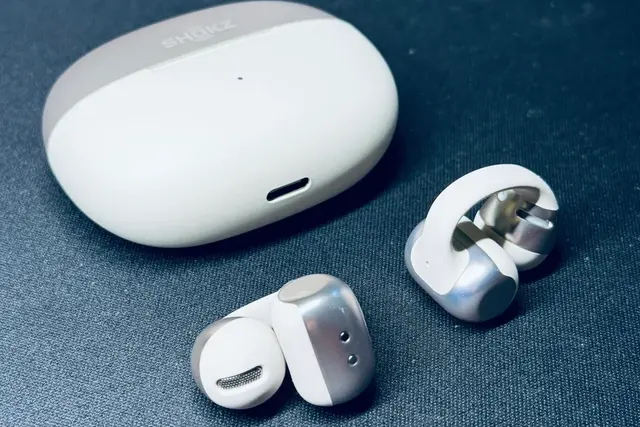
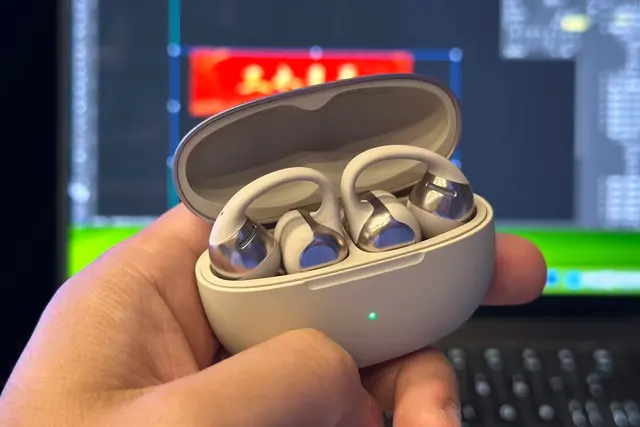
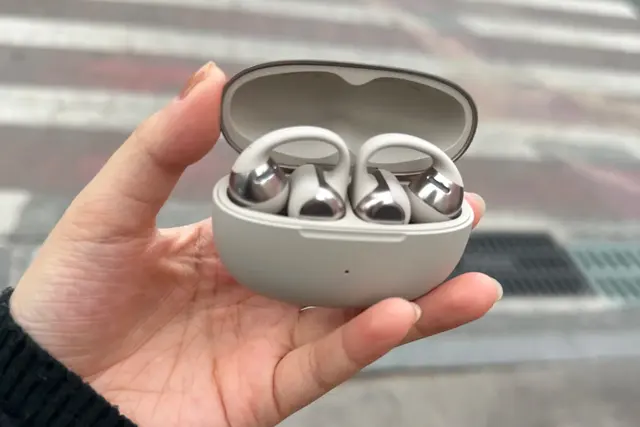
• The charging case is a little large: It is noticeably larger than an AirPods case, and it makes a noticeable bulge in a jeans pocket.
• I found that they provided essentially no noise cancellation. They are open-ear headphones, so anyone who wants active noise cancellation should look elsewhere.
To sum up
If you are like me
✅ In-ear headphones make your ears hurt
✅ You wear glasses
✅ You often commute or exercise
✅ You want headphones that are comfortable to wear and also sound good
Then I’d genuinely recommend going for these. They are expensive, but when you think about using them every day, wearing comfort matters most. After all, you only get one pair of ears.
By the way, the white version looks great. I bought the white one, and its matte finish is very easy on the eyes. If anyone has questions, feel free to ask in the comments.
Source: 爱倒腾数码的小张 · Xiaohongshu · 2026-03-05 · 韶音OpenDots ONE:戴了一天差点忘了它的存. Search this Chinese title in Xiaohongshu to find the original post.
Before You Buy
Models in your region
The owner’s post identifies the headphones as Shokz OpenDots ONE but does not establish the complete model number of the purchased unit. The official US page lists Shokz OpenDots ONE as clip-on open-ear earbuds with Dolby Audio, up to 10 hours per charge, 40 hours with the case, and IP54 earbud protection. The Chinese unit may differ in SKU or service coverage, so hardware equivalence is not established.
| Model in this review | Related regional model | What to know |
|---|---|---|
| Shokz OpenDots ONE | Shokz OpenDots ONE (US) | The owner’s Chinese-market OpenDots ONE has no full model number in the post. The regional product page identifies the US Shokz OpenDots ONE; its hardware and service coverage should not be assumed identical to the owner’s unit. |
- Model in this review
- Shokz OpenDots ONE
- Related regional model
- Shokz OpenDots ONE (US)
- What to know
- The owner’s Chinese-market OpenDots ONE has no full model number in the post. The regional product page identifies the US Shokz OpenDots ONE; its hardware and service coverage should not be assumed identical to the owner’s unit.
What the owner’s experience can tell you
The owner’s strongest result is comfort: after previously experiencing ear pain with another clip-on design, the owner wore the OpenDots ONE for six hours on the first workday, removing it only to eat. Glasses and sunglasses reportedly caused no pressure. This is one person’s experience, not a fit guarantee.
The owner also found the open design useful for commuting, because surrounding sounds and station announcements remained audible, and reported a secure fit while running and no ear pressure when lying on one side in bed. Those observations cover commuting, exercise and rest, rather than every activity or ear shape.
Battery and charging
The owner’s routine—two hours of commuting, an hour at lunch and additional workplace listening—lasted a full week before one recharge. That is an owner-reported usage result, not a controlled battery test. The owner quotes a local claim of 10+ hours per charge; separately, the official US listing advertises up to 10 hours per charge and 40 hours with the charging case. The regional claims use different wording; equivalent performance remains unconfirmed.
Wireless charging was a practical benefit for the owner, who kept the case on a desk charging stand between uses. Buyers should confirm that the local package and charging setup match the product they are purchasing, because the linked product page covers only the US version.
Sound, awareness and noise control
The owner considered the sound better than expected for an open-ear design, while still below the performance of in-ear headphones in the 1,000-yuan range. The owner particularly liked clear introductory drumbeats and an immersive impression on a Mayday live recording, but described the assessment as non-professional.
The owner reported no audible leakage to a nearby colleague at 60% volume on the subway and acceptable leakage performance in an office. This was a single informal check, so the result may change with volume, background noise, distance and content.
Open-ear listening preserves awareness of nearby sound, but it does not replace noise isolation. The owner reports essentially no noise cancellation and advises shoppers seeking active noise cancellation to look elsewhere. That is the owner’s observation, not an independently verified ANC specification.
Case size and regional buying checks
The owner described the charging case as noticeably larger than an AirPods case and bulky in a jeans pocket. Buyers who carry a case in small pockets should weigh that daily inconvenience.
For regional comparison, the linked regional documentation covers the US Shokz OpenDots ONE and lists IP54 protection for the earbuds, along with the advertised battery figures. It does not establish that the owner’s Chinese unit has the same SKU, protection rating or service coverage, so local buyers should verify those details before treating the US specifications as their own.
Related Reading
Reviews & Guides · Instruments & Audio
Shokz OpenDots ONE: a first afternoon of calls and a 10 km run
I wore the Shokz OpenDots ONE for calls, two to three hours of comfort and a 10 km run, but still prefer bone-conduction headphones for heavy exercise.
Reviews & Guides · Instruments & Audio
Shokz OpenDots ONE (E310): two hours testing fit and sound
I wore the Shokz OpenDots ONE E310 for two hours and found strong highs and lows, stable but slightly pinching fit, and limited leakage at full volume.
Reviews & Guides · Instruments & Audio
Shokz OpenDots ONE E310 vs my noise-cancelling AirPods: notes for AirPods 4 ANC buyers
I compared Shokz OpenDots ONE E310 with my noise-cancelling AirPods. The clip-on pair felt light and breathable; AirPods paired more smoothly and isolated subway noise better.