
BISSELL 2767Z: water marks and self-cleaning notes for CrossWave Cordless Max buyers
I kept the BISSELL 2767Z for its larger tanks, but self-cleaning leaves a wet roller and a puddle. My half-hour mop comes with 15 more minutes of cleanup.
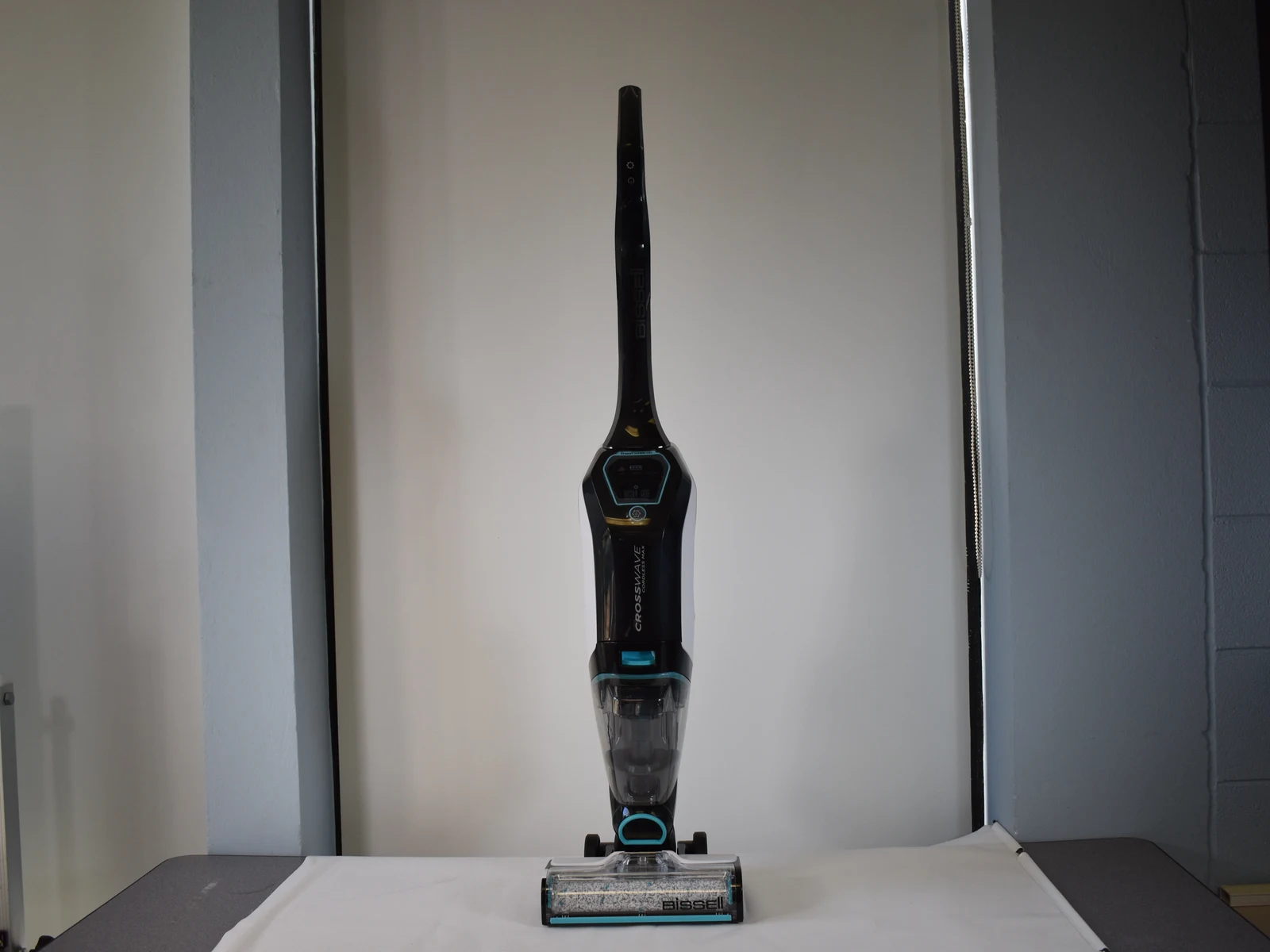
Before buying BISSELL, I read many reviews on forums and e-commerce platforms, but none mentioned the problems I encountered. Maybe everyone thinks these problems do not count as problems, or maybe everyone else’s machines work normally and mine is unusual. However, these issues made cleaning very troublesome for me. The BISSELL 2767Z is a third-generation Pro smart floor washer with one-button intelligent cleaning. It sounded perfect, and before buying it I imagined that it would be excellent. (Before buying the BISSELL, I first bought a Tineco Floor One. After it arrived, I found some things about the Tineco unsatisfactory, so I immediately ordered the BISSELL as well. In the end I kept the BISSELL because it can dry mop: it can wipe without spraying water, rather than only offering dry vacuuming. In southern China, March and April are humid, rainy months, so I needed dry mopping.)
Cleaning performance and water marks
Online reviews suggested that the BISSELL 2767Z could clean dirt and hair in a single pass without needing rework, and that water marks were almost invisible compared to earlier models. I thought buying the 2767Z was a safe bet, but the reality proved otherwise. Water marks were still quite obvious on my glazed tile floors. In the kitchen, which has polished tiles, water marks were less noticeable. However, after cleaning, lifting the floor washer consistently left a horizontal streak of dirty water. Customer service advised me to keep suctioning for longer. I tried suctioning for 20 seconds and the streak was still there, meaning I had to move the machine back and forth without spraying water for several minutes before lifting it. Otherwise, a dirty water mark remained on the floor. While the Tineco also left occasional streaks when lifted or pulled backward, its short-bristle roller seemed to leave the floor looking somewhat cleaner overall, whereas the BISSELL’s longer bristles left noticeable dirty water marks in certain areas.
Machine weight and tank capacity
Although the machine has wheels, mopping with it is still tiring. I had to continually switch between my left and right hands. The Tineco offered more forward propulsion assistance and felt lighter in hand, though that was likely because the machine itself is smaller.
On the other hand, the Tineco’s clean and dirty water tanks were both quite small. During a 30-minute cleaning session, I had to refill clean water once or twice and empty dirty water at least once. With the BISSELL, after mopping for the same 30 minutes, half of the clean water tank was still full, and the dirty tank only prompted for emptying after running the self-cleaning cycle. Tank capacity was a key reason I kept the BISSELL: no need to refill or empty halfway through.
Self-cleaning issues: my biggest frustration
Damp roller: After running the self-clean cycle, an excessive amount of water remained on the roller. I had read that previous models spun the roller nearly dry, so I was surprised by how wet the 2767Z’s roller remained—water could literally be wrung out by hand. The reviews never mentioned this.
Puddle on the charging base: After one-button self-cleaning, a puddle of water collected on the docking base. I had to wipe it dry with tissues or a cloth each time. Three paper towels were not enough; I needed five. If I used a rag, my hands got dirty. A self-cleaning feature that still requires manual cleanup defeats much of the convenience. The Tineco handled this much better: its roller was spun much drier and no water pooled on the base.
Roller cover and hair pickup: Opening the roller cover was physically difficult every time. There were some lint fibers on the inside of the cover, and hair occasionally wrapped around the roller despite claims that hair would not tangle easily. On the positive side, the BISSELL had less debris buildup around the intake port than the Tineco.
Summary
Although the BISSELL is heavy, tiring, and less automated than the Tineco, the Tineco felt overly finicky for me—its voice prompts repeatedly insisted on emptying the dirty tank even after it was just emptied. Apart from being heavy, leaving damp rollers, and pooling water on the base, the BISSELL is an acceptable workhorse for general household cleaning. My home is around 75 square meters. After cleaning the kitchen, living room, and balcony, one or two battery bars remained—enough to run the self-cleaning cycle. Mopping took about half an hour, while the self-cleaning and post-cleaning wipe-down added another 15 minutes.
Source: 格拉迪娃 · Zhihu · 2021-01-14 · 必胜2767Z真实体验:智能一键清洗有多糟糕. Original post
Before You Buy
Models in your region
The owner identifies the tested product as the China-market BISSELL 2767Z. The official regional evidence supplied here identifies related CrossWave Cordless Max products in the US and Australia, not the owner’s exact Chinese-market model, so the rows below should be read as regional counterparts rather than confirmed identical specifications.
| Model in this review | Related regional model | What to know |
|---|---|---|
| BISSELL 2767Z | CrossWave Cordless Max 2554A (US) | The US CrossWave Cordless Max 2554A is a related model to the China-market 2767Z. The evidence does not confirm that 2767Z and 2554A have identical hardware, runtime or self-cleaning behaviour. |
| BISSELL 2767Z | CrossWave Cordless Max 2765F (Australia) | The Australian CrossWave Cordless Max 2765F is a related model to the China-market 2767Z. The Australian model is specified for 220–240 V AC, 50–60 Hz; equivalence with 2767Z is not confirmed. |
- Model in this review
- BISSELL 2767Z
- Related regional model
- CrossWave Cordless Max 2554A (US)
- What to know
- The US CrossWave Cordless Max 2554A is a related model to the China-market 2767Z. The evidence does not confirm that 2767Z and 2554A have identical hardware, runtime or self-cleaning behaviour.
- Model in this review
- BISSELL 2767Z
- Related regional model
- CrossWave Cordless Max 2765F (Australia)
- What to know
- The Australian CrossWave Cordless Max 2765F is a related model to the China-market 2767Z. The Australian model is specified for 220–240 V AC, 50–60 Hz; equivalence with 2767Z is not confirmed.
What the owner valued
The owner kept the BISSELL because its dry-mopping mode could wipe without spraying water, which mattered during the rainy season in southern China. That preference is specific to the owner’s 2767Z experience and should not be assumed to describe every regional CrossWave model without checking its local controls and documentation.
The owner also preferred the BISSELL because it required fewer tank interventions in practice than the Tineco Floor One: after about 30 minutes of mopping, the BISSELL still had roughly half its clean-water tank, while the Tineco needed one or two refills and about one dirty-water emptying. This was one owner’s comparison, not a controlled test.
Water marks and handling
The owner reports visible water marks, especially after lifting or pulling the machine backward, and says that repeated passes without spraying could take several minutes to reduce them. The result varied with the floor: marks were more noticeable on the owner’s glazed tiles than on the kitchen’s polished tiles.
The owner found the 2767Z heavy and tiring despite its wheels, and changed hands repeatedly while mopping. Buyers who are sensitive to steering effort should treat this as an experience warning rather than infer a precise weight or motor-performance difference, because no comparative measurement was supplied.
Self-cleaning still required attention
The owner’s main complaint was that the roller remained wet enough to wring out after self-cleaning, while the docking base held a puddle that required three tissues plus two more, or a cloth, to dry. The owner therefore found that the one-button cycle still required manual drying and maintenance.
The owner also found hair and lint on the roller and found the cover difficult to open, although the BISSELL’s main suction opening collected less debris than the compared Tineco. These observations show that self-cleaning did not eliminate the need to inspect and manually maintain the roller, cover and dock.
What regional buyers should verify
For US buyers, the official CrossWave Cordless Max 2554A is advertised as a cordless vacuum-and-wash cleaner with dual tanks, a self-cleaning dock cycle and up to 30 minutes of runtime. That advertised runtime is for 2554A and does not validate the China-market 2767Z experience or guarantee a particular cleaning area.
For Australian buyers, the official CrossWave Cordless Max 2765F documentation specifies dual-tank wet/dry cleaning and a 3-in-1 Docking Station Clean Out Cycle button. It is intended for a 220–240 V AC, 50–60 Hz supply, so buyers should use the local model and electrical documentation rather than import the China-market 2767Z based on the shared product family name.
The roller moisture, dock puddle and floor marks reported for the 2767Z have not been confirmed for the US 2554A or Australian 2765F. Those points remain unverified for local counterparts and are worth checking in region-specific reviews or the return policy.
Related Reading
Reviews & Guides · Appliances
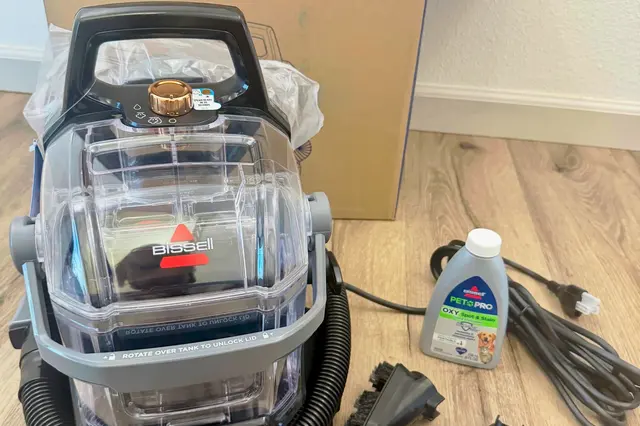
Bissell Little Green HydroSteam Pet: sofa-cleaning notes for SpotClean HydroSteam buyers
I tried the Bissell Little Green HydroSteam Pet on my pale sofa. Most marks came out, and seeing the dirty water was satisfying and slightly horrifying.
Reviews & Guides · Appliances
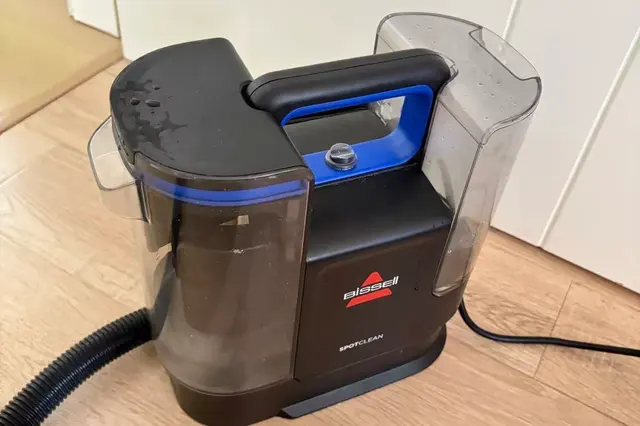
Bissell SpotClean C2: portability notes for SpotClean ProHeat 52074 buyers
I expected the Bissell SpotClean C2 to be bulky. Instead, I can carry it with one hand and tuck it into a cupboard—a welcome fit for my small home.
Reviews & Guides · Appliances
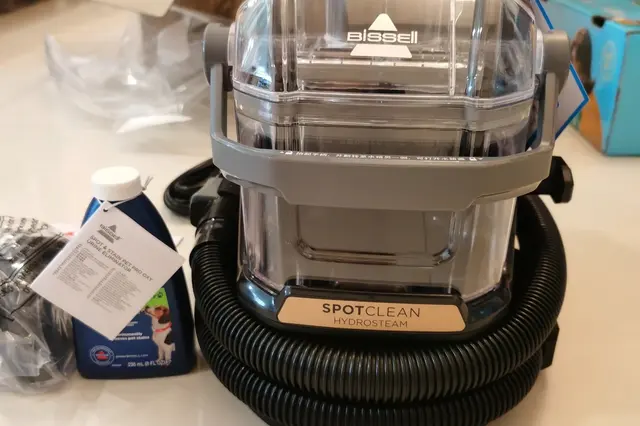
Bissell SpotClean HydroSteam 3697Z: wet-mattress notes for Little Green HydroSteam buyers
I bought the Bissell 3697Z after my dog wet the bed. Cleaning left the mattress very wet, and the small tank and short hose made it harder than I expected.