
BWT CubIQ: under-sink cabinet-fit notes for WS 555 buyers
I fitted BWT CubIQ into a tight under-sink space without altering my cabinets; its angled salt inlet makes refilling less messy.
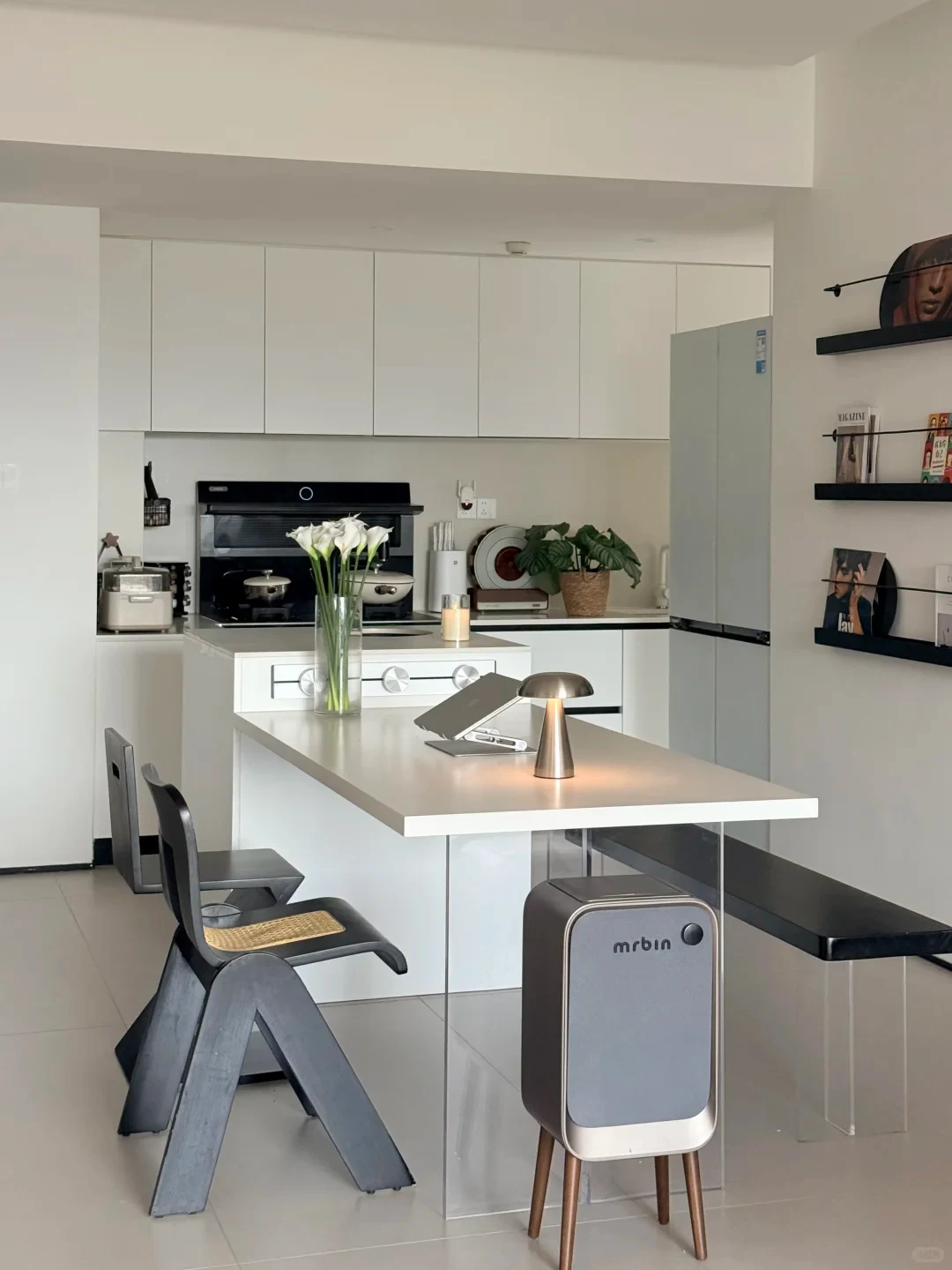
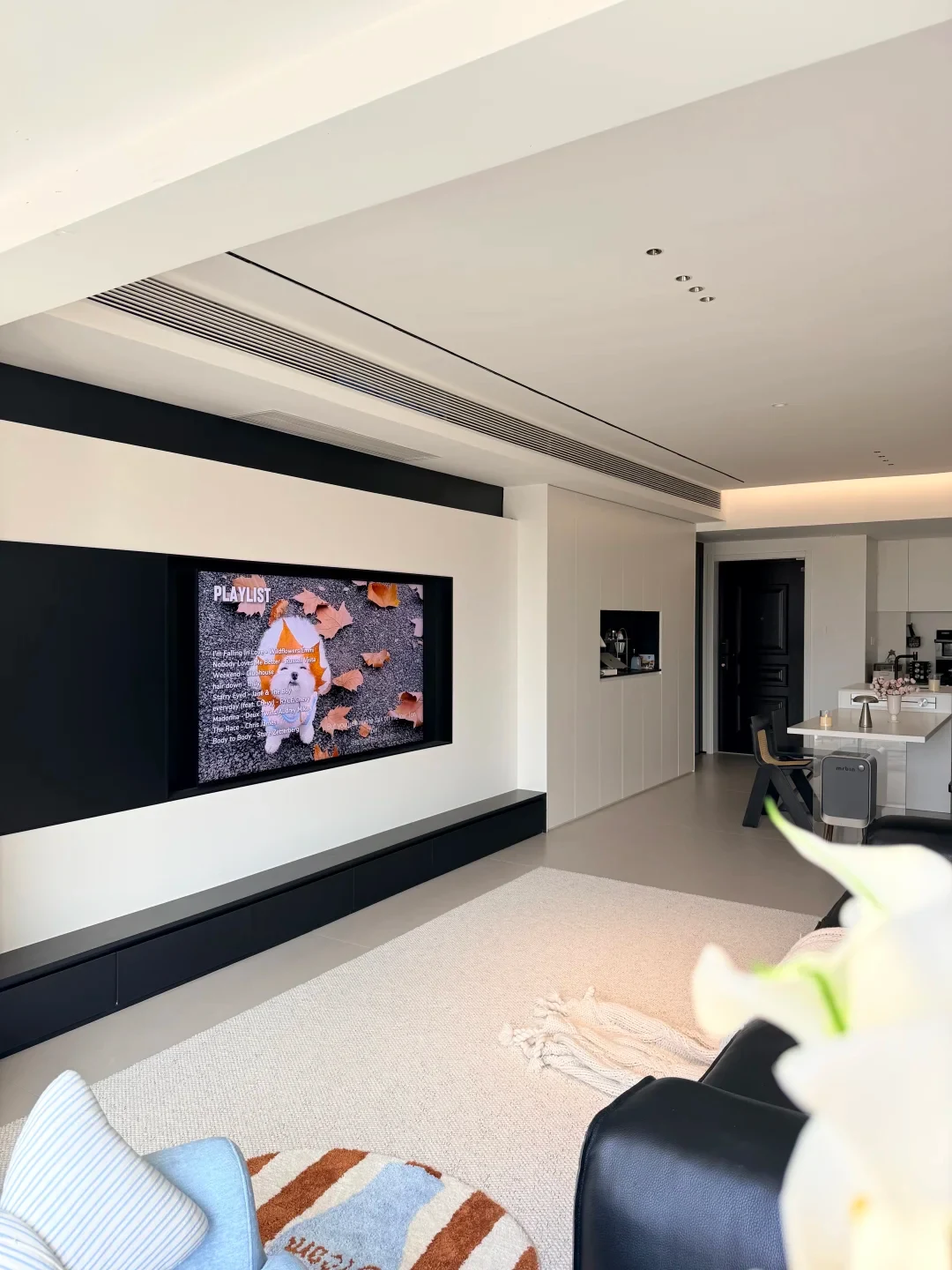
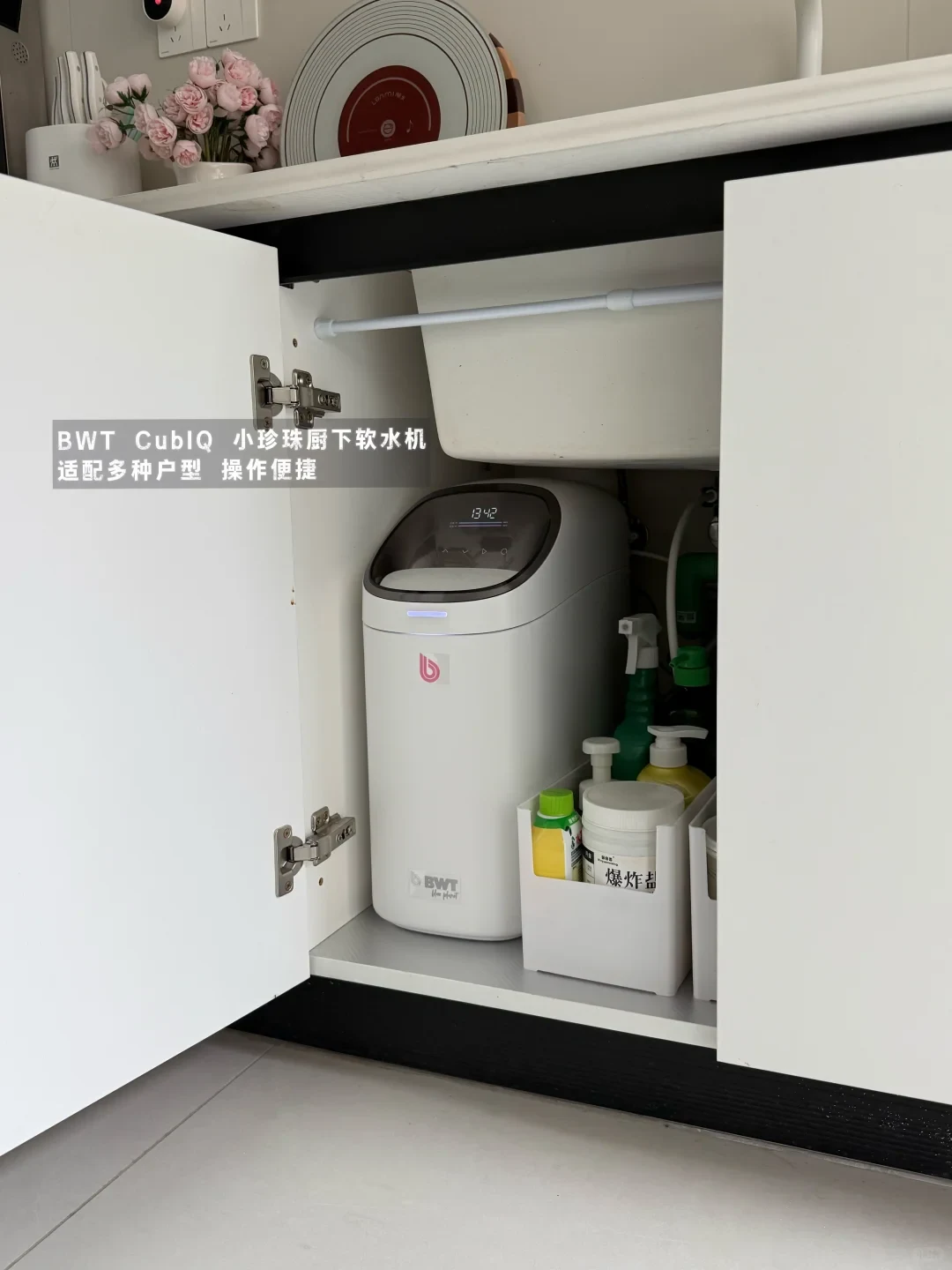
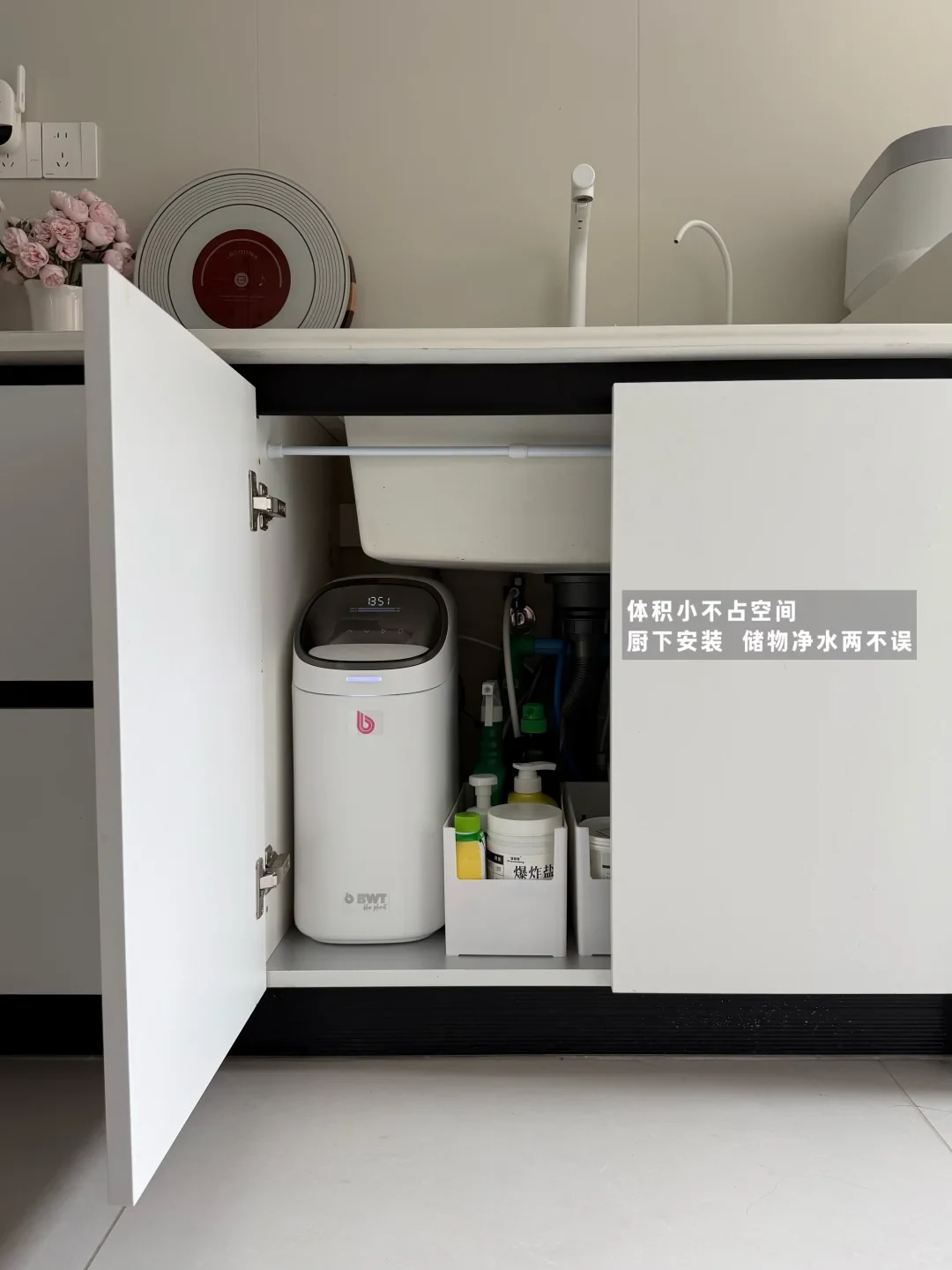
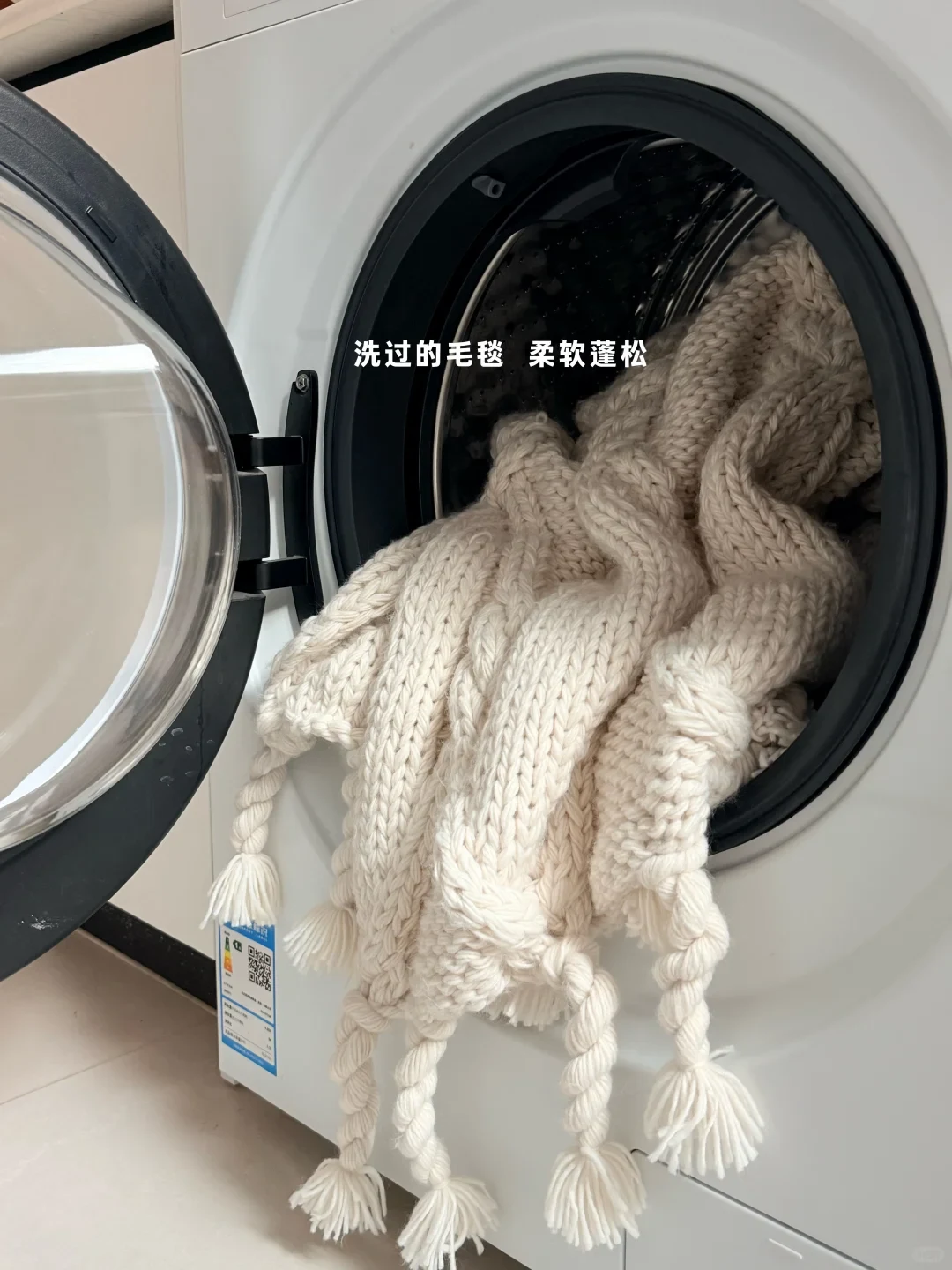
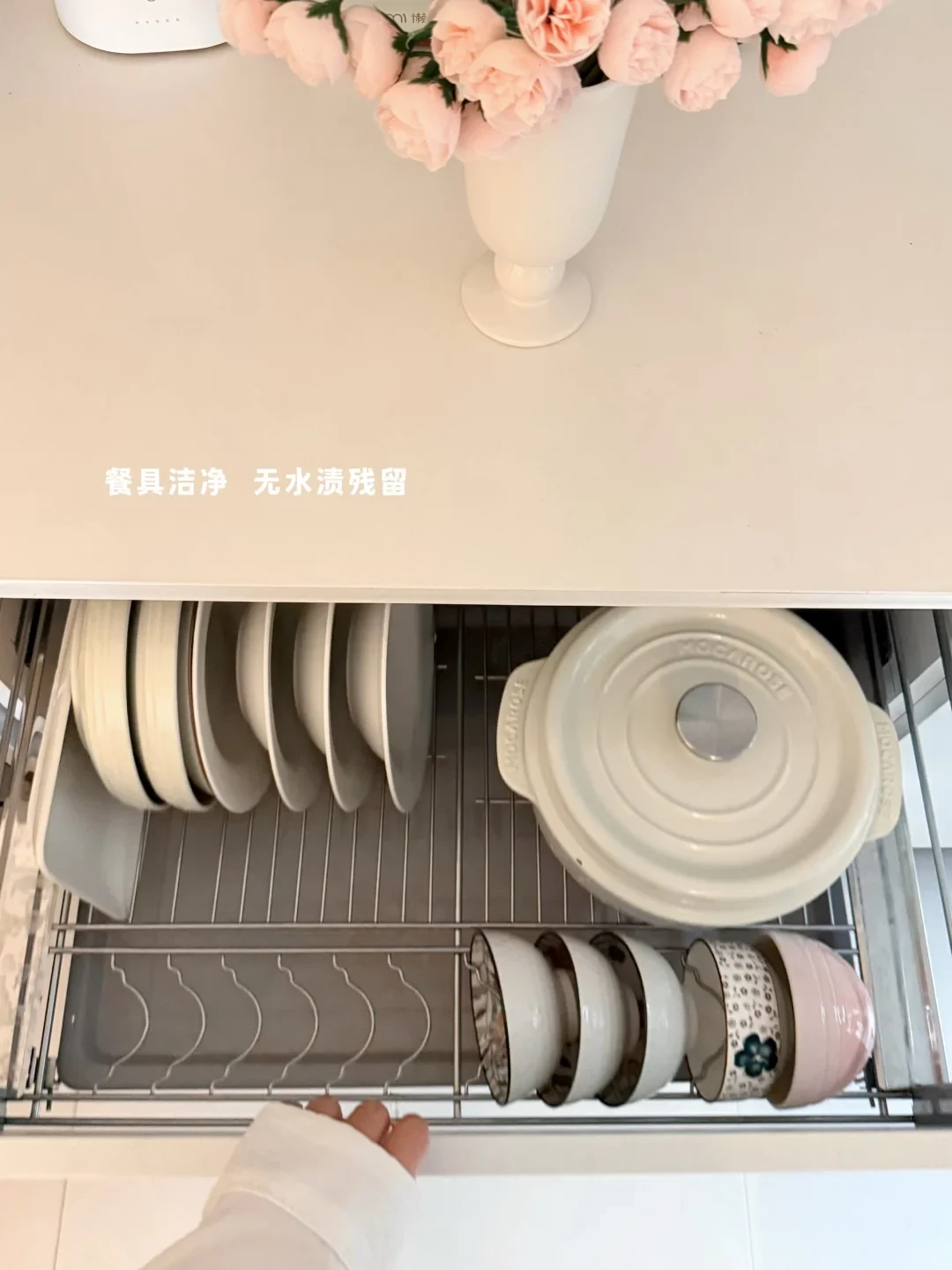
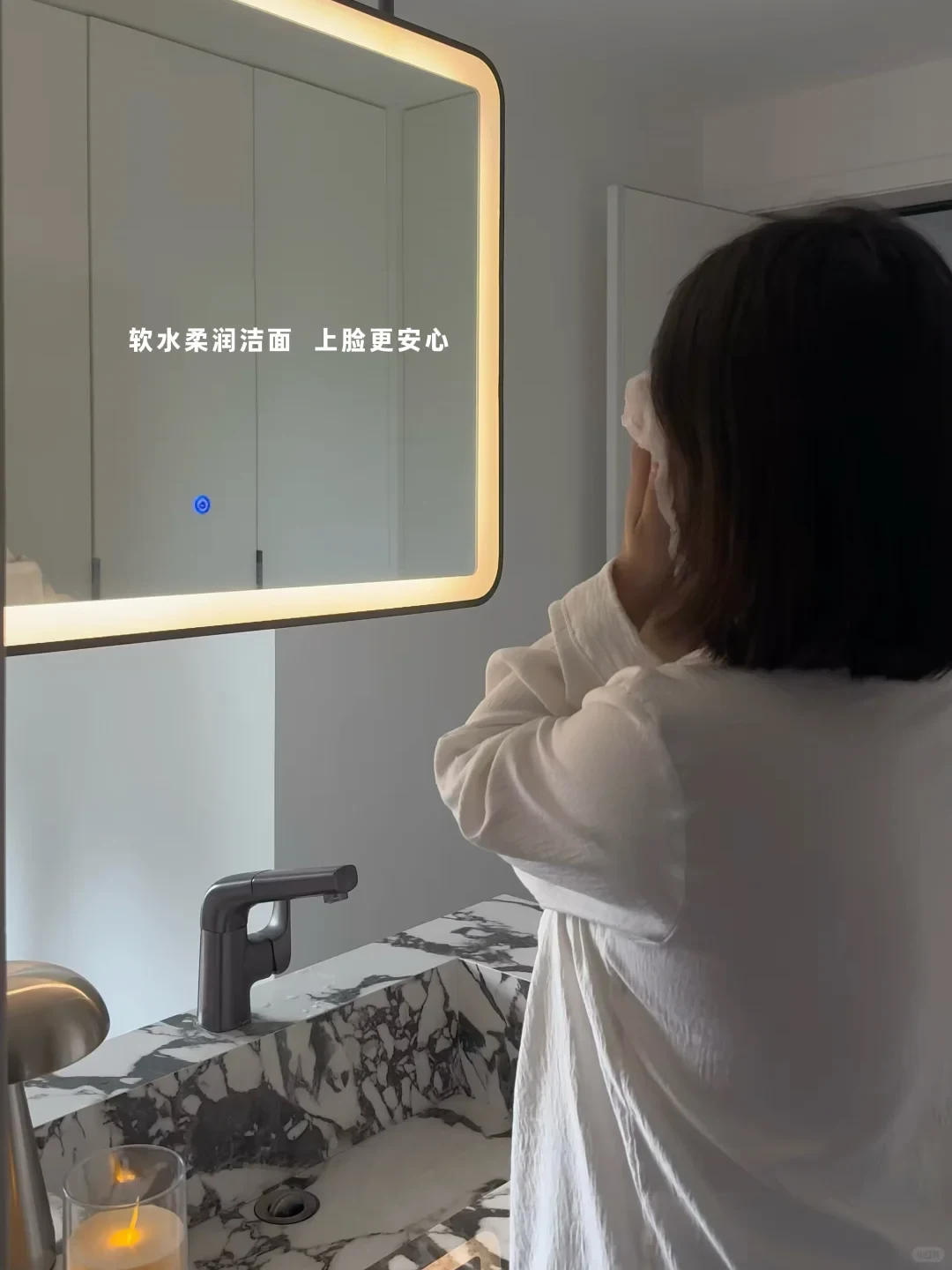
After living in this home for two years, I had already learned some hard lessons while choosing a water softener.
Many water softeners on the market have bulky bodies, and they simply cannot fit when cabinet space is limited.
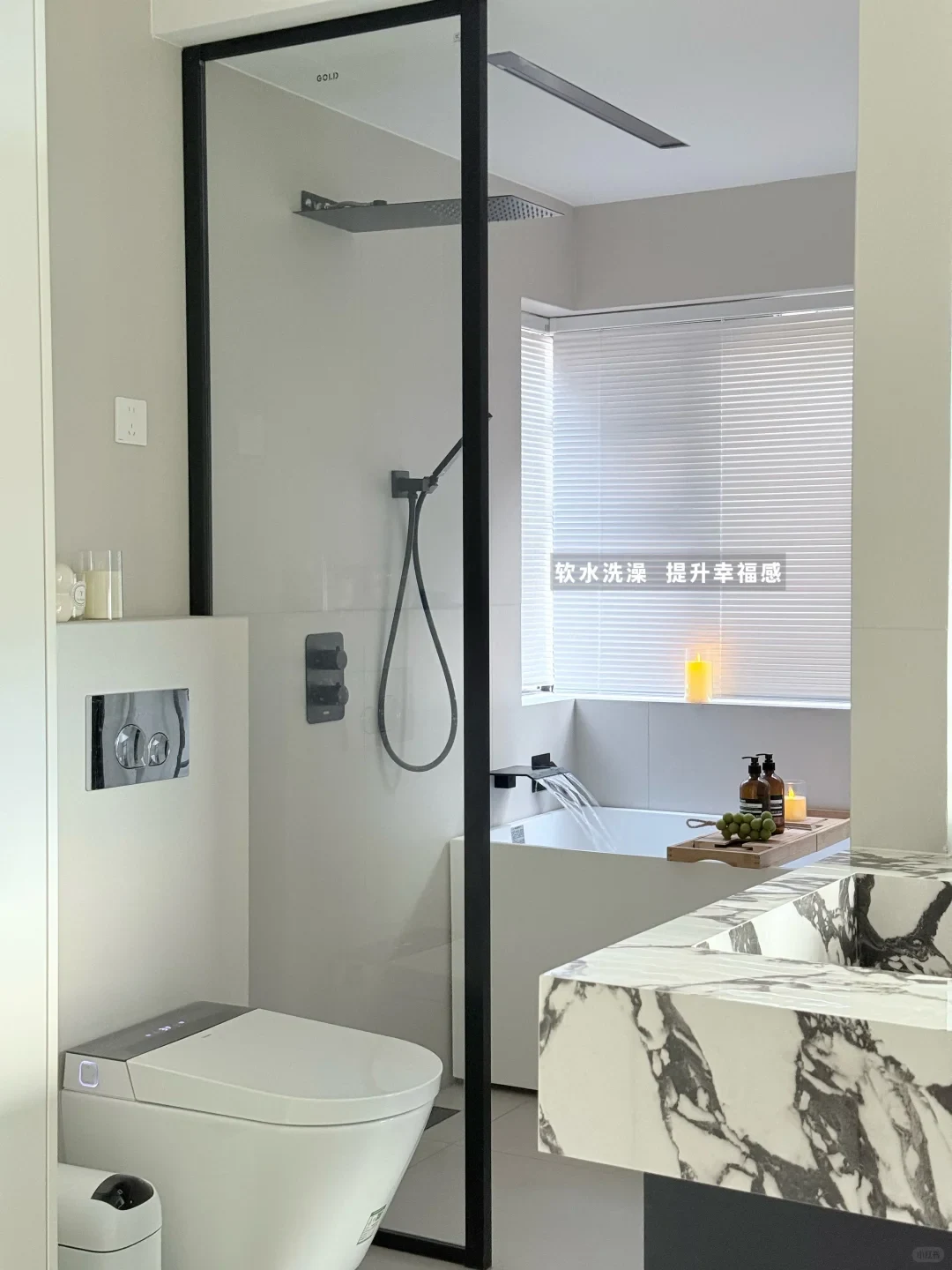
My home has a black-and-white minimalist style, with the kitchen opened up into an open-plan space.
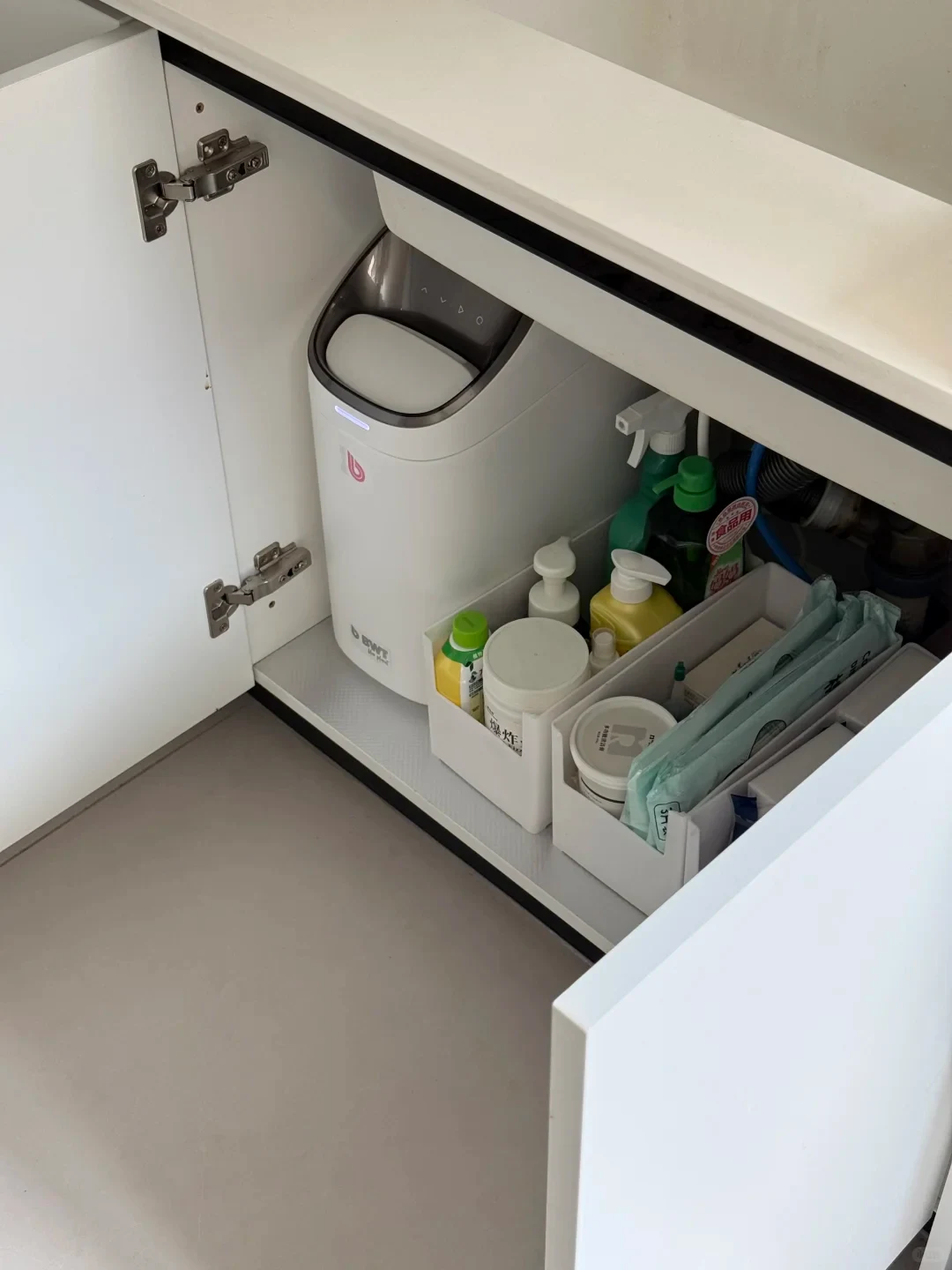
The space reserved under my kitchen sink was already very compact, so at one point I thought a water softener would be impossible to install.
Installation restrictions were the most frustrating part of choosing a water softener.
After comparing several models, I settled on the BWT CubIQ compact under-sink water softener.
Its compact 43.9 cm body can fit under a sink even when space is tight.
It did not require changes to my existing cabinets, and its appearance is simple and clean.
It also suits my black-and-white minimalist style very well.
Clothes come out of the wash soft and fluffy, and they are less likely to become stiff or yellow.
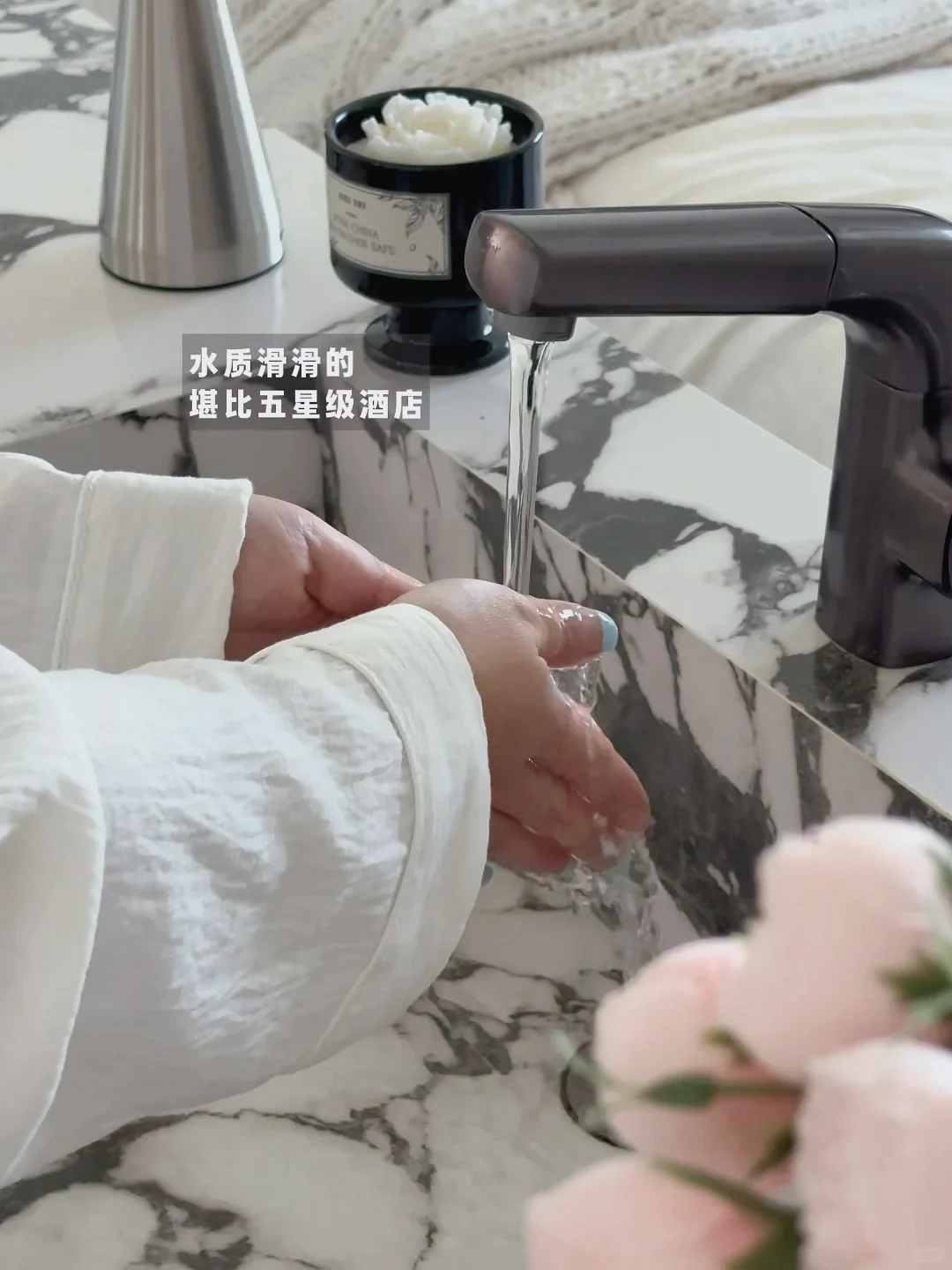
When I wash fruit and vegetables, there is no white limescale residue left on their surfaces.
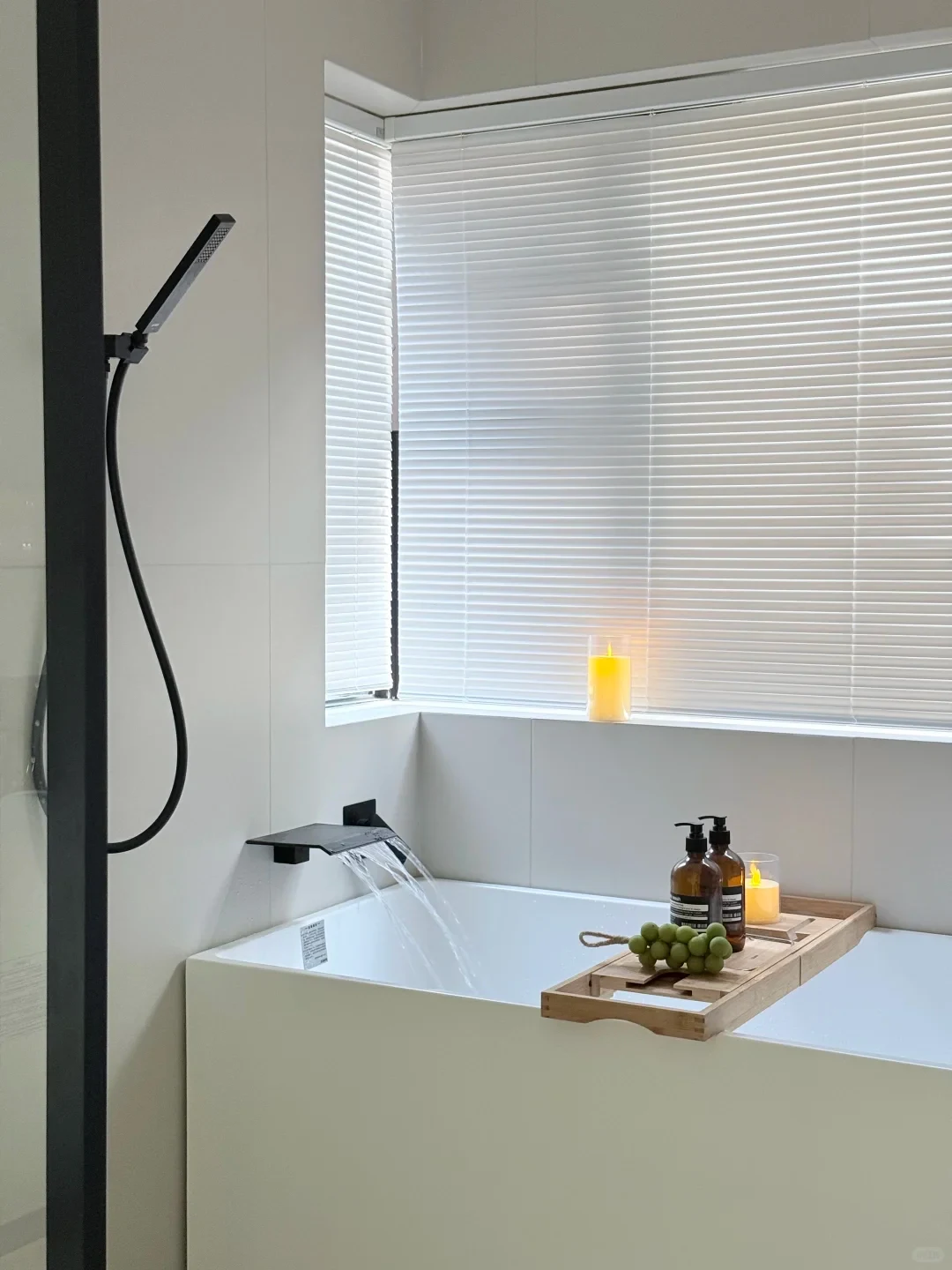
The showerhead and taps are also less likely to accumulate limescale.
It makes cleaning and general upkeep much easier, which is genuinely appealing if you are particular about cleanliness.
It also has an automatic regeneration system.
It calculates regeneration automatically according to household water use, which saves salt and water.
It uses a self-developed multi-way valve together with a supercapacitor.
If the power fails, it automatically closes the valve, reducing the risk of leaks.
Its specially formulated resin is designed to provide higher exchange efficiency and greater durability.
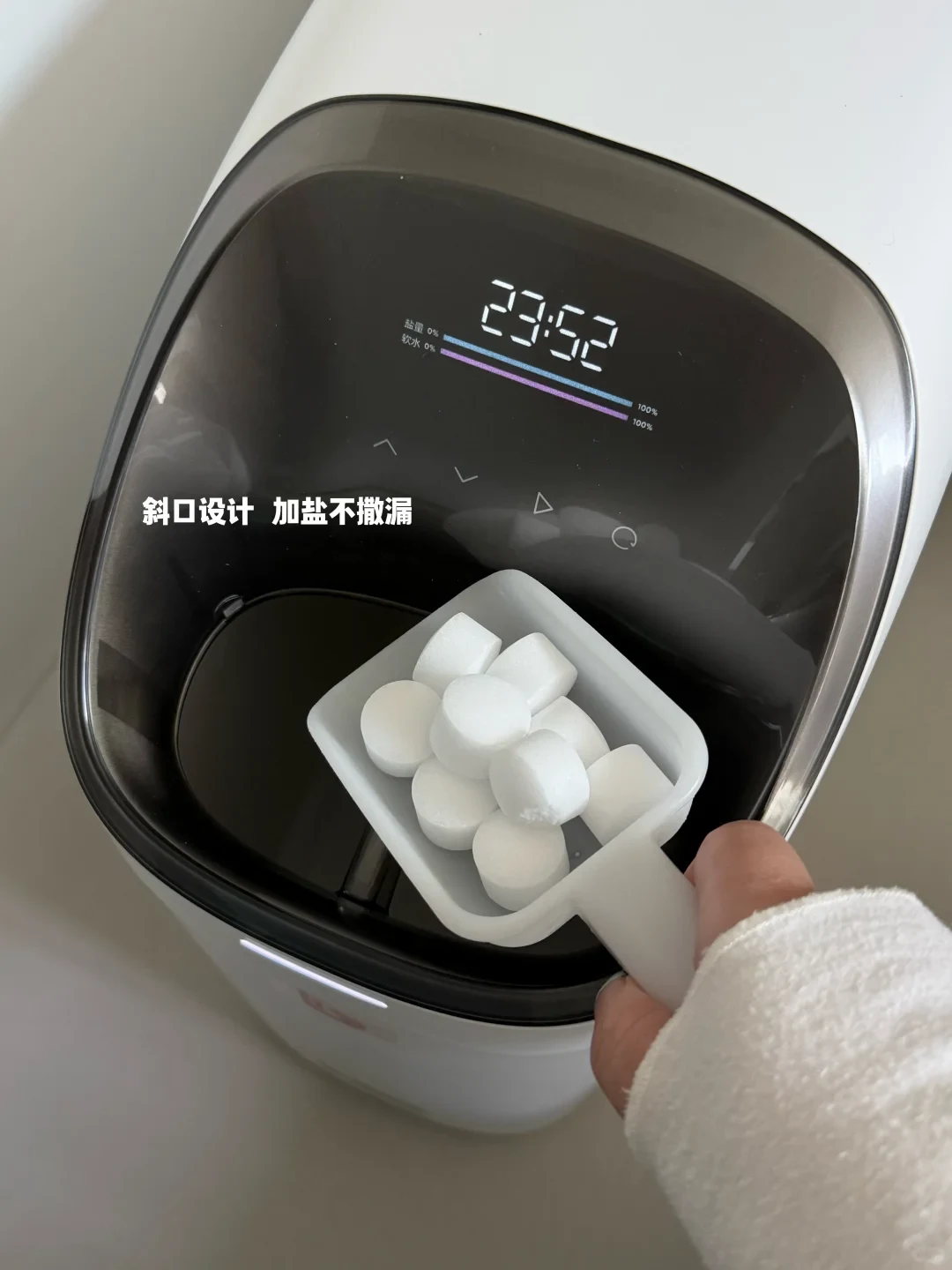
When the salt level falls below 20%, laser detection automatically sends a reminder.
The salt inlet has a 30-degree angled funnel design, so salt is less likely to spill everywhere when I pour it in.
It supports phone-app connectivity, letting me check water-use data and the appliance’s operating status at any time.
Choosing equipment during a renovation does not have to mean making an uncomfortable compromise.
Even a small space can have the comfort of softened water throughout the home.
In my own little corner of the world,
I can take life slowly and comfortably.
Source: 颖yy · Xiaohongshu · 2026-10-15 · 111㎡黑白极简家,厨下藏了台小珍珠✨. Search this Chinese title in Xiaohongshu to find the original post.
Before You Buy
Models in your region
The UK product supplied for comparison is the BWT WS 555, a same-brand softener rather than an identical or officially documented regional version of the Chinese-market BWT CubIQ. The UK model measures 270 × 480 × 602 mm, uses a 230 V AC supply with a 12 V transformer, and includes UK 22 mm hose and valve fittings plus 3/4-inch BSP connections. The source account’s 43.9 cm CubIQ body, app connectivity and other CubIQ-specific features should not be assumed to apply to the WS 555.
| Model in this review | Related regional model | What to know |
|---|---|---|
| BWT CubIQ | BWT WS 555 (UK) | This is the compact BWT model used by the owner; the official UK comparison is the BWT WS 555, not an identical regional CubIQ. The WS 555 is 270 × 480 × 602 mm and uses UK-specific 22 mm hose and valve fittings with 3/4-inch BSP connections. |
- Model in this review
- BWT CubIQ
- Related regional model
- BWT WS 555 (UK)
- What to know
- This is the compact BWT model used by the owner; the official UK comparison is the BWT WS 555, not an identical regional CubIQ. The WS 555 is 270 × 480 × 602 mm and uses UK-specific 22 mm hose and valve fittings with 3/4-inch BSP connections.
Cabinet fit is the owner’s main reason for choosing it
The owner’s under-sink cabinet was already too tight for many full-size softeners, and she reports fitting the BWT CubIQ without modifying the existing cabinetry. Her cited body height is 43.9 cm, but the source does not provide the CubIQ’s complete width, depth, clearance or connection requirements, so buyers still need to measure the cabinet and confirm installation details before ordering.
For UK buyers, the official BWT WS 555 comparison is a different product rather than a regional CubIQ listing. Its published dimensions are 270 × 480 × 602 mm, and its installation kit is specified for UK 22 mm hose and valve fittings with 3/4-inch BSP connections. Those figures cannot be used to confirm that the owner’s CubIQ will fit a UK cabinet.
The reported household benefits are practical but not independently measured
The owner reports softer, fluffier laundry, less stiffness or yellowing, fewer white marks on washed fruit and vegetables, and less limescale on taps and shower hardware. These are her household observations; the source does not include water-hardness readings, before-and-after measurements or a controlled test, so they should not be treated as universal performance results.
The owner also attributes easier upkeep to the reduced limescale she observed. That may matter most in bathrooms and kitchens where mineral deposits are visible, but the account does not establish how quickly deposits formed, the household’s incoming-water hardness or the exact operating conditions.
Automation and salt handling may reduce routine attention
The owner says the CubIQ automatically calculates regeneration from household water use and reports that it saves salt and water. She also describes a low-salt alert below 20% and a 30-degree angled funnel that makes pouring salt less messy. The source does not provide measured salt consumption, regeneration frequency or the required salt format, so these features describe the reported convenience rather than a verified running-cost comparison.
The owner further identifies a multi-way valve, supercapacitor and automatic valve closure during a power failure, along with specially formulated resin. These are source-described product features; no independent test confirms the leak-risk reduction, exchange efficiency or durability claims.
Check regional controls and connectivity before buying
The owner says the CubIQ can connect to a phone app for water-use data and operating status. The official UK WS 555 page instead documents an electronic keypad for setting the time, incoming hardness and regeneration time, and does not establish a CubIQ-style app for that model. Buyers should therefore confirm the exact local model, controls and app support rather than transferring the owner’s connectivity experience to the WS 555.
The UK WS 555 documentation lists an operating-flow row of 5/30 L/min, but the same page has an inconsistent unit label in a separate maximum-flow row. That inconsistent row is not suitable for a performance comparison, and the supplied evidence does not establish an equivalent CubIQ flow figure.
Related Reading
Reviews & Guides · Appliances
BWT CubIQ under-sink installation: compact softening with WS 555 and BWT AQA drink Pro 20 buying context
I installed BWT's compact under-sink softener and integrated purifier-heater, routing softened household water separately from kitchen drinking water.
Reviews & Guides · Appliances
Harvey water softener: first-week rinsing and app notes for HarveyArc buyers
I installed a Harvey whole-house water softener and, after one week, found foam seemed harder to rinse while the app only reminded me about salt.
Reviews & Guides · Appliances
HarveyArc Water Softener Installation: An Early UK Owner Report
I arranged a HarveyArc installation after a home water-hardness reading of 320, with a separate filter offer and recurring salt and cartridge supplies.