
Reviews & Guides · Kitchen & Dining
KitchenBoss G310: tender meat, but too much waiting
Reviewed: KitchenBoss G310Regional reference: KitchenBoss G310 (EU (global store))
I found the KitchenBoss G310 made tender meat, but overnight prep, extra searing and cleanup made the process feel like too much work.
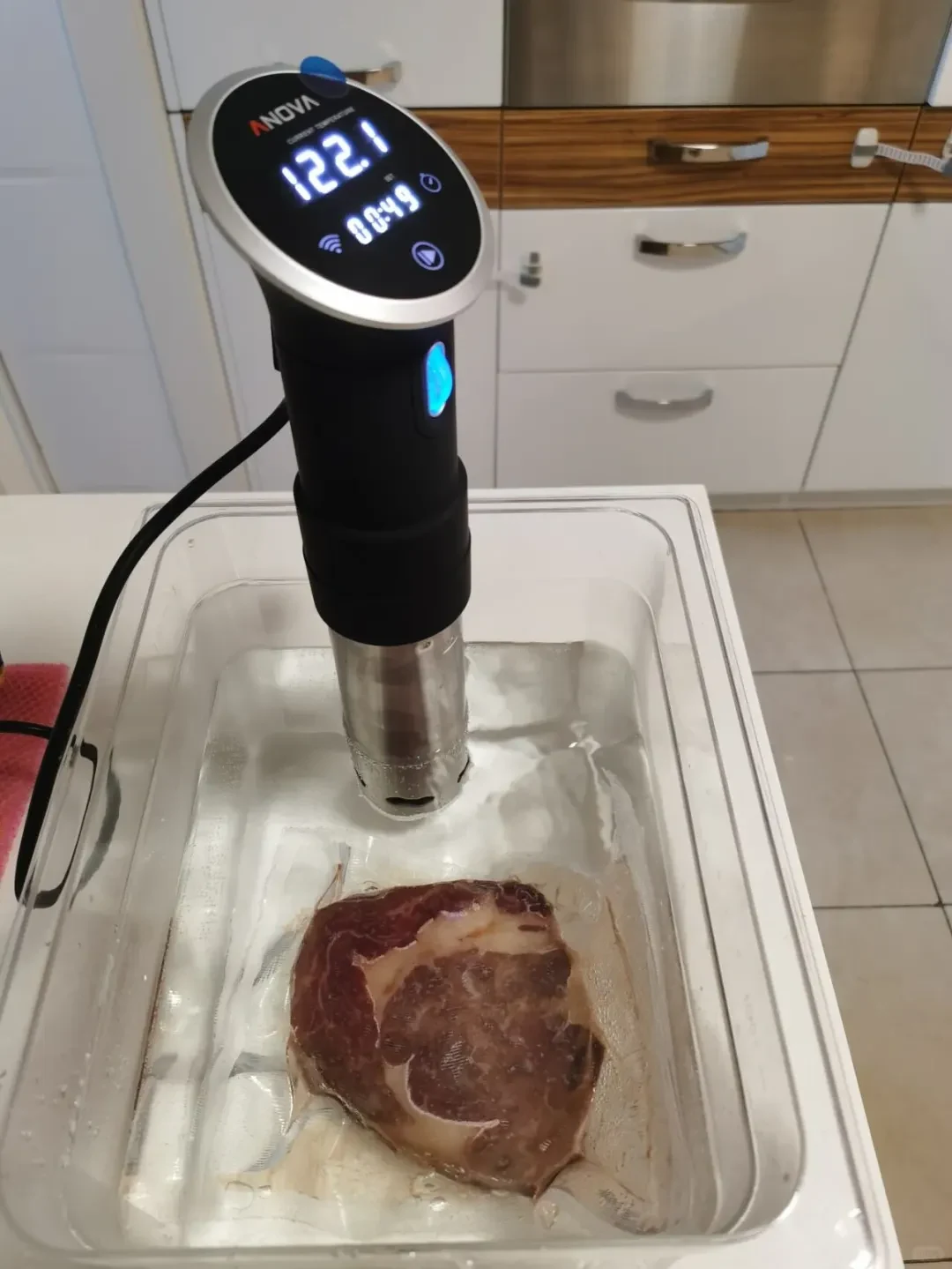
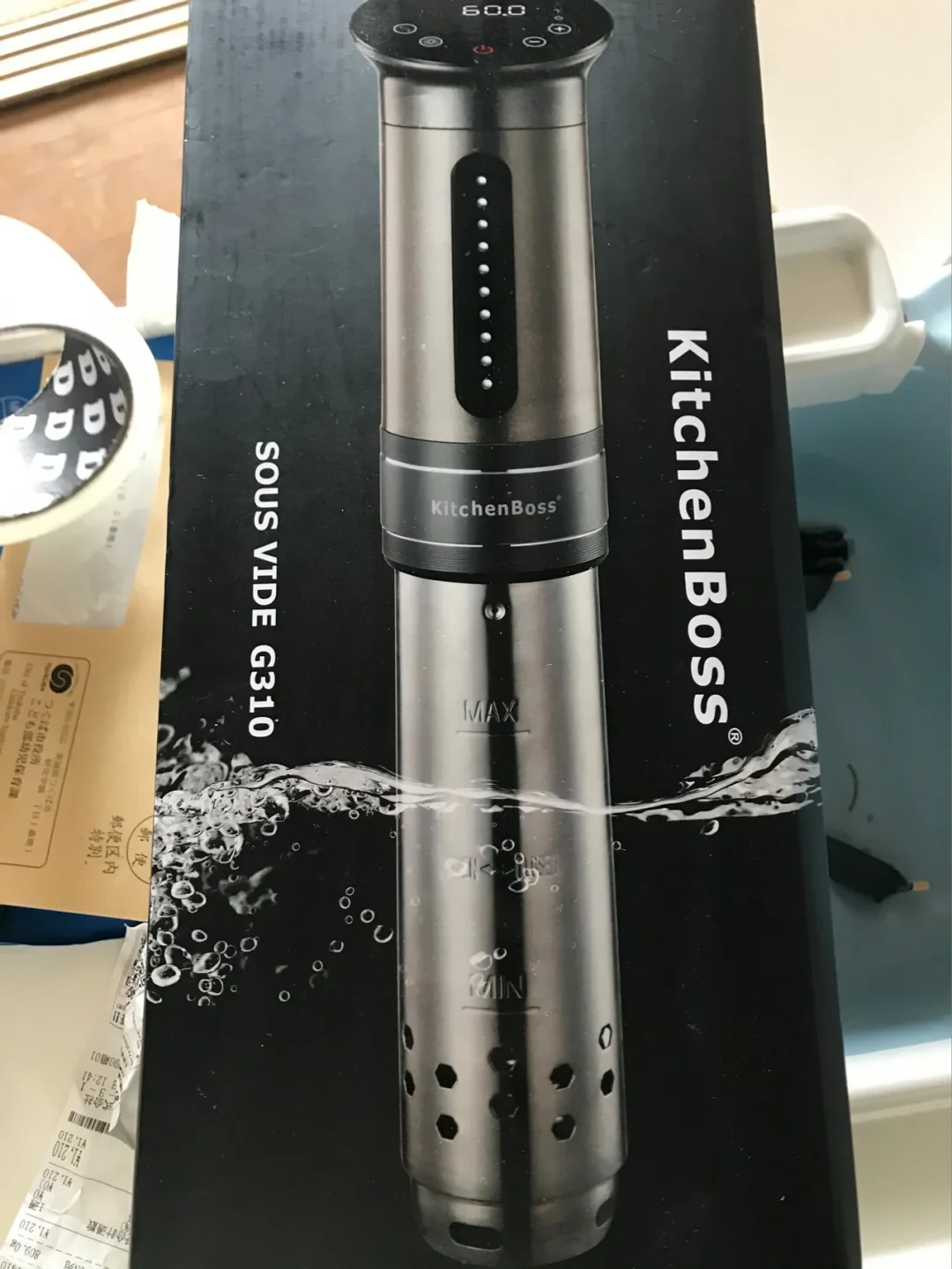

I haven’t posted on Xiaohongshu for a long time. Today I’m giving this sous-vide cooker away, and I’d better get my complaints out before I forget.
Around this time last year, determined to lose weight, I spent a lot on this sous-vide cooker. To make better use of it, I also spent a lot on a cookbook with 60 sous-vide recipes. I thought I’d turn into a Michelin-starred chef with those in hand. The thought was so exciting I could hardly sleep.
Reality hit hard. After an enthusiastic first few attempts, I really didn’t want to use it again.
I can’t help complaining about its downside: the very thing it advertises as its biggest advantage—taking its time.
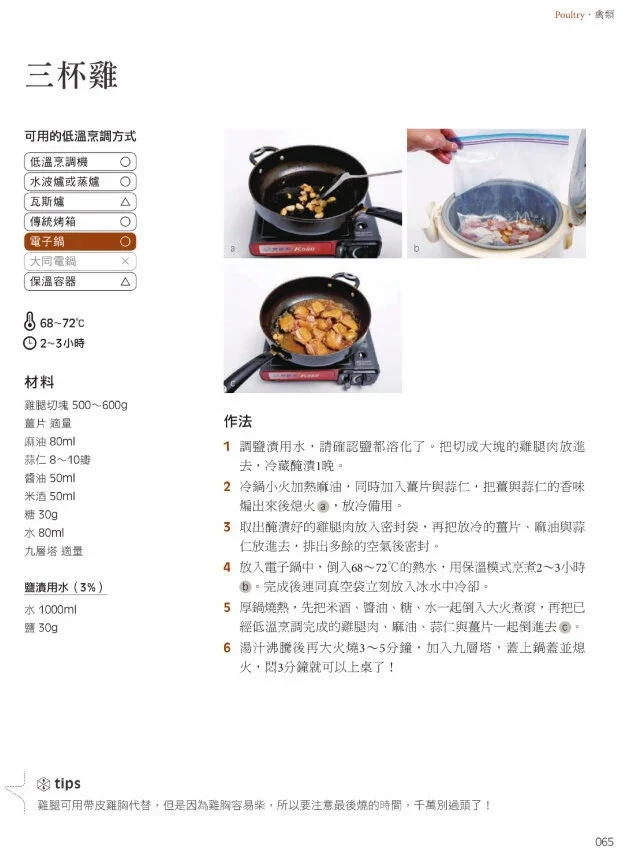
Just how slow is it? If you’re making three-cup chicken, you basically have to get things ready today to cook them tomorrow at the earliest.
Here’s an example: prepare and marinate all the ingredients, seal them in a bag, and refrigerate them overnight. The next day, set the sous-vide cooker, take the bag out, and choose a cooking duration based on the type and amount of food—anywhere from 2 to 100 hours. Fish and shrimp cook relatively quickly, in about 2–3 hours; chicken takes longer; pork trotters and beef tendon take the longest.
Let’s leave the marinating ratio aside for a moment: 1,000 ml of water with 30 g of salt means even half that amount—500 ml of water—needs 15 g of salt. Who uses 15 g of salt for one stir-fry? Salt doesn’t grow on trees, either.
So if you’re planning to eat this meal, the shortest wait is a day and a half, and the longest is three days. Never mind whether the electricity bill can take it; I can’t stand waiting that long to eat.
And can you eat the food as soon as the sous-vide cooker is done? No. You still have to put it in a pan to brown it; otherwise it looks pale and unappetizing. If I have to use a pan at the end anyway, why use the sous-vide cooker? It just means more cookware to wash.
After all that effort, it was time to taste the food. Honestly, I wasn’t especially impressed. The meat was tender, but I think a regular pan can do the job too if you get the timing right—and more simply and quickly.
It also didn’t turn me into a Michelin-starred chef, and I feel like it’s still a long way from that. Maybe I have an unusual fixation on Michelin-starred chefs; maybe my expectations were just too high. Either way, after trying it a few times, it didn’t even make it through its trial period before I banished it to the back of the cupboard.
All right, here’s my final summary of using it
Pros: Slow cooking brings out the details; the texture is decent.
Cons: It’s inefficient, and electricity is expensive in Japan. Compared with the improvement in texture, I care more about the electricity bill.
My advice to anyone thinking of buying a sous-vide cooker: treat it as a kitchen toy. If you really want one, get a secondhand one and play around with it. You might be selling it secondhand again before long.
Source: 居然是果然妈 · Xiaohongshu · 2020-03-16 · 关于低温慢煮机的吐槽. Search this Chinese title in Xiaohongshu to find the original post.
Before You Buy
Models in your region
The owner’s box identifies the owner’s cooker as a KitchenBoss G310, but the account does not establish the Japanese unit’s exact electrical rating or plug. The EU-market G310 is a useful regional reference, not proof that the owner’s unit has the same hardware.
| Model in this review | Related regional model | What to know |
|---|---|---|
| KitchenBoss G310 | KitchenBoss G310 (EU (global store)) | The source box and global listing both identify a G310, but the Japanese unit’s rating label is not shown. The global page offers an EU selection while its shared comparison table lists 110–120 V and 1100 W; confirm the voltage and plug on the local unit rather than transferring those figures to the owner’s cooker. |
- Model in this review
- KitchenBoss G310
- Related regional model
- KitchenBoss G310 (EU (global store))
- What to know
- The source box and global listing both identify a G310, but the Japanese unit’s rating label is not shown. The global page offers an EU selection while its shared comparison table lists 110–120 V and 1100 W; confirm the voltage and plug on the local unit rather than transferring those figures to the owner’s cooker.
The wait depends on the recipe, not just the cooker
The account describes overnight marinating followed by a cooking duration the owner says could range from 2 to 100 hours, with fish and shrimp taking about 2–3 hours. That was the experience and understanding after a few attempts, not a measured timing test across foods. The G300/G310 instructions describe preheating, sealing and submerging food, then cooking until the thickest part reaches the target temperature; they do not require every meal to be brined overnight or to take at least a day and a half.
KitchenBoss G310 · United Kingdom (multiregion G300/G310 instructions)
The cookbook page shown in the post gives one three-cup chicken recipe with a 3% brine and a 2–3 hour cook at 68–72°C. It is an example from a separately purchased cookbook, not evidence that every recipe requires that brine or cooking time—or that all the salt in the brine ends up in the food.
Count the finishing step and cleanup
For the owner, the workflow did not end when the cooker stopped: the owner browned the food in a pan and disliked having more cookware to wash. The manufacturer’s instructions also describe a quick sear as an optional finishing step, so buyers who want browned surfaces should factor in the pan and cleanup rather than treating sous-vide cooking as a one-device process.
The owner found the meat tender but not sufficiently better than food cooked in a regular pan to justify the time and extra work. That is the owner’s assessment after a few uses, not a controlled comparison of cooking methods; the account does not identify the particular cuts, recipes or pan-cooking conditions.
Treat the electricity concern as personal, not measured
The owner said electricity was expensive in Japan and that the perceived cost mattered more to the owner than the texture improvement. The owner did not measure the G310’s energy use or report a bill comparison, and the electrical rating of the Japanese unit is not established here; the EU-market listing’s 1100 W specification cannot confirm either point. Rated power is not an energy-use measurement; compare metered consumption for the cooking routine you actually plan to use.
Related Reading
Reviews & Guides · Kitchen & Dining
Breville Bambino after three and a half years: why I switched to Gaggia Classic E24
After three and a half years, my Bambino seemed to run cooler; I switched to a Gaggia Classic E24 for the beans we buy and roast at home.
Reviews & Guides · Kitchen & Dining
Gaggia Classic E24 daily routine: 18 g in, 36 g out
I make two coffees most mornings with my Gaggia Classic E24, weighing 18 g in and 36 g out. Pairing it with a Sculptor 064S helped me dial in.
Reviews & Guides · Kitchen & Dining
Gaggia Classic E24: 16-second shots and a changed temperature routine
I pulled roughly 26 g shots from 16 g of dark-roast coffee in my Gaggia Classic E24; a new flush routine seemed to slow them slightly, but I did not measure the change.