
Reviews & Guides · Kitchen & Dining
My ORIGAMI after three months: rinsing Wave papers and choosing cone filters
Reviewed: ORIGAMI Ceramic Dripper (size unspecified), Kalita Wave Filter 185, CAFEC T-90 Medium-Dark Roast paper filter (MC1-100)Regional reference: ORIGAMI Ceramic Dripper (source size unspecified) (United States)
I tried Wave and cone papers in my ORIGAMI for three months. Rinsing Kalita papers with 200 g of hot water, then hand-grinding, helped clear their papery smell.
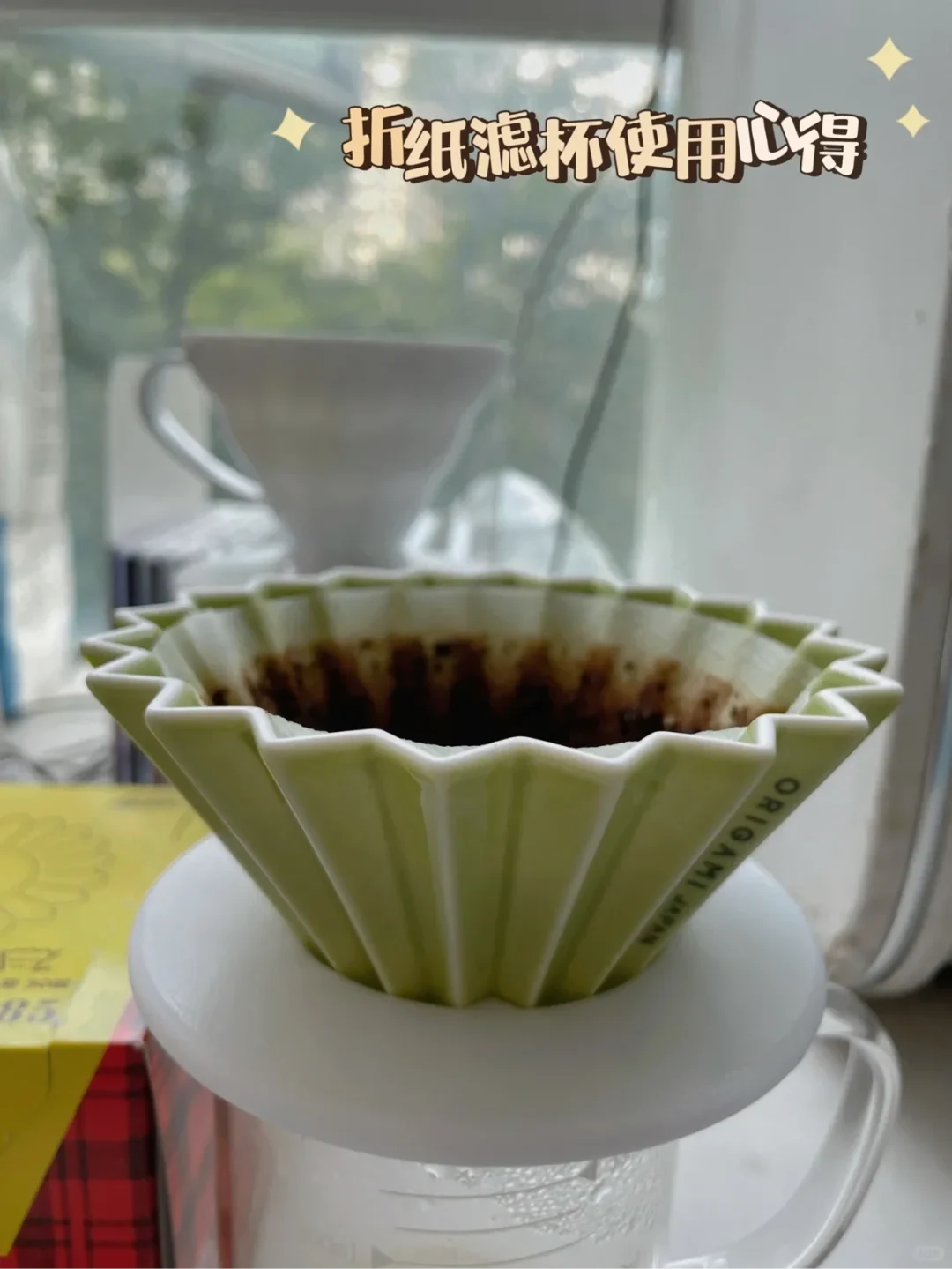
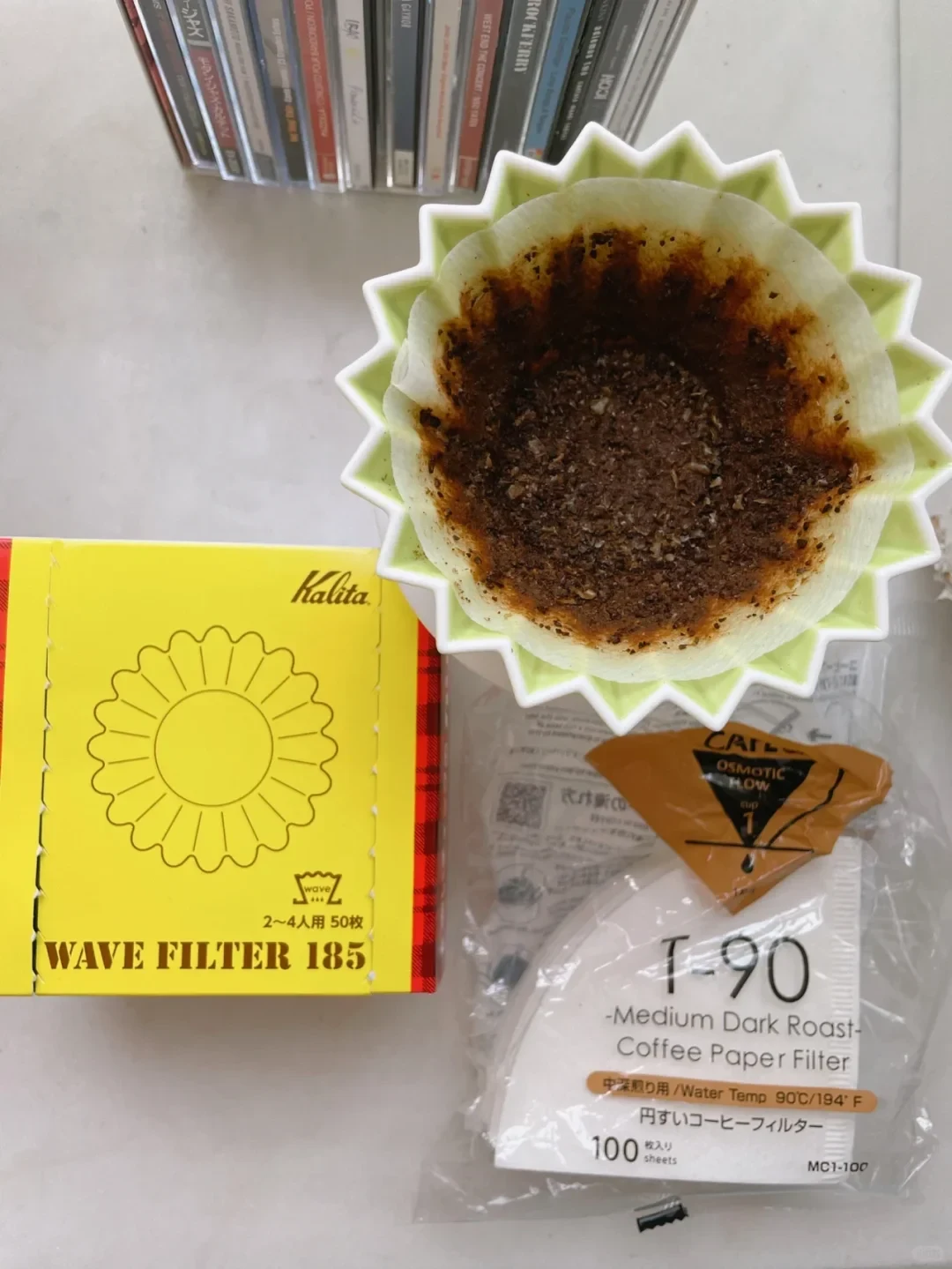
How many of you, like me, bought the ORIGAMI dripper because it was the same one used by a champion? Collecting the same gear can make me feel as if I’m compensating for a lack of skill with too many tools.
Buying it:
I bought it at the Fellow booth on the last afternoon of a coffee expo. It was a little cheaper than buying it during a Taobao sale, but because I bought it at the last minute, there were fewer colors to choose from.
Choosing filters:
As most people know, the ORIGAMI dripper can be used with both flat-bottom and conical filters.
I recommend large flat-bottom filters and small, one-to-two-cup V60 filters.
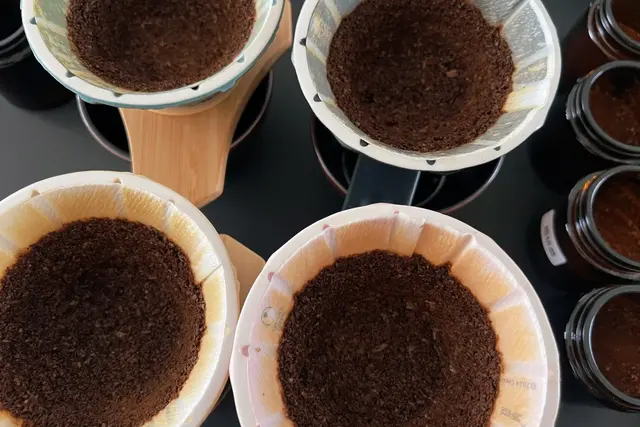
I use Kalita bleached flat-bottom filters. The advantage is that water runs through quickly; the downside is a papery smell. After talking with friends and testing it myself, I found it best to rinse the paper with 200 g of hot water, then grind my beans by hand. By the time I finish grinding and smell the paper again, the odor is gone. If I add the grounds immediately after rinsing, I can still smell it.
For conical filters, I chose a Sanyo filter intended for medium-roast beans. Its ridges are more numerous and deeper than those on ordinary filters, and it has no papery smell at all.
Different filters, different flavors:
With the grind size, amount of water, and pouring technique held the same, I didn’t expect the flat-bottom filter to drain faster than the conical one. I’m not sure whether that’s because my conical filter is for medium roasts. But even the Phoebus variable-speed V60 drained faster than the ORIGAMI with a conical filter. I don’t understand it, but I was amazed.
Most of the time, to control brew time, I use circular pours with the flat-bottom filter. With the conical filter, I usually pour in a few circles and then pour steadily into the center. I usually finish brewing light-roast beans in 1 minute 45 seconds to 1 minute 55 seconds.
At the same grind size and brew time, I personally find that the ORIGAMI with a flat-bottom filter gives the coffee noticeably more sweetness and a fuller body, with a lingering, weighty sensation on the tongue. Lately, when I brew La Mula Geisha on a flat-bottom filter, I feel as if I’m drinking rose-flavored brown sugar water. A coffee expert said, “Doesn’t that mean you brewed it really well?” I said, “...But I want something sour!” The expert replied, “Maybe what you’re missing is an EK43.”
Coffee brewed with a conical filter has much brighter acidity, more layers of flavor, and more changing aromas, but less sweetness and a less persistent finish than coffee brewed with a flat-bottom filter.
Based on my experiments, I’d use a conical filter for beans with rich aromas and plenty of natural sweetness, such as Panamanian Geisha. Brewing those with a flat-bottom filter can make them taste like sugar water and mask changes in acidity. I’d also use a conical filter when I want to highlight acidity, such as with Kenyan or Yirgacheffe beans.
For everyday beans that aren’t especially distinctive, I’d choose a flat-bottom filter. I’d also use one for beans where I’m after a rounded, full mouthfeel rather than aroma—such as Blue Mountain, Mandheling, or Brazilian coffee.
I’m still learning more brewing approaches. There are plenty of videos from Douzi that I can learn from.
Source: 静音品啡 · Xiaohongshu · Edited January 19, 2022 · Origami折纸滤杯三个月使用感受. Search this Chinese title in Xiaohongshu to find the original post.
Before You Buy
Models in your region
ORIGAMI’s ceramic dripper series has a US counterpart. The owner’s photos show Kalita Wave 185 and CAFEC T-90 cone papers, but the post does not identify the dripper size.
| Model in this review | Related regional model | What to know |
|---|---|---|
| ORIGAMI Ceramic Dripper (size unspecified) | ORIGAMI Ceramic Dripper (source size unspecified) (United States) | The US listing is also an ORIGAMI ceramic dripper and supports both conical and wave papers, like the owner’s dripper. The owner’s size is unknown, so the listing does not establish an exact size match; check paper size against the dripper you buy. |
- Model in this review
- ORIGAMI Ceramic Dripper (size unspecified)
- Related regional model
- ORIGAMI Ceramic Dripper (source size unspecified) (United States)
- What to know
- The US listing is also an ORIGAMI ceramic dripper and supports both conical and wave papers, like the owner’s dripper. The owner’s size is unknown, so the listing does not establish an exact size match; check paper size against the dripper you buy.
Keep paper size and pouring method in the comparison
The photographed packages identify Wave 185 and CAFEC T-90 Medium-Dark Roast, although the owner calls the cone paper a medium-roast version. The 200 g quantity is rinse water, not a brew recipe. The initial flow comparison describes unchanged pouring, while the later routine changes the pouring pattern to manage time; those observations should be read in their separate contexts.
Related Reading
Reviews & Guides · Kitchen & Dining
My Bincoo immersion dripper lost its steel ball during washing
I lost the valve ball while cleaning my Bincoo immersion dripper and bought five 14 mm spares. My receipt records the size; I didn’t report a sealing test.
Reviews & Guides · Kitchen & Dining
My 11-dripper comparison: why I used the Kalita Wave 155 and 185 least
I tried 11 pour-over drippers over time. I used my Kalita Wave 155 and 185 least because their papers lost shape during storage and rinsing.
Reviews & Guides · Kitchen & Dining
My four ceramic drippers: HARIO Alpha, V60, Shanwen 62 and Coffee Flower
I compared four ceramic drippers with washed Panama SL28. The Alpha felt weightier than my V60; I also compared Shanwen 62 and Coffee Flower.