
PETKIT PURA X and PURA MAX: large-clump jams and entry-height trade-offs
Reviewed: PETKIT PURA X, PETKIT PURA MAXRegional reference: PETKIT PURA X P9901 (International English manual); PETKIT PURA MAX P9902 (International English manual)
I compared two PETKIT automatic litter boxes: one handled large clumps more easily, while the other jammed and stopped during cleaning.
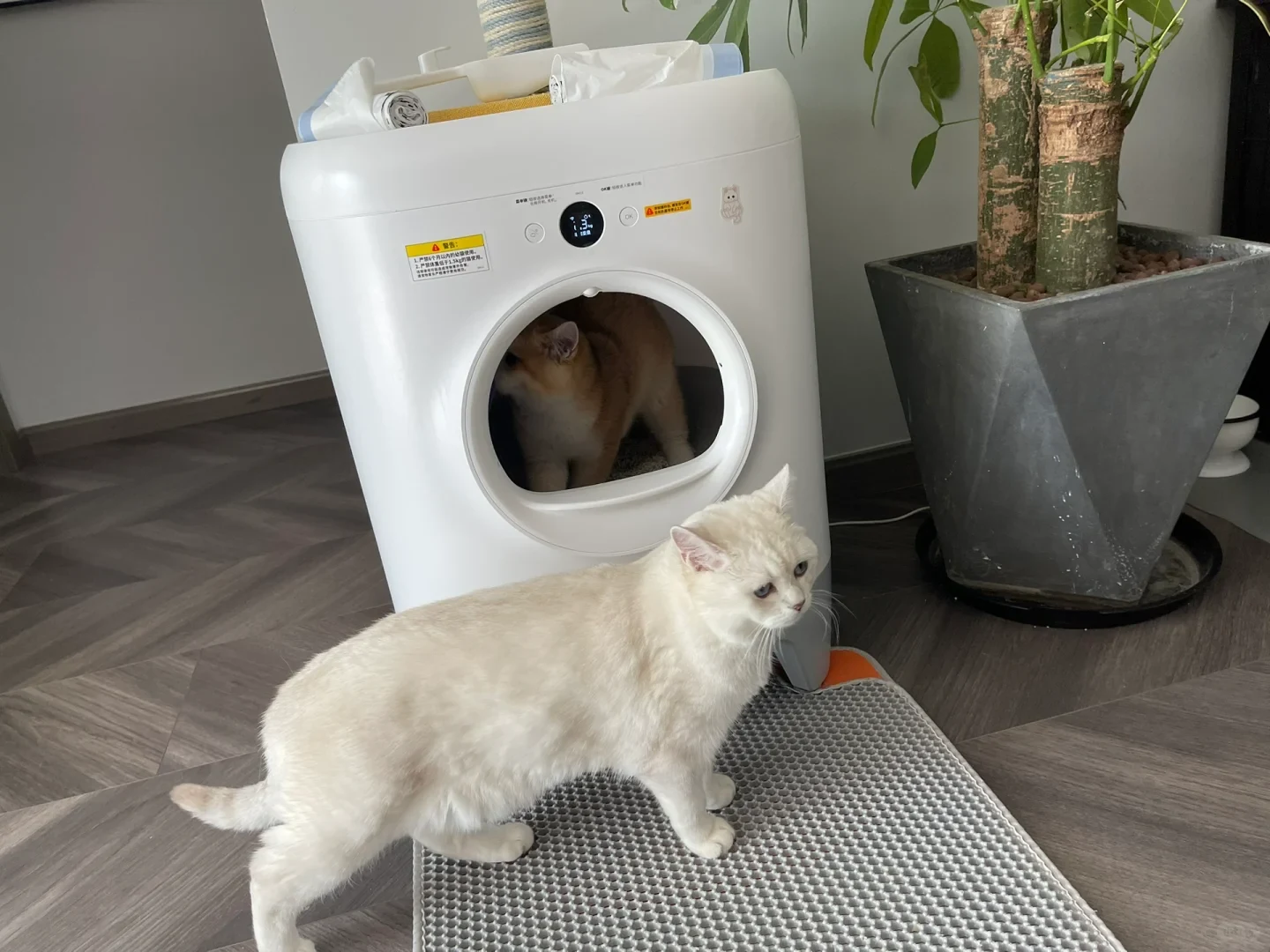
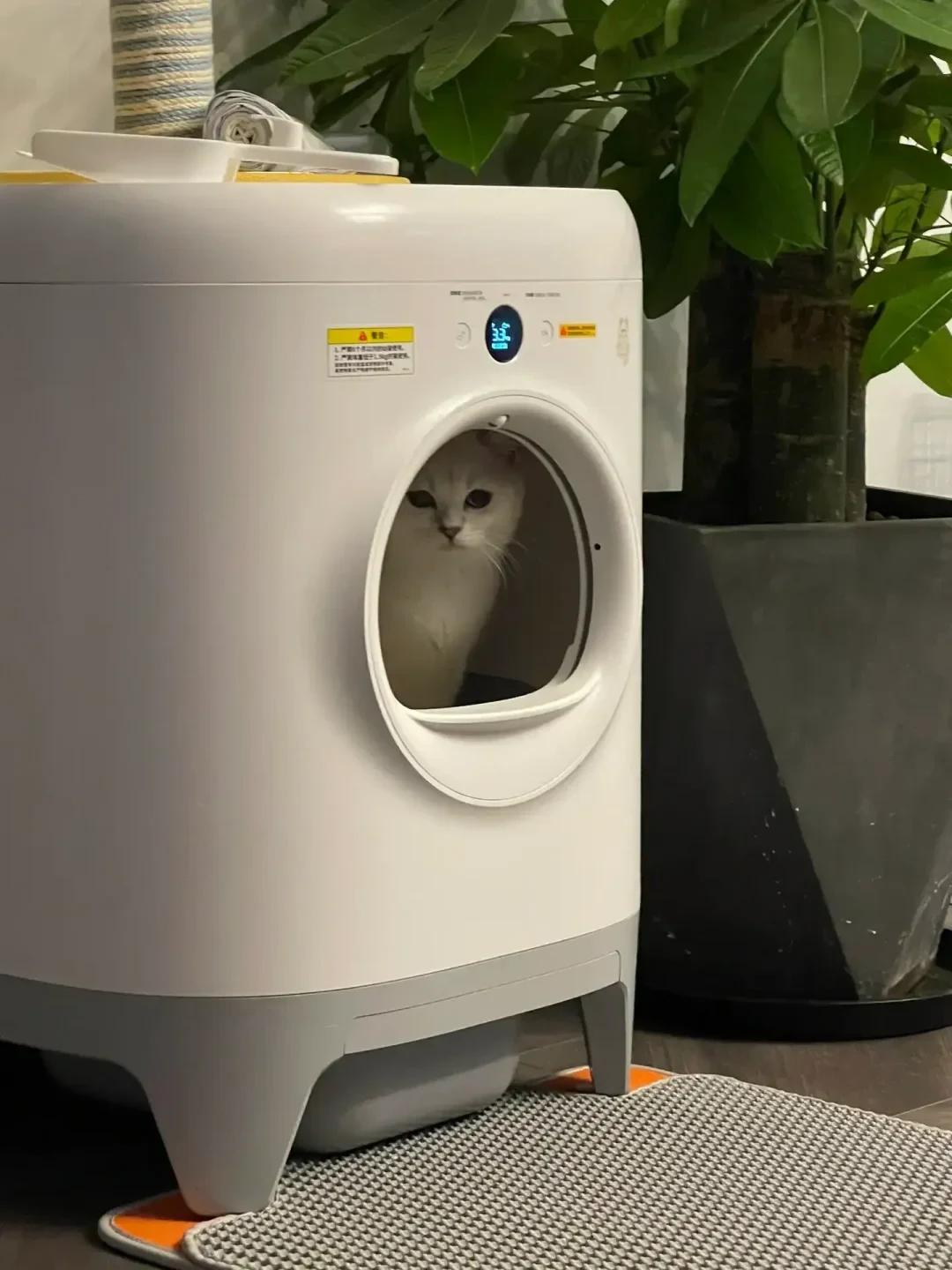
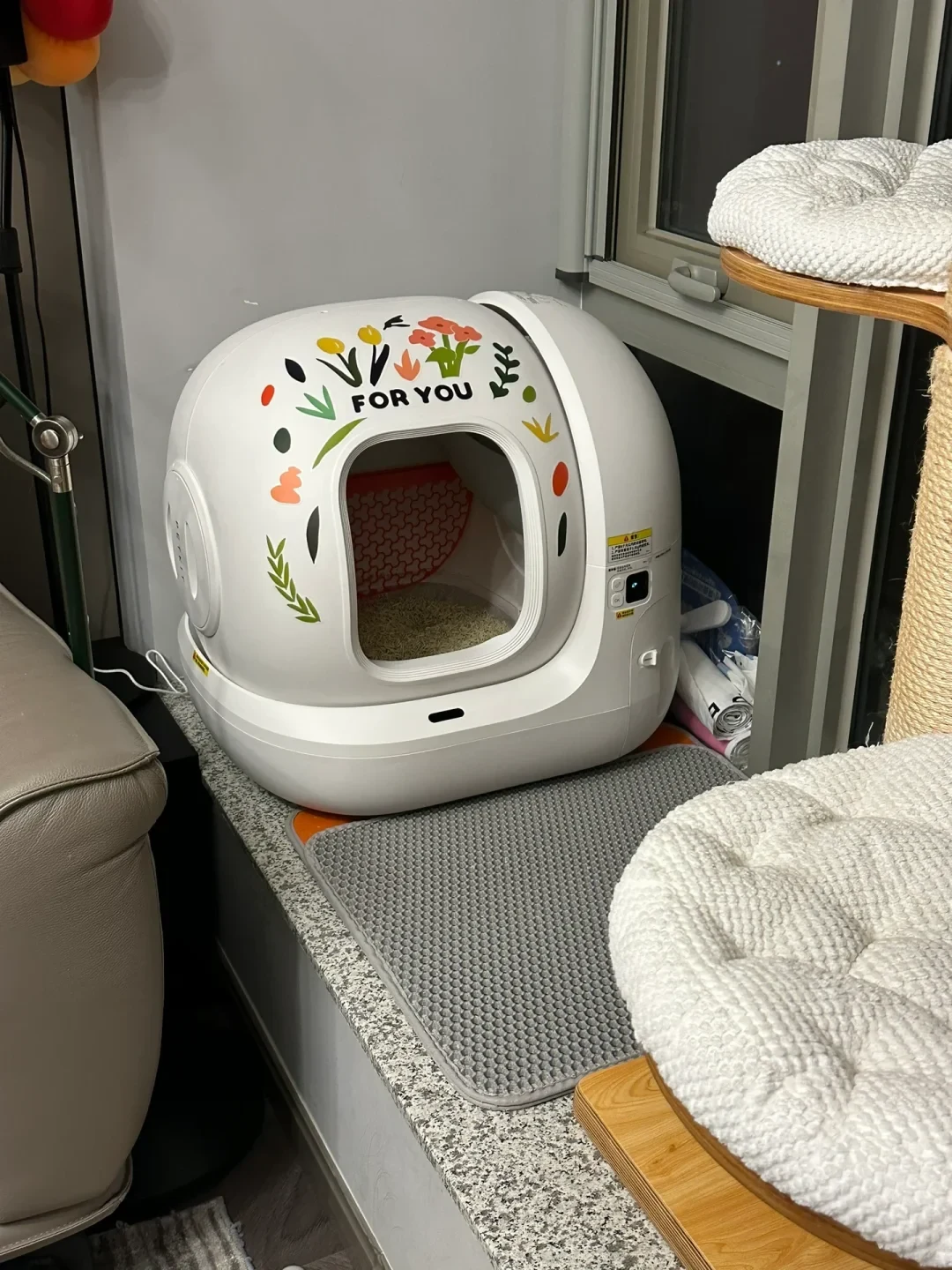

My conclusion up front: I’d recommend the first-generation model for cats that urinate a lot or are large. If your cat is small and its urine and stools aren’t especially substantial, choose whichever design you prefer.
- Price: When I first got a cat, I didn’t know much and assumed every cat-owning household needed an automatic litter box. I happened to buy the first-generation box after adding money to my PETKIT account; I think it cost ¥1,299 after a discount. Later, when the next generation came out, its discounted price was ¥999.
Cleaning: The first-generation model cleans the litter by rotating the whole drum. I feel that works better for cats that urinate a lot, because large clumps don’t get left behind. The second-generation model has several times failed to roll a urine clump into the passage leading to the waste drawer. This morning, a clump got stuck in the passage and stopped the whole machine, so I reached in and removed it by hand. The inside of the first-generation drum is silicone; the second-generation one has a waterproof, fabric-like lining. I don’t know why, but large clumps stick to it, so I’ve had to scrape them off by hand.
Both models are fairly easy to take apart for cleaning. We wash them every two weeks.
- Drum space: The second-generation drum is a little larger than the first-generation one, so it may suit large cats such as Ragdolls and Maine Coons better. Our British Shorthair weighs only 9 jin (4.5 kg), so the difference in size makes no difference to us.
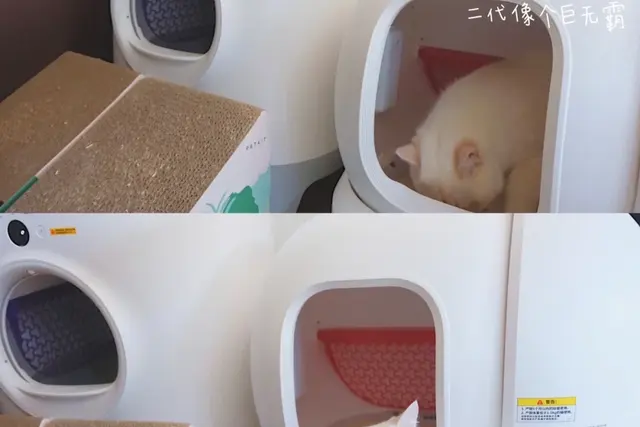
Machine size and entrance height: The first-generation machine is a little larger overall than the second-generation one. The second-generation model feels only about half as tall, while the first-generation one has space on top for cat or dog supplies. The second-generation model needs a separate stand for that.
The first-generation model’s entrance is higher than the second-generation model’s. A cat with mobility problems might need a step.
If you have a dog that likes eating cat litter or poop, I’d recommend the first-generation model because its entrance is higher.
- Litter tracking: They’re about the same; both need a litter-trapping mat. The first-generation machine can hold the mat in place. The second-generation one must not sit on the mat or too close to a wall, or it won’t operate. Mine stopped working several times on the first day after I bought it.
- Safety: Both models have sensors. They stop rotating when a cat comes near, and I found them very responsive.
- Odor: The second-generation model can take a deodorizing device stuck to the inside wall, but it costs several hundred yuan, so I didn’t buy it. There’s also a place in the waste drawer for a small deodorizing block. I didn’t find the block very useful: I used four and never bought more. The fragrance mixed with the odor and made the smell even worse. The first-generation model takes deodorizing liquid underneath and deodorizes automatically after each cleaning cycle. Honestly, that didn’t help either; cat poop still smelled. A well-ventilated spot for the litter box worked better.
- Waste capacity: I feel the first-generation model holds more.
Source: 吴百亿和哈尼 · Xiaohongshu · 2023-04-04 · 小佩一代二代自动猫砂盆|个人使用小感受. Search this Chinese title in Xiaohongshu to find the original post.
Before You Buy
Models in your region
The photos show the tall, round-entry PURA X and the lower, rectangular-entry original PURA MAX. PETKIT’s international manuals identify these separate products as P9901 and P9902. The owner’s first- and second-generation labels refer to those units; later MAX variants are different models.
| Model in this review | Related regional model | What to know |
|---|---|---|
| PETKIT PURA X | PETKIT PURA X P9901 (International English manual) | The tall round-entry unit in photos 1–2 is the PURA X. Its international manual identifies model P9901; the owner found its direct waste path handled large clumps better in this household. |
| PETKIT PURA MAX | PETKIT PURA MAX P9902 (International English manual) | The lower rectangular-entry unit in photo 3 is the original PURA MAX, identified as P9902 in the international manual. The reported side-channel jams concern this unit, not the PURA X. |
- Model in this review
- PETKIT PURA X
- Related regional model
- PETKIT PURA X P9901 (International English manual)
- What to know
- The tall round-entry unit in photos 1–2 is the PURA X. Its international manual identifies model P9901; the owner found its direct waste path handled large clumps better in this household.
- Model in this review
- PETKIT PURA MAX
- Related regional model
- PETKIT PURA MAX P9902 (International English manual)
- What to know
- The lower rectangular-entry unit in photo 3 is the original PURA MAX, identified as P9902 in the international manual. The reported side-channel jams concern this unit, not the PURA X.
Check the model before applying this comparison
The owner compares the PURA X with the original PURA MAX. The photographs show both distinct enclosures, and the caption distinguishes the X’s bottom drawer from the MAX’s side waste channel. PETKIT identifies them as P9901 and P9902; this comparison does not cover the later PuraMax 2.
The author’s large-clump jam was a reported incident involving the second-generation unit in that household, not evidence that PURA X or PURA MAX generally jams. The international manuals supplied here do not establish that either model will handle large clumps as described in the post.
Plan cleaning around the model’s removable parts
For PURA X P9901, the international manual says the cylinder and waste drawer are removable. Switch the unit off and unplug it before cleaning; the main unit contains electrical components and must not be immersed or washed. The author found both compared boxes easy to take apart and cleaned them every two weeks, but that schedule is a household routine, not a manufacturer recommendation for every model.
Use the separate PURA MAX manual for its cleaning procedure and removable parts. The owner cleaned both boxes every two weeks, but that household schedule does not replace the instructions for either model.
Allow for entrance access, placement, and litter mats
The author found the first-generation unit’s entrance higher and suggested a step for cats with mobility problems; a higher opening may also matter in a home with a dog that gets into the litter box. These are observations from the compared units, not verified entrance measurements for PURA X or PURA MAX. Check the exact model’s opening and the cat’s access before buying.
The author’s second-generation unit stopped several times on its first day when positioned on a litter mat or too close to a wall. That account makes placement worth checking during setup, but does not establish a universal clearance requirement for PURA MAX. The author found both units needed a mat to catch tracked litter and said the first-generation unit could hold its mat in place.
Treat odor control and sensor behavior as separate questions
The author found that neither deodorizing approach eliminated litter-box odor in their home: a scented block seemed to mix with the smell, and the first-generation unit’s automatic deodorizing liquid did not make stool odor disappear. Ventilation worked better for this household. The account does not verify the performance or compatibility of deodorizing accessories for a specific international model.
The author found both units’ sensors responsive and observed that they stopped rotating when a cat came near. That brief household observation does not establish general safety performance. For PURA X, the international manual says it is not recommended for pets younger than six months and directs repairs to professionals; follow the manual for the exact model.
Related Reading
Reviews & Guides · Pet Care
PETKIT PURA X: mineral-litter sieve and odor control after setup
I used my PETKIT PURA X without deodorizing liquid while my cat was four months old, and bought a mineral-litter sieve separately.
Reviews & Guides · Pet Care
PETKIT PURA X and PURA MAX: a six-cat owner's year-long comparison
I used the PETKIT PURA X for a year and the PURA MAX for two months with six cats; the MAX was roomier, but I missed the X's one-touch litter-emptying feature.
Reviews & Guides · Pet Care
PETKIT PURA X and PURA MAX: cleaning trade-offs after two years
I used the PETKIT PURA X for about two years and the PURA MAX for under one. Cleaning both was enough to send me back to manual scooping.