
Reviews & Guides · Computing & Networking
Steam Deck 1TB: three-day weight and setup frustrations, with Steam Deck OLED buying context
I used my 1TB Steam Deck for three days and found its weight and game setup frustrating, especially for relaxed sofa and bed gaming.
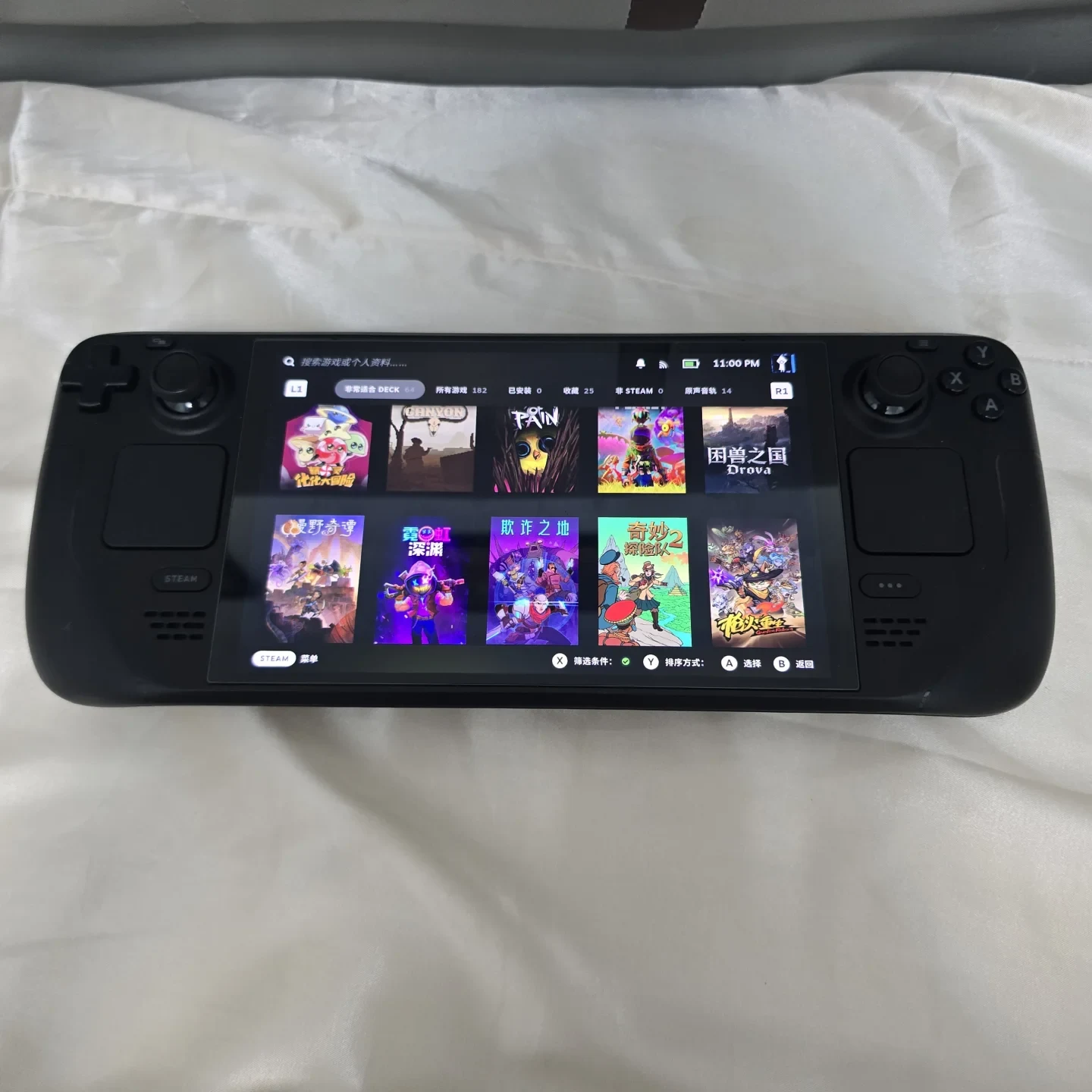
I only played it for three days before selling it. Don’t ask.
Here is why I sold it. I mainly play pixel-art and card-based games. In theory, these games should be very well suited to a handheld, but after three days I found that it simply did not work for me. These are the drawbacks I noticed.
- The body is too bulky and heavy: My main use cases were lying on the sofa or bed, or reclining in a rocking chair in the yard. I mainly play while lying down, but this machine is genuinely heavy. Compared with the Switch, it is noticeably heavier. Personally, the battery life felt about the same.
- Compatibility was frustrating: As the official handheld from the Steam platform, many games do not support this handheld properly. You may have to rearrange the button layout yourself, which becomes very troublesome. I owned 180 games, but only around 80 truly supported Steam Deck. Its compatibility was far worse than the Switch’s for me, and having to remap the controls in many games was the main reason I sold it.
- I could not get used to the button design: After playing for a long time, it made my wrists hurt badly. This does not happen to me when I use a game controller. It may be because the body is so heavy, combined with all the buttons being positioned on the upper sides of the machine.
Compared with the Switch, this machine really falls short for me. On Switch, games are designed to support the console by default, so after buying a game I can launch it and enjoy it immediately. Many Steam games do not support Steam Deck properly, because Steam games use all kinds of controls: some rely on mouse input and some on a keyboard. Forcing them all into a controller layout can create compatibility problems.
If you do not usually play many AAA games and are willing to tinker, this machine may still suit you. A friend brought it from Japan, and I paid him RMB 6,500 for the 1TB version. I sold it on Xianyu for RMB 4,000. This is only for reference.
Source: 悠哉 · Xiaohongshu · 2026-08-31 · steam deck拔草🌿指南. Search this Chinese title in Xiaohongshu to find the original post.
Before You Buy
Models in your region
The owner identifies the handheld as a 1TB Steam Deck, but the source does not state its display generation. The official US and UK reference below is the 1TB Steam Deck OLED, so OLED-specific package features should not automatically be assigned to the owner’s unit.
| Model in this review | Related regional model | What to know |
|---|---|---|
| Steam Deck 1TB | Steam Deck OLED 1TB (US / UK) | The owner used a 1TB Steam Deck; the official US/UK comparison model is the 1TB Steam Deck OLED. The source does not identify the generation, so the owner’s weight, battery and comfort comments should not be treated as OLED-specific measurements. |
- Model in this review
- Steam Deck 1TB
- Related regional model
- Steam Deck OLED 1TB (US / UK)
- What to know
- The owner used a 1TB Steam Deck; the official US/UK comparison model is the 1TB Steam Deck OLED. The source does not identify the generation, so the owner’s weight, battery and comfort comments should not be treated as OLED-specific measurements.
Weight matters most in relaxed handheld use
The owner’s main sessions were lying on a sofa, bed or rocking chair, and they found the handheld noticeably heavier than their Switch. Valve lists the Steam Deck OLED at approximately 640 g; that specification supports the product’s substantial weight, but it does not establish a direct Switch comparison or explain the owner’s wrist discomfort.
For readers who plan to play while reclining, the relevant takeaway is the owner’s comfort trade-off rather than a universal endurance verdict. They personally felt battery life was about the same as their Switch, while Valve advertises 3–12 hours of gameplay for the OLED family; the owner did not report a timed battery test.
Compatibility can mean setup work, not only whether a game launches
The owner estimated that around 80 of their 180 games properly supported Steam Deck and said remapping controls was the main reason they sold it. That is their personal library count, not a verified platform-wide compatibility rate. Valve’s system separates games into Verified, Playable, Unsupported and Unknown, and a Playable title may require a community layout or touchscreen navigation.
This distinction matters for buyers with keyboard- or mouse-oriented PC libraries. A game can run while still requiring control-layout changes, so the owner’s experience is most relevant to people who want immediate controller-ready play rather than those willing to configure individual titles.
The owner’s Switch comparison reflects different software expectations
The owner found Switch games more straightforward because they expected them to support the console’s controls from the start, whereas Steam games can be built around mouse, keyboard or other input methods. That comparison describes their setup experience; it is not a claim that every Steam Deck game requires manual changes.
Their own conclusion was conditional: the Steam Deck could suit someone who does not focus on AAA games and is willing to tinker. Buyers should therefore check the specific games they play in Valve’s compatibility categories instead of treating the owner’s approximately 80-supported-game estimate as a general count.
Regional model and support limits
Valve’s US/UK 1TB OLED package includes etched glass intended to reduce glare, while Valve also advertises 30–50% more battery life than the LCD model and a 30 g weight reduction. Because the owner did not identify their display generation, these OLED package differences cannot be used to explain their individual experience.
Valve lists direct availability in the United States, Canada, the European Union and the United Kingdom, with Japan, South Korea, Taiwan and Hong Kong served through Komodo. The source only says that a friend brought the unit from Japan, so the owner’s China-market purchase does not establish local warranty coverage for another buyer.
Related Reading

Reviews & Guides · Computing & Networking
eero 7: a 2Gbps fibre test before ordering eero Pro 7
I tested eero 7 on a new 2Gbps fibre line and saw 1.2Gbps wired but 470Mbps Wi-Fi before returning it; I later ordered eero Pro 7.

Reviews & Guides · Computing & Networking
eero Pro 7: Four-node mesh owner review with ad blocking
I replaced my eero Max 7 with four eero Pro 7 units and found ad blocking worked across phone browsing and Samsung Tizen, though not every YouTube ad.
Reviews & Guides · Computing & Networking
NETGEAR Orbi RBR850: 800+ Mbps at home after replacing Nighthawk RAX120
I replaced my NETGEAR RAX120 with a three-node Orbi 850 system and saw over 800 Mbps throughout my home, including about 900 Mbps in the living room.