Stock firmware worked for ordinary browsing
After three months with the router, one owner found the stock setup sufficient for browsing on a 500–600 Mbps home connection. [1]

GL.iNet · Travel router
My GL.iNet Beryl 7 got just 1–5 Mbps repeating hotel Wi-Fi in Tokyo. Using the Ethernet cable from the room’s TV took the same travel router past 400 Mbps. Adapted from an owner review
After three months with the router, one owner found the stock setup sufficient for browsing on a 500–600 Mbps home connection. [1]
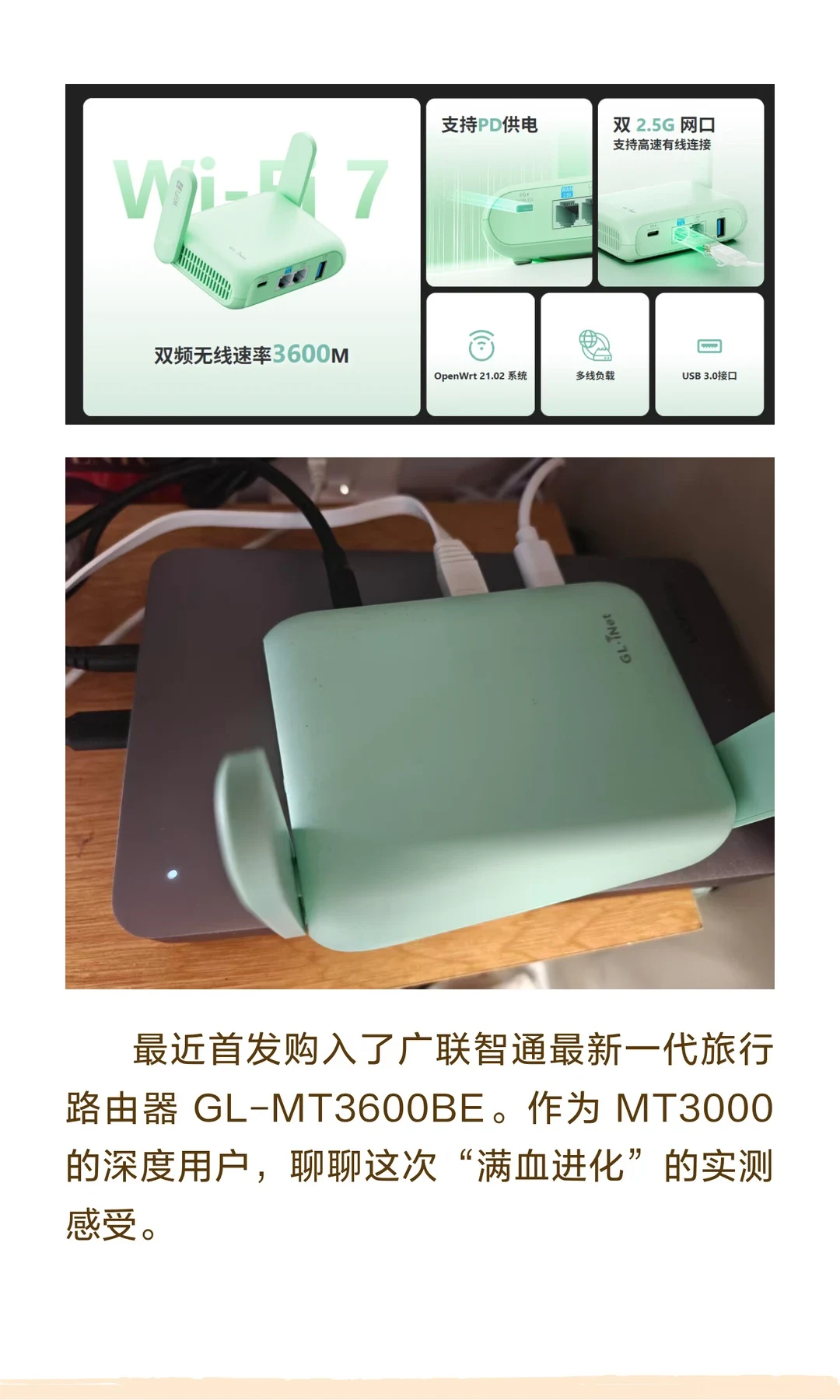
The same owner preferred their native OpenWrt build for plugins and showed a lower memory reading while running one plugin and streaming 8K video to a single device. [1]
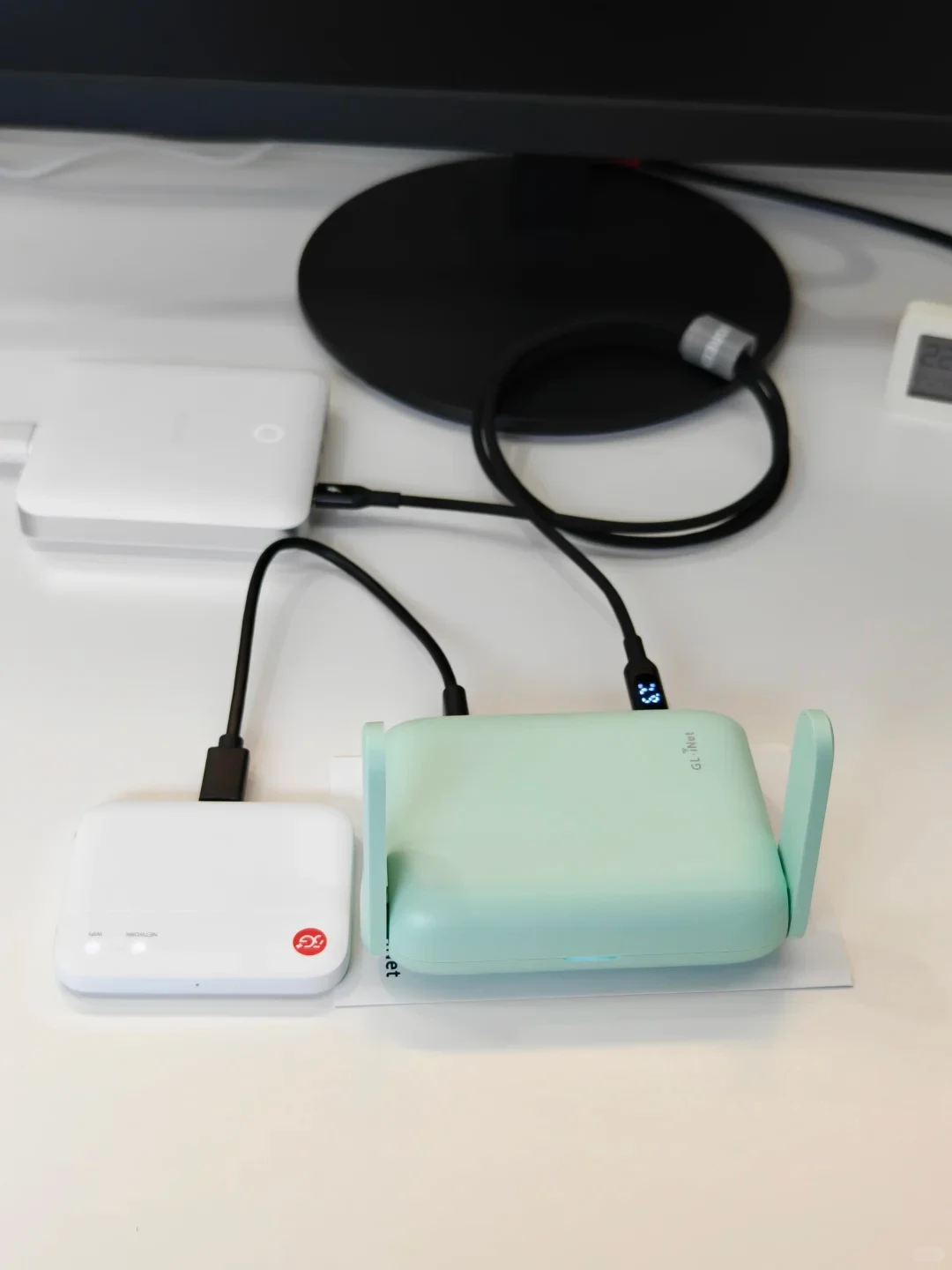
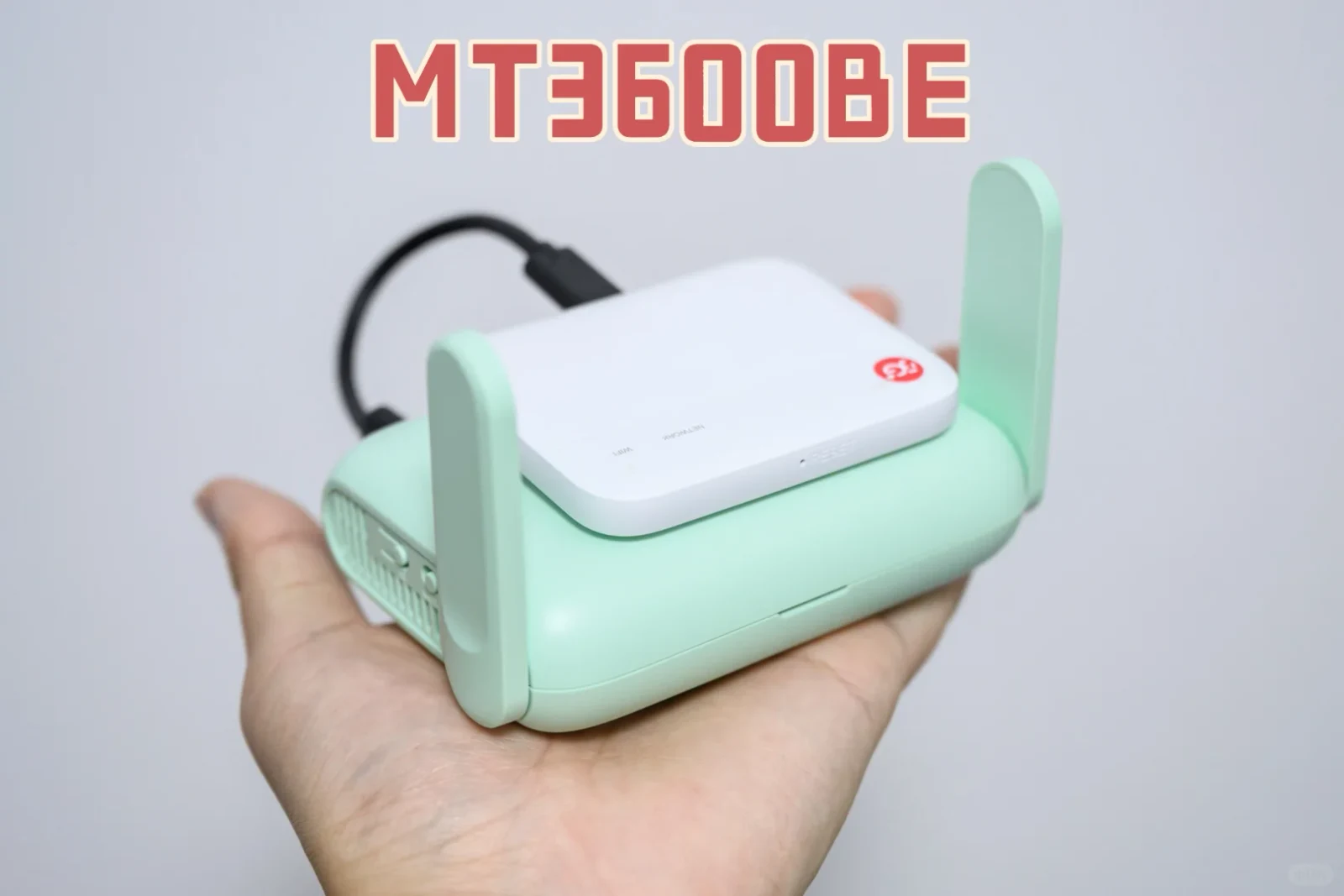
An owner powered an F50 hotspot from the Beryl 7 and reported about 7 W for the pair. A separate owner also found it easy to power and connect their F50 over USB. [2][3]
A traveler measured more than 400 Mbps using hotel Ethernet. On the same visit, the wireless repeater connection was much slower. [4]
The owner showed one stock-firmware snapshot at 93% memory use with a plugin and one 8K stream. Their screenshots captured individual setups and workloads. [1][5]
The owner found the LuCI-only interface more involved than the stock interface. [1]
One traveler reported 1–5 Mbps through the repeater on hotel Wi-Fi and more than 100 Mbps when connecting directly. Their Beryl 7 worked as a repeater at home and on a cellular hotspot. [4][6][7]
A streaming operator reported that a Teradek Cube dropped offline and needed intervention after interruptions. The direct hotel Wi-Fi setup worked in the reported use. [8]
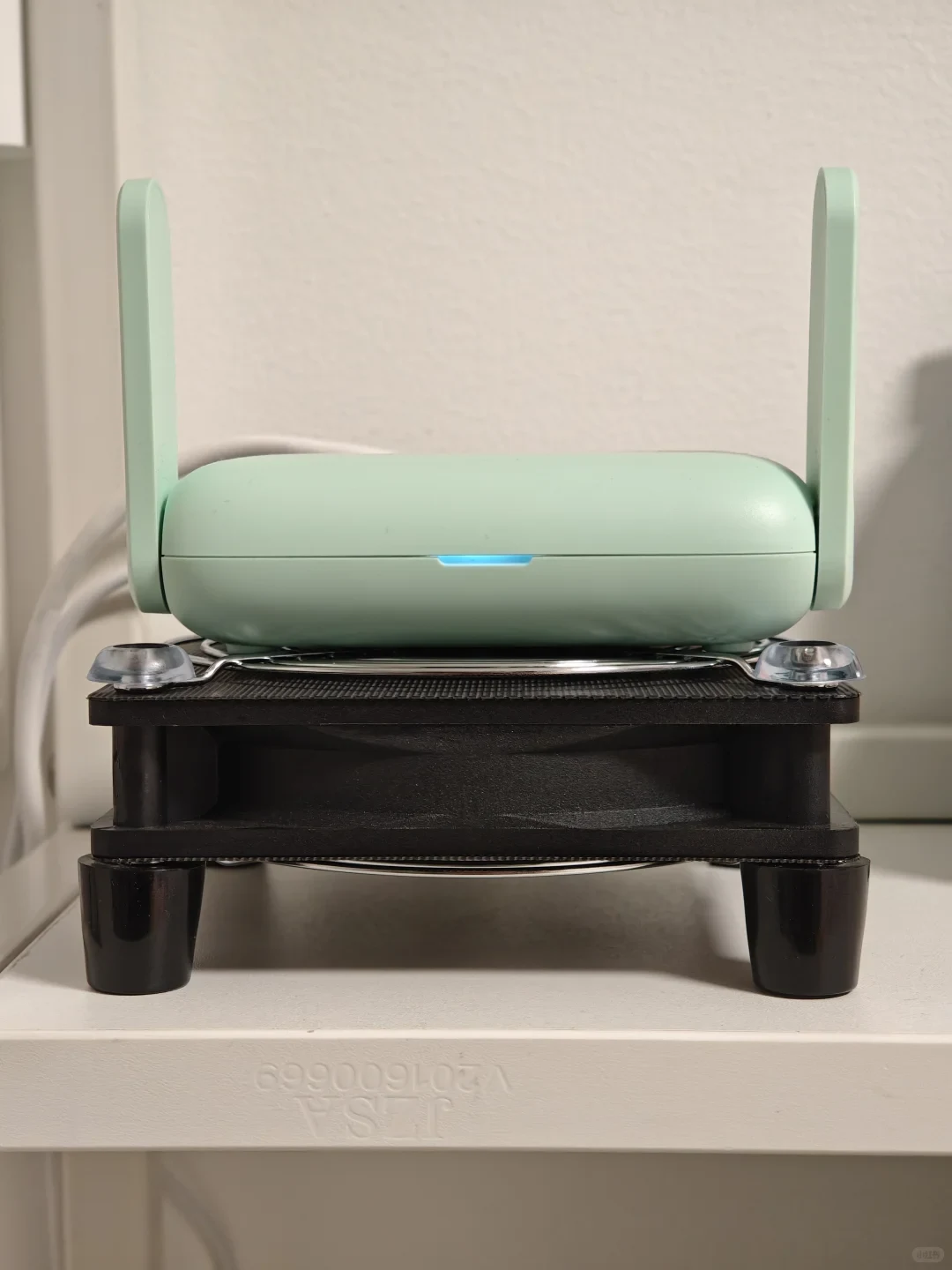
An early buyer reported about 70°C while running plugins. Another owner reported nearly 70°C at idle on their unit and a drop of almost 30°C after adding a fan. [5][9]
A traveler reported losing routing and access to the admin page on hotel Wi-Fi and a phone hotspot. Memory reached about 88% before a freeze. The cause remained unknown. [10][11]
Three months · Stock firmware vs native OpenWrt
ZTE F50 · Combined USB power draw
Hotel and phone hotspot · Tailscale exit node
Tokyo hotel · Repeater vs wired WAN
UniFi Travel Router comparison · Wi-Fi and Ethernet
Xfinity gateway · Firmware retest and return
ZTE F50 · Stock USB tethering
Early firmware · F50, powered drive and plugins
Hotel livestream · Teradek Cube
Idle temperature · External 1,200 rpm fan