
Reviews & Guides · Computing & Networking
TP-Link Archer BE550 Pro: Japan IPoE and MLO notes, with Archer BE550 buying context
I bought the Japanese TP-Link Archer BE550 Pro for 10Gbps fiber, but severe MLO latency and recurring IPv6 drops led me to use OpenWrt for routing.
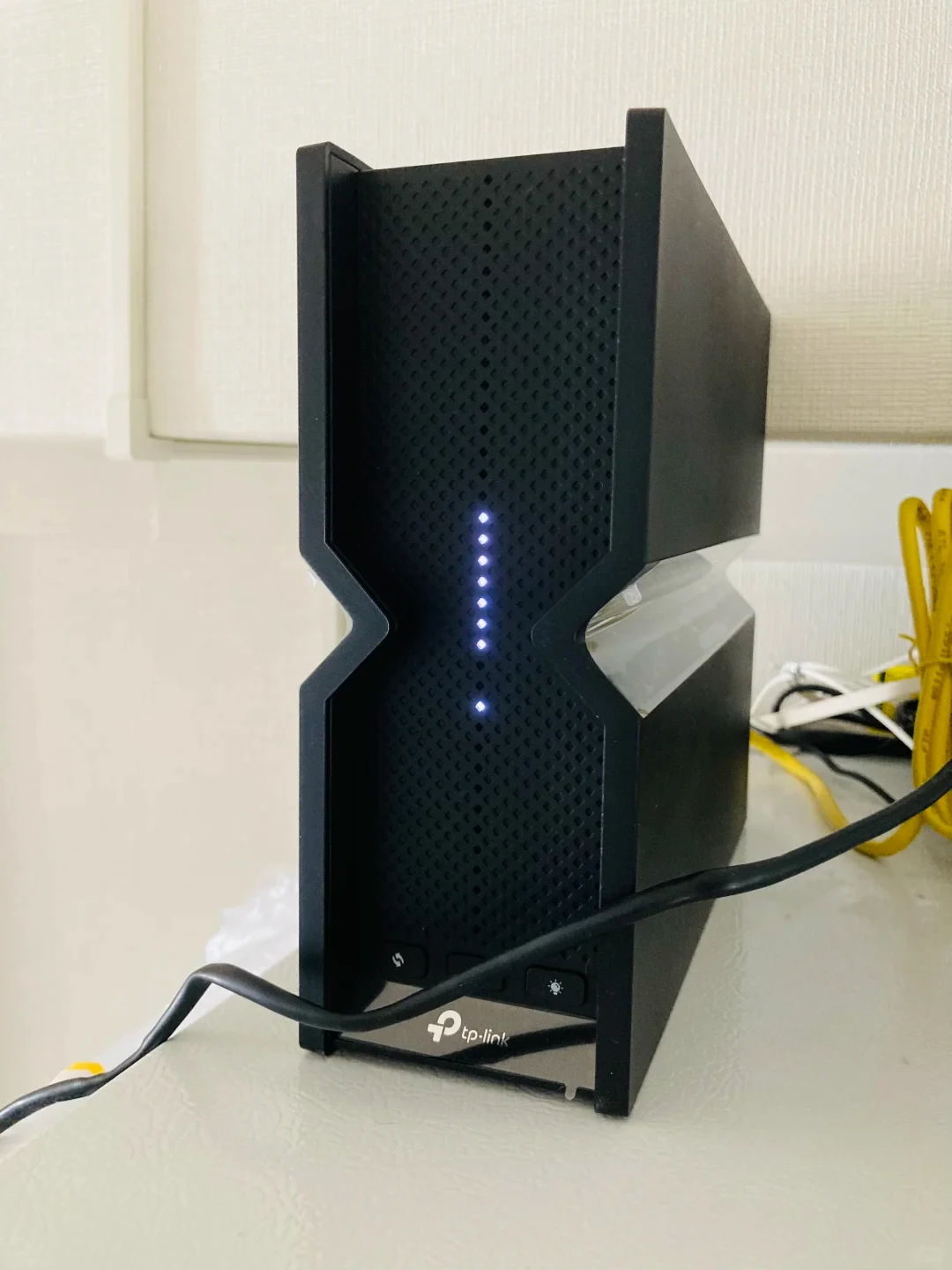
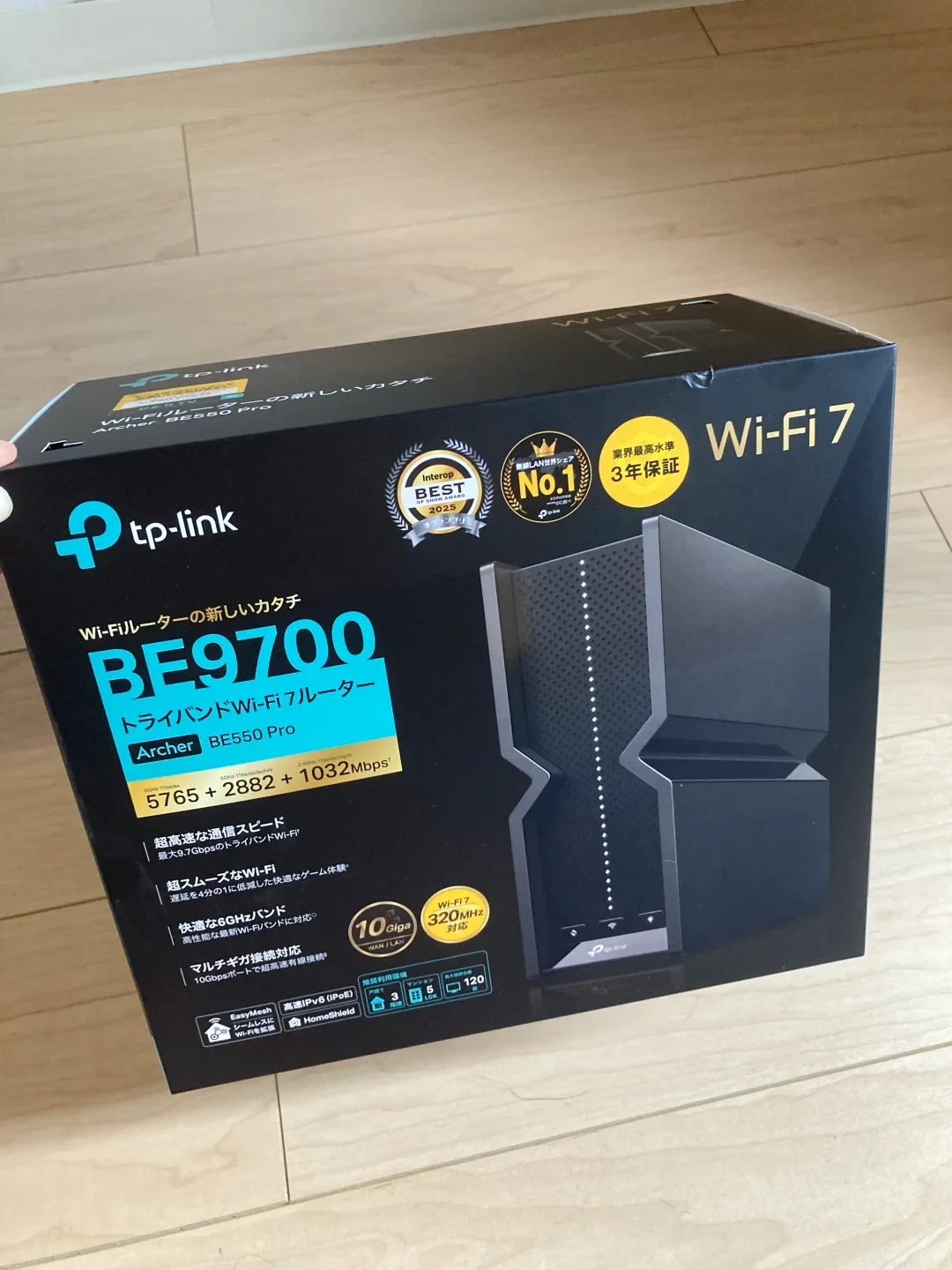
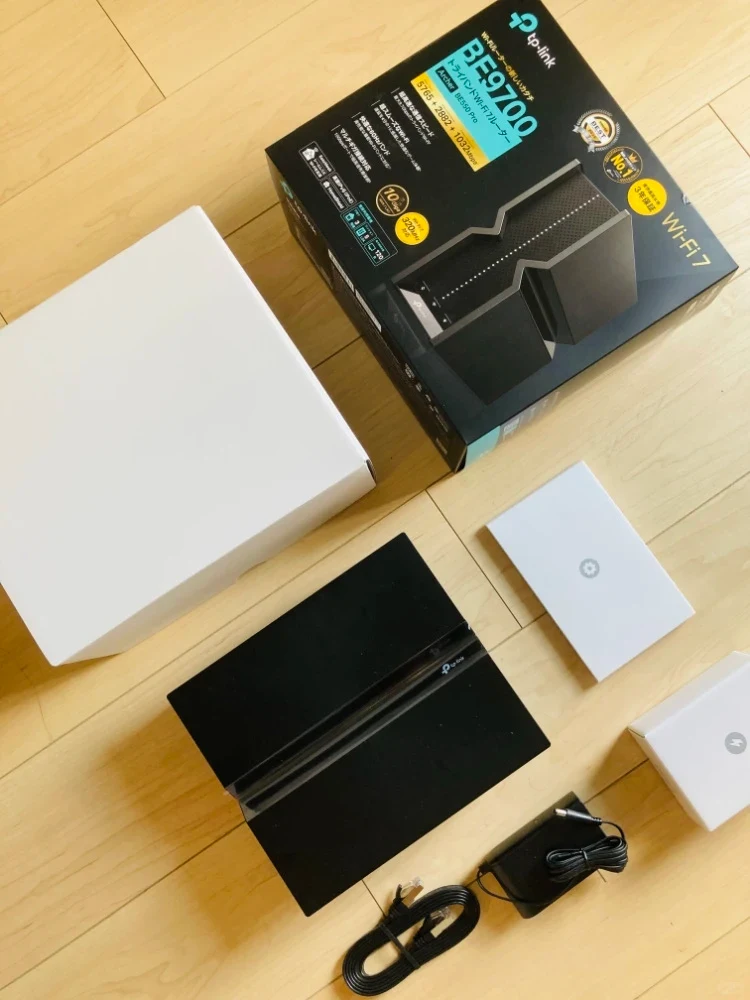
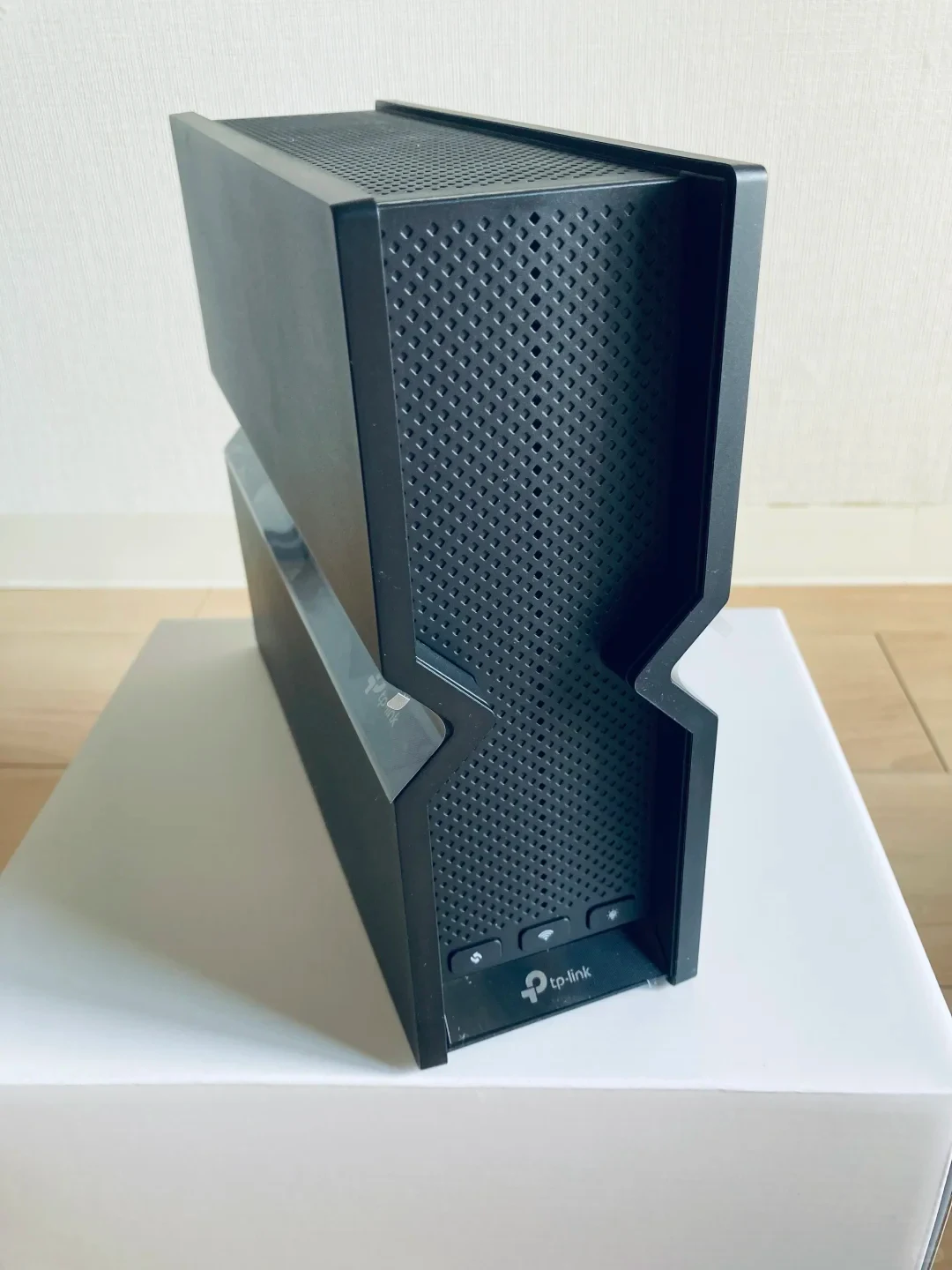
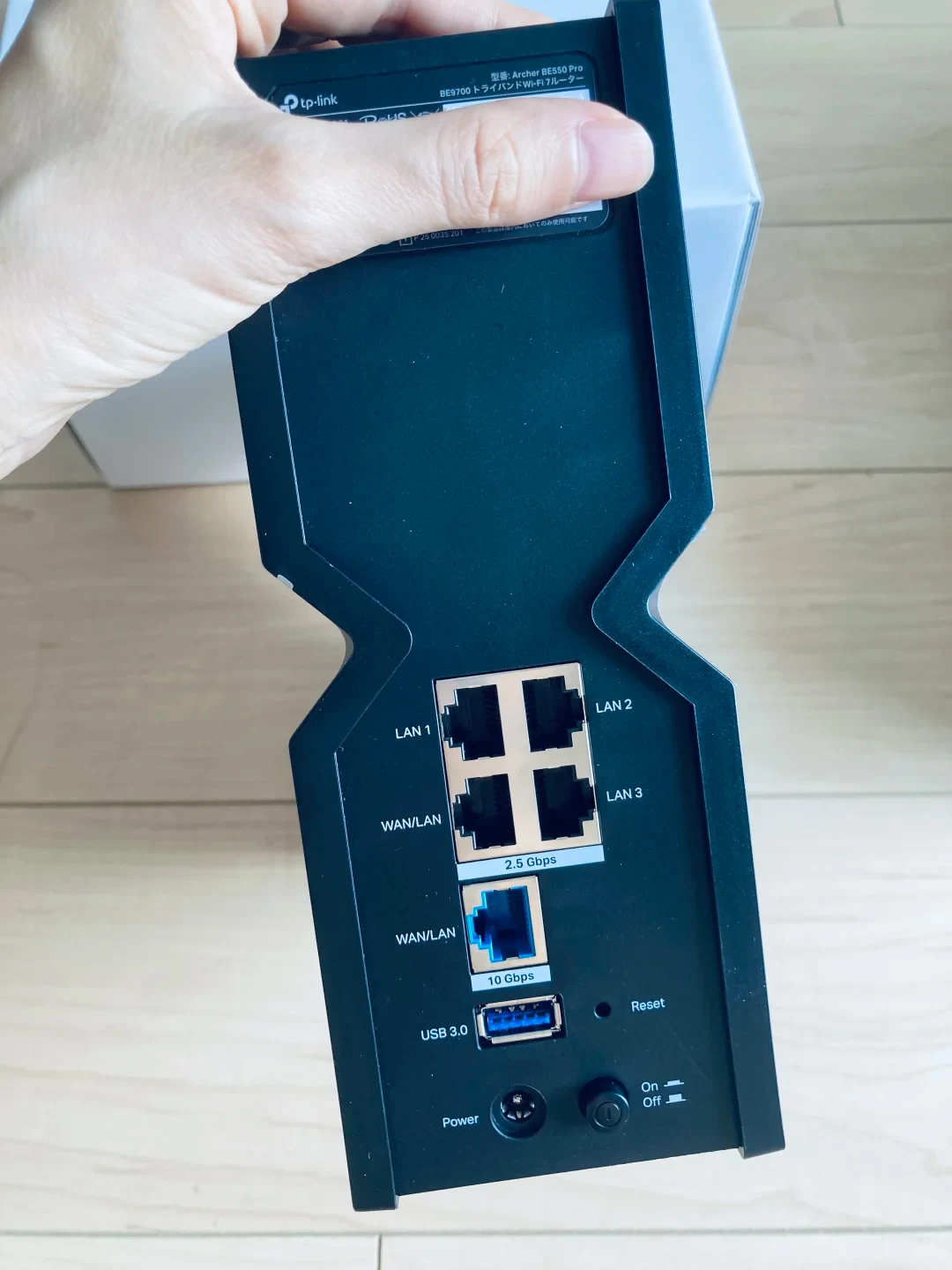
I recently switched my home’s 10Gbps fiber connection from SoftBank to NTT docomo. Some users reported that the rented docomo gateway modem-router’s Wi-Fi signal was very unstable, so I bought a genuine 10Gbps Wi-Fi 7 router, the TP-Link BE550 Pro.
A high-performance 10Gbps, full-spec Wi-Fi 7 powerhouse with a 6GHz band: the TP-Link BE550 Pro BE9700.
This model is the lowest-priced 10Gbps, 6GHz Wi-Fi 7 router on sale in Japan. When I placed the order, the yen had just weakened, and the price was still reasonable.
Apart from the router and manual, the box contains very few accessories: only a wide-voltage power adapter and a 1.5-meter shielded Category 6A cable.
It uses a built-in antenna design, with a recessed waistline running through the middle. The exterior design language is reminiscent of the Dell XPS chassis.
Highlights
The antennas are concentrated in the upper part of the chassis. Six internal antenna groups serve the 2.4GHz, 5GHz, and 6GHz bands, with each group using two antennas. The maximum combined wireless rate is 9,679Mbps.
The wired ports are one 10Gbps WAN port and four 2.5Gbps LAN ports. Overall, this is quite generous—better than many products that offer a 10Gbps uplink but pair it with a group of 1Gbps LAN ports.
Weaknesses
The TP-Link BE series is generally packed with hardware, but its software is the biggest weakness. Although it supports MLO, packet loss and latency are extremely severe in MLO mode, making it basically unusable.
Although this router is designed for the Japanese market, its support for Japan’s IPv4 over IPv6 IPoE connections is not very good. This type of IPoE depends heavily on IPv6, yet TP-Link’s system frequently loses IPv6. After that happens, the IPv6 service neither restarts nor reconnects, so I have to reboot the router manually. After switching to OpenWrt, I no longer had this problem, so I now use OpenWrt for dialing the connection and the BE550 Pro only as an access point.
I hope TP-Link will put more effort into improving the system’s core functions. Spending so much on flashy features is not very meaningful.
Source: momo的agn369 · Xiaohongshu · 2026-09-28 · 有6G频段的万兆满血WiFi 7性能小怪兽👾. Search this Chinese title in Xiaohongshu to find the original post.
Before You Buy
Models in your region
The owner used the Japanese TP-Link Archer BE550 Pro, whose official specification lists six internal antennas, an advertised aggregate wireless rate of 9,679Mbps, and a 10Gbps port alongside 2.5Gbps ports. The exact hardware revision and firmware are unknown, so the reported MLO and IPv6 behavior cannot be treated as universal or confirmed fixed. The related US Archer BE550 is a different BE9300 model rather than an identical regional version.
| Model in this review | Related regional model | What to know |
|---|---|---|
| TP-Link Archer BE550 Pro | TP-Link Archer BE550 Pro (Japan) | This is the Japanese model used by the owner. Official specifications list one 10Gbps WAN/LAN port, one 2.5Gbps WAN/LAN port, and three 2.5Gbps LAN ports; the switchable 2.5Gbps port can serve as a fourth 2.5Gbps LAN connection when the 10Gbps port is used for WAN. |
| TP-Link Archer BE550 | TP-Link Archer BE550 (US) | The US Archer BE550 is a related but not identical BE9300 model: it has one 2.5Gbps WAN port and four 2.5Gbps LAN ports, without the Japanese Pro model’s 10Gbps port. The owner’s MLO and Japanese IPoE experience should not be transferred directly to it. |
- Model in this review
- TP-Link Archer BE550 Pro
- Related regional model
- TP-Link Archer BE550 Pro (Japan)
- What to know
- This is the Japanese model used by the owner. Official specifications list one 10Gbps WAN/LAN port, one 2.5Gbps WAN/LAN port, and three 2.5Gbps LAN ports; the switchable 2.5Gbps port can serve as a fourth 2.5Gbps LAN connection when the 10Gbps port is used for WAN.
- Model in this review
- TP-Link Archer BE550
- Related regional model
- TP-Link Archer BE550 (US)
- What to know
- The US Archer BE550 is a related but not identical BE9300 model: it has one 2.5Gbps WAN port and four 2.5Gbps LAN ports, without the Japanese Pro model’s 10Gbps port. The owner’s MLO and Japanese IPoE experience should not be transferred directly to it.
Hardware suits a 10Gbps connection
The owner chose the Archer BE550 Pro after moving to 10Gbps fiber, and the Japanese model’s official specification supports that use with one 10Gbps WAN/LAN port plus 2.5Gbps connectivity for additional wired devices. One of the four 2.5Gbps connections is a switchable WAN/LAN port, so its role depends on which port is selected for the internet connection.
TP-Link advertises a combined wireless rate of 9,679Mbps and lists six internal antennas for the Japanese model. That figure is an aggregate radio rating rather than a measured single-device internet speed, so it indicates the product’s class but does not establish that a client will reach 9,679Mbps.
MLO and IPoE are the main buying risks
The owner reports severe packet loss and latency when using MLO, making that mode unusable in their setup. This is a single owner’s experience, and the source does not identify the router’s hardware revision, firmware version, client devices, or test conditions, so it cannot establish the same result for every Archer BE550 Pro.
TP-Link Archer BE550 Pro (JP) · Japan
For Japanese IPv4-over-IPv6 IPoE, the owner experienced recurring IPv6 disconnections that required a manual reboot, then avoided the problem by using OpenWrt for the connection and the BE550 Pro only as an access point. The owner did not install OpenWrt on the BE550 Pro, and the source does not identify the separate router used for dialing, so buyers should confirm ISP protocol support and a practical fallback before purchase.
TP-Link’s Japanese firmware pages separate hardware versions and advise using firmware from the purchase region. A listed V2 release includes IPv6 compatibility optimization and a DNS fix, while newer 2026 releases also exist; the owner’s installed version is unknown, and the supplied evidence does not show that a newer release fixed the reported IPv6 disconnections.
Do not substitute the US model without checking the ports
The US Archer BE550 is a related BE9300 router, not the same regional model used by the owner. Its official layout has one 2.5Gbps WAN port and four 2.5Gbps LAN ports, so it lacks the Japanese Archer BE550 Pro’s 10Gbps port and is not a direct choice for someone planning around a 10Gbps wired uplink.
The US model supports router and access-point modes and EasyMesh, while the Japanese official evidence states that EasyMesh is unavailable in AP mode. The owner did not test mesh, so this comparison describes official regional behavior rather than a mesh result from the owner’s home.
Related Reading
Reviews & Guides · Computing & Networking
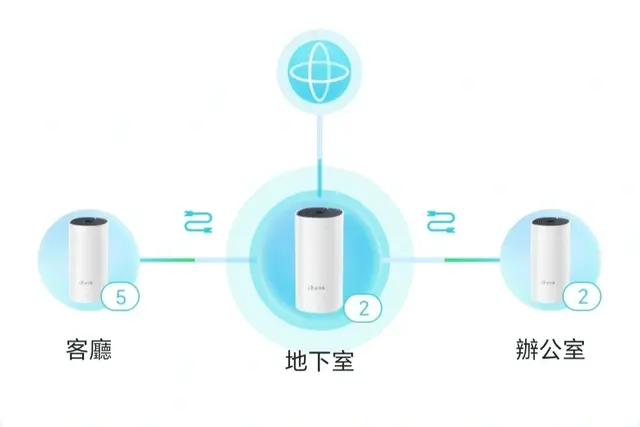
TP-Link Deco M4: a four-floor wired-backhaul setup
I used TP-Link Deco M4 units across four floors with Ethernet backhaul, then found my upstairs computer needed an extra switch to get a wired connection.
Reviews & Guides · Computing & Networking
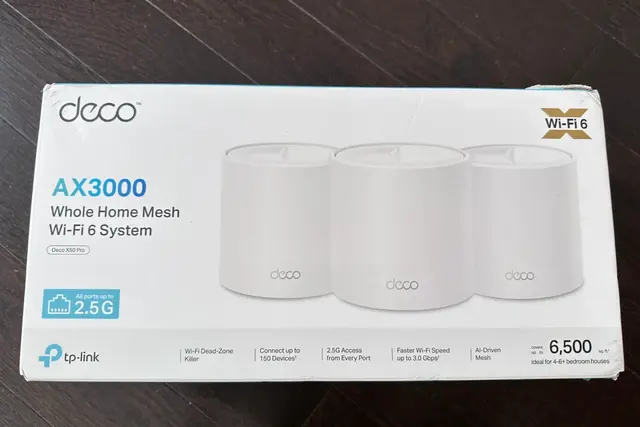
TP-Link Deco X50 Pro: fixing weak upstairs Wi-Fi in a Canadian home
I used a TP-Link Deco X50 Pro mesh system to fix weak upstairs Wi-Fi from a garage router after a cheap extender failed; setup was simple.

Reviews & Guides · Computing & Networking
TP-Link Deco X55: a three-floor installation reached about 400 Mbps upstairs
I installed three TP-Link Deco X55 units for a friend and found setup took about 10 minutes, with roughly 400 Mbps still available on the top floor.