
Google Fitbit Air: a half-month owner review from Guangzhou
I wore Google Fitbit Air for half a month in Guangzhou and found it comfortable for sleep, quick to recharge, but limited by inconsistent AI Coach access.
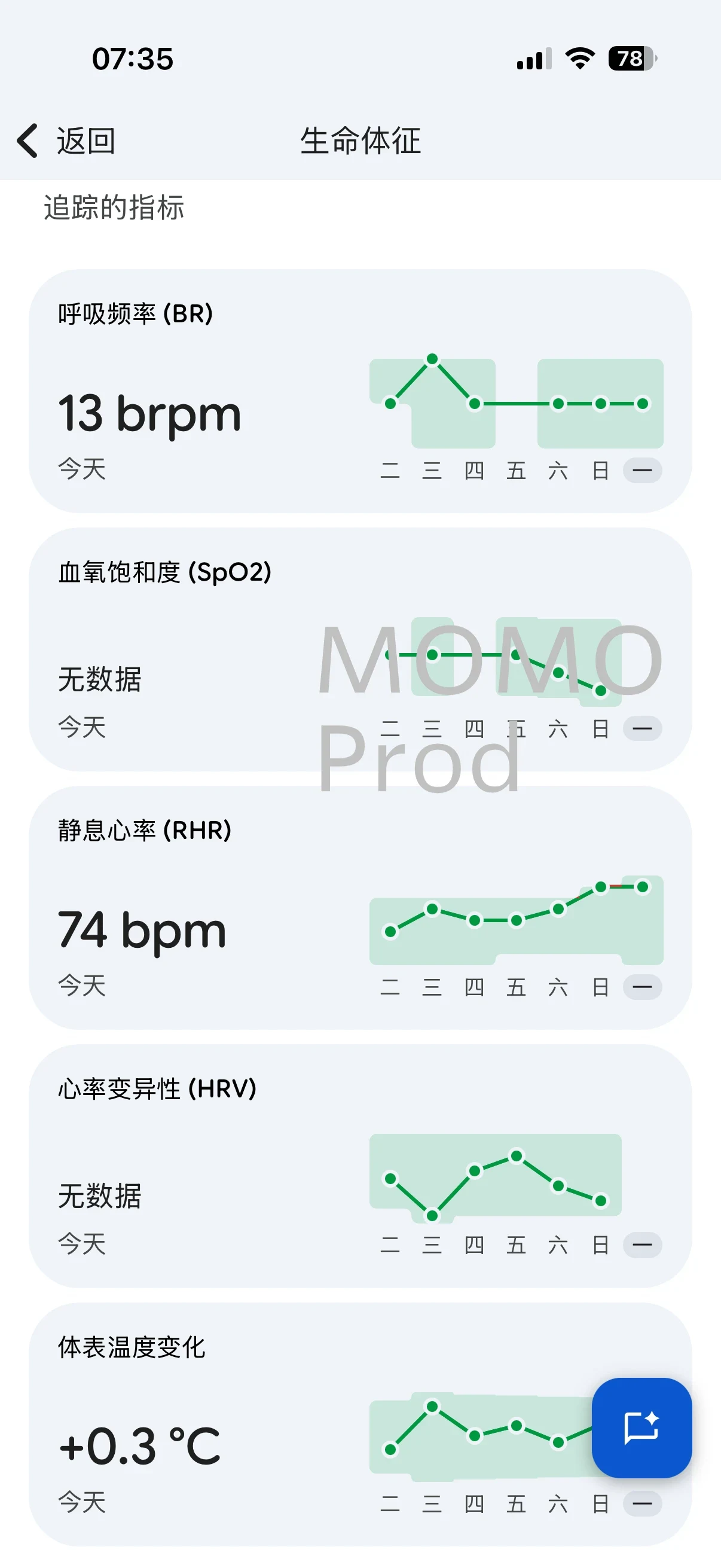
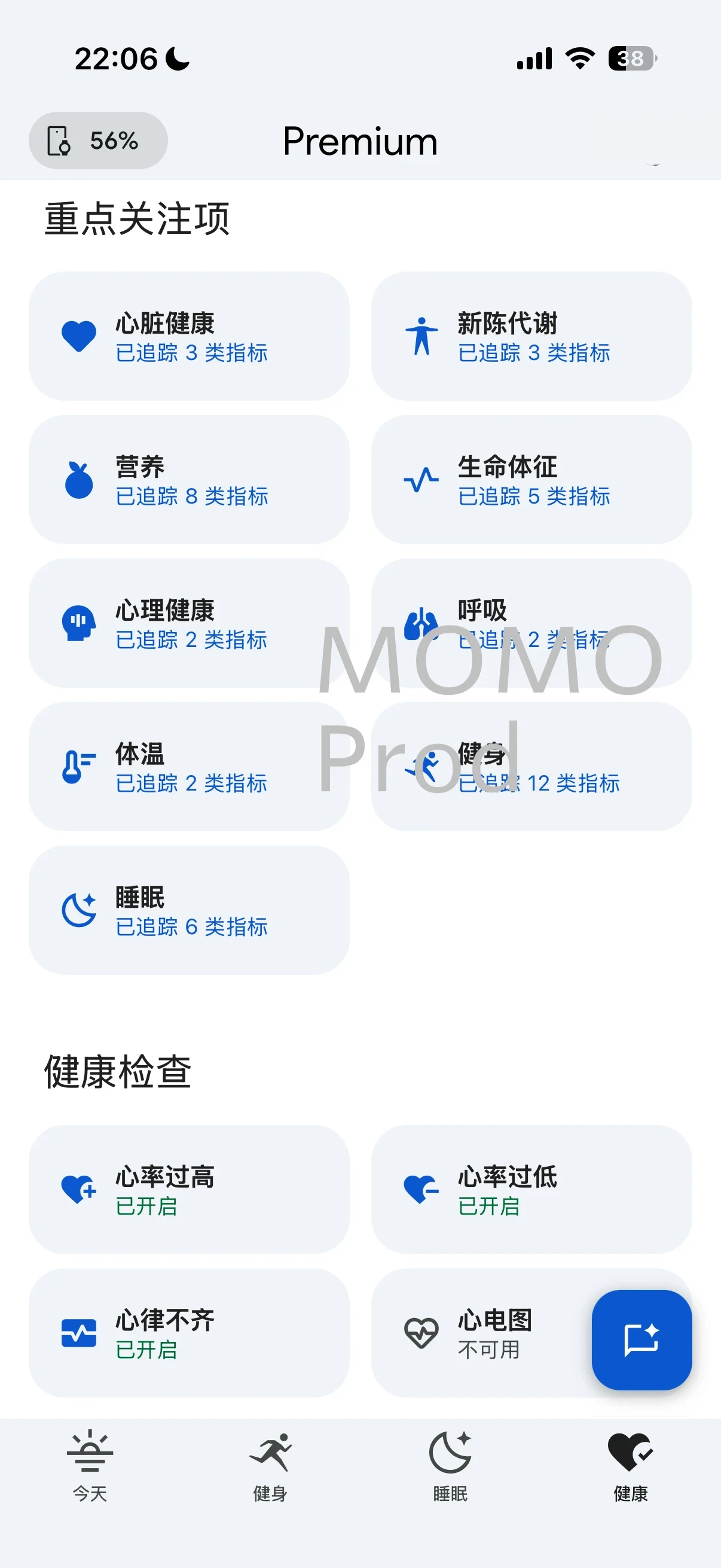
I ordered it from Amazon US on May 13 for $130.66. It shipped on May 30, reached Guangzhou on June 4, and SF Express delivered it to my home on June 7. I have used it for half a month so far; here are my personal impressions.
Appearance, wearing comfort, battery life and charging
The tracker itself is completely enclosed by the band, so from the outside it looks like a simple wristband. It is lightweight and genuinely feels like wearing nothing. Sleeping with it causes no pressure at all; it does not dig into my wrist or affect turning over. If I sync data frequently, the battery does not last as long as the officially claimed one week, but charging is very fast. I can charge it while taking a shower, and more than ten minutes of charging gives me another two days of use, so I have no real battery anxiety.
Notifications and reminders
I knew before buying it that the tracker does not support message notifications or incoming-call alerts; at present, it only provides vibrating alarms. All operation and settings must be handled through the phone app. People have affectionately called it a first-generation Mi Band. If phone notifications give you notification fatigue, you may love this quiet approach of passive recording rather than active interaction. On the other hand, that is a disadvantage.
Sleep and overnight monitoring
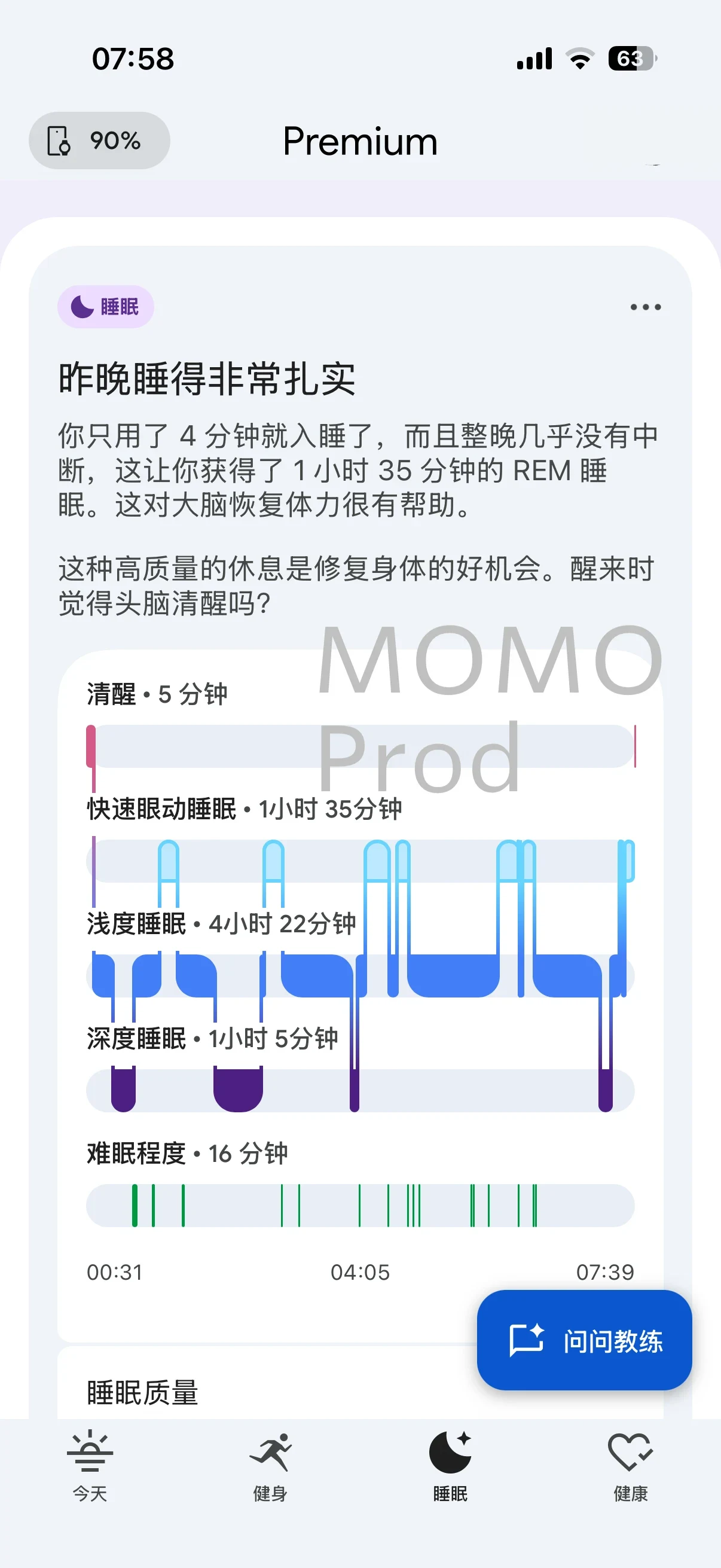
The sleep data is very similar to the records I remember from early Mi Bands and the WeLoop band. My deep-sleep duration has always been short, and this tracker reached the same conclusion, which suggests good consistency in the data. It is said that its algorithm logic is similar to Apple Watch, so I consider its credibility relatively high. At night, the tracker also provides blood-oxygen and breathing-quality monitoring, along with vital-sign data.
Nap recording
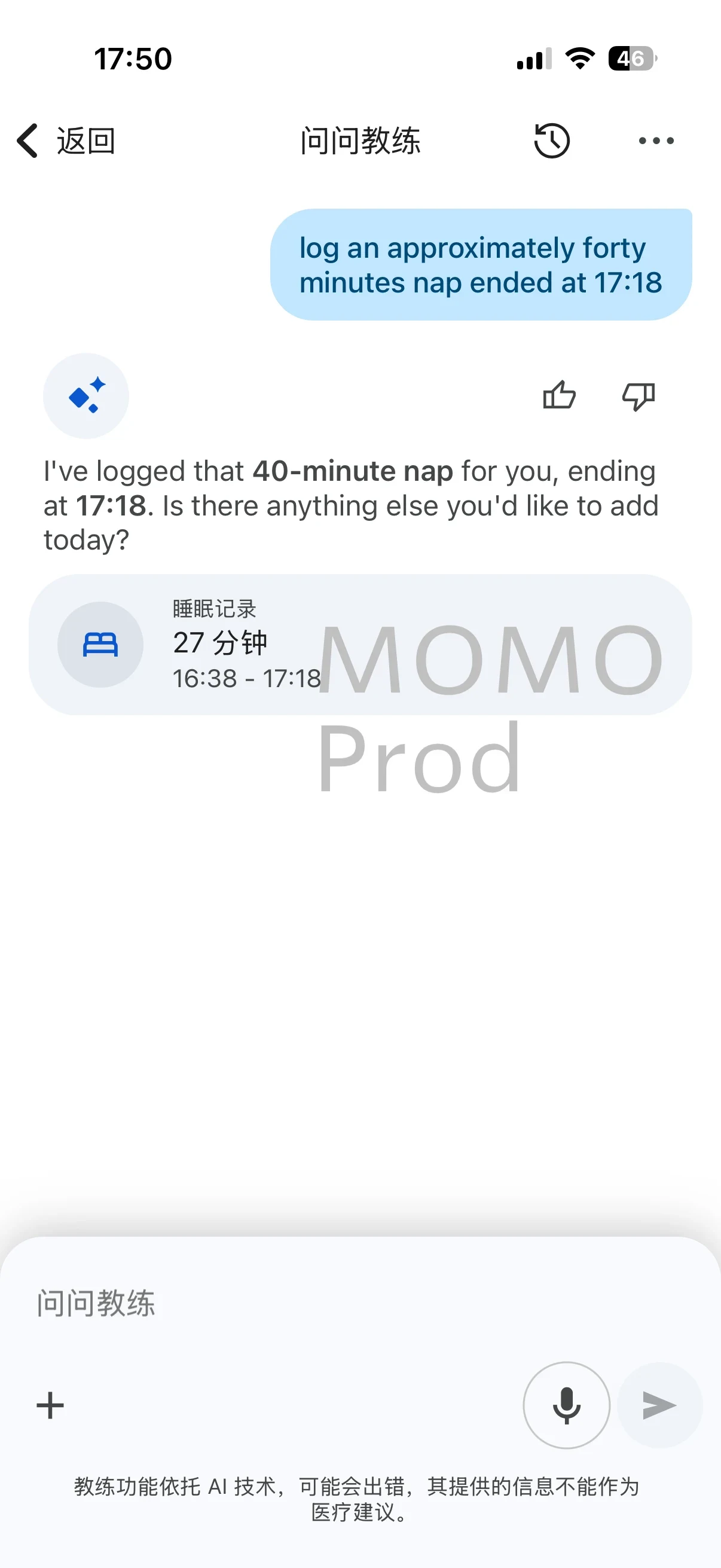
On the second day after receiving it, I took a 30-minute nap, and the data appeared successfully after syncing. A week later, I tried naps of 20 and 40 minutes, but neither generated an automatic record. Automatic nap detection is somewhat inconsistent. However, if I need the data, I can add it manually through AI Coach, which is a useful workaround.
Workout tracking and heart-rate zones
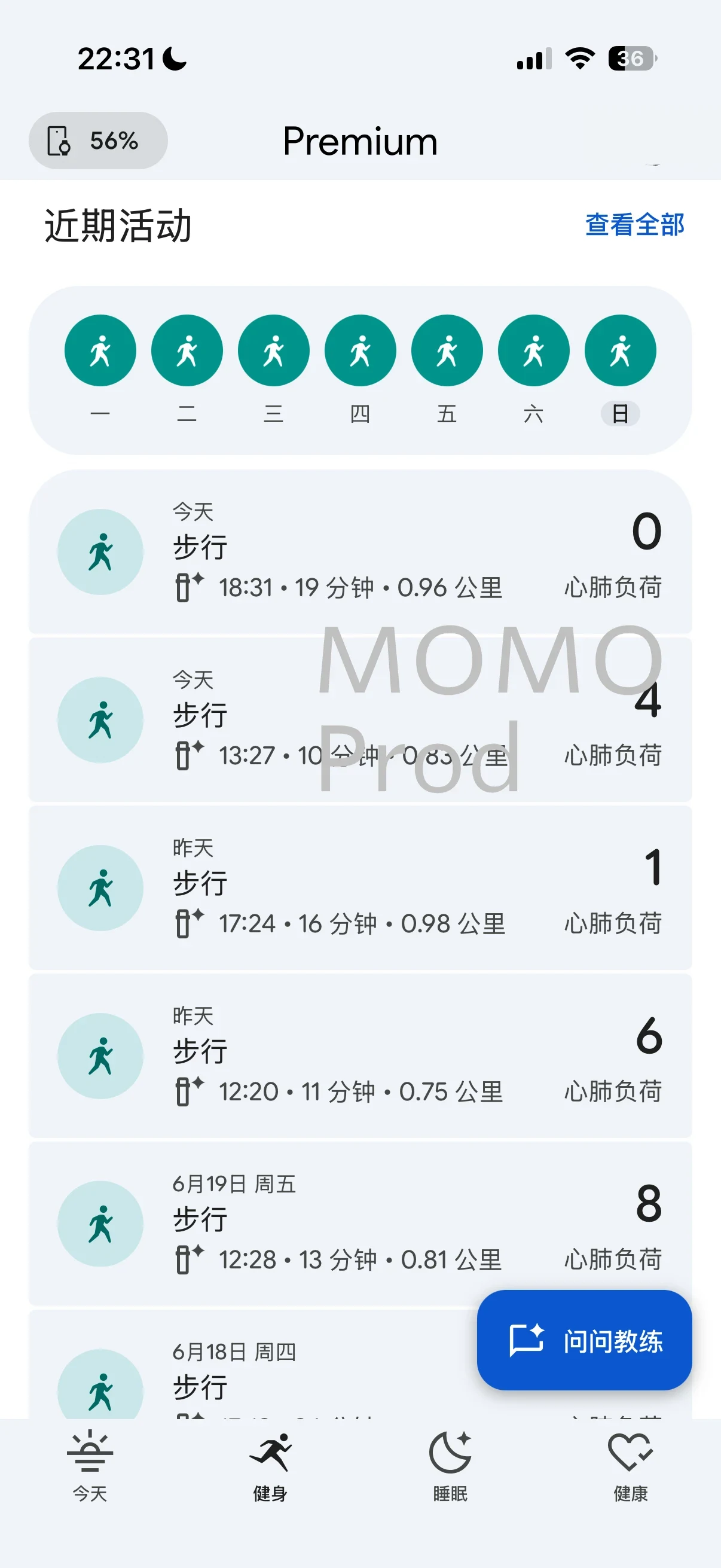
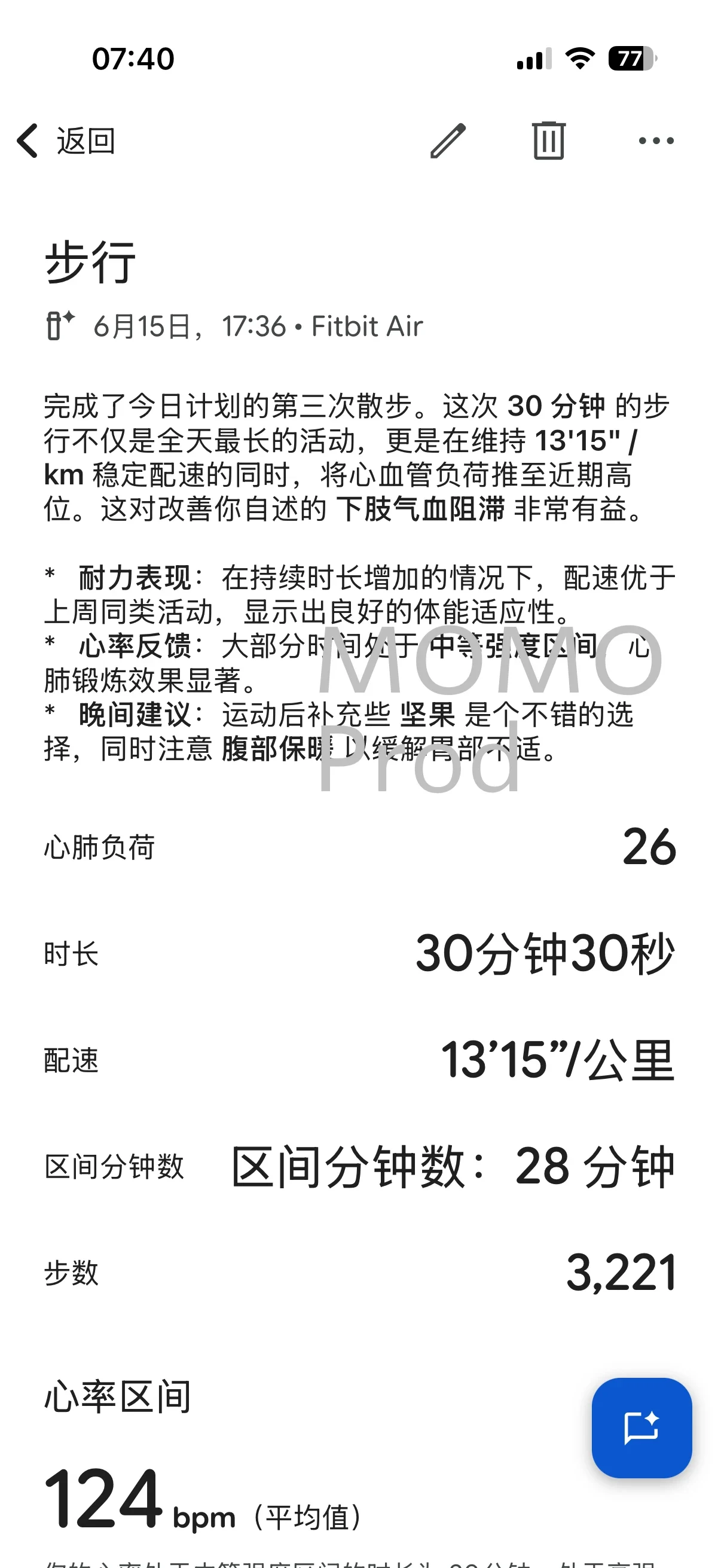
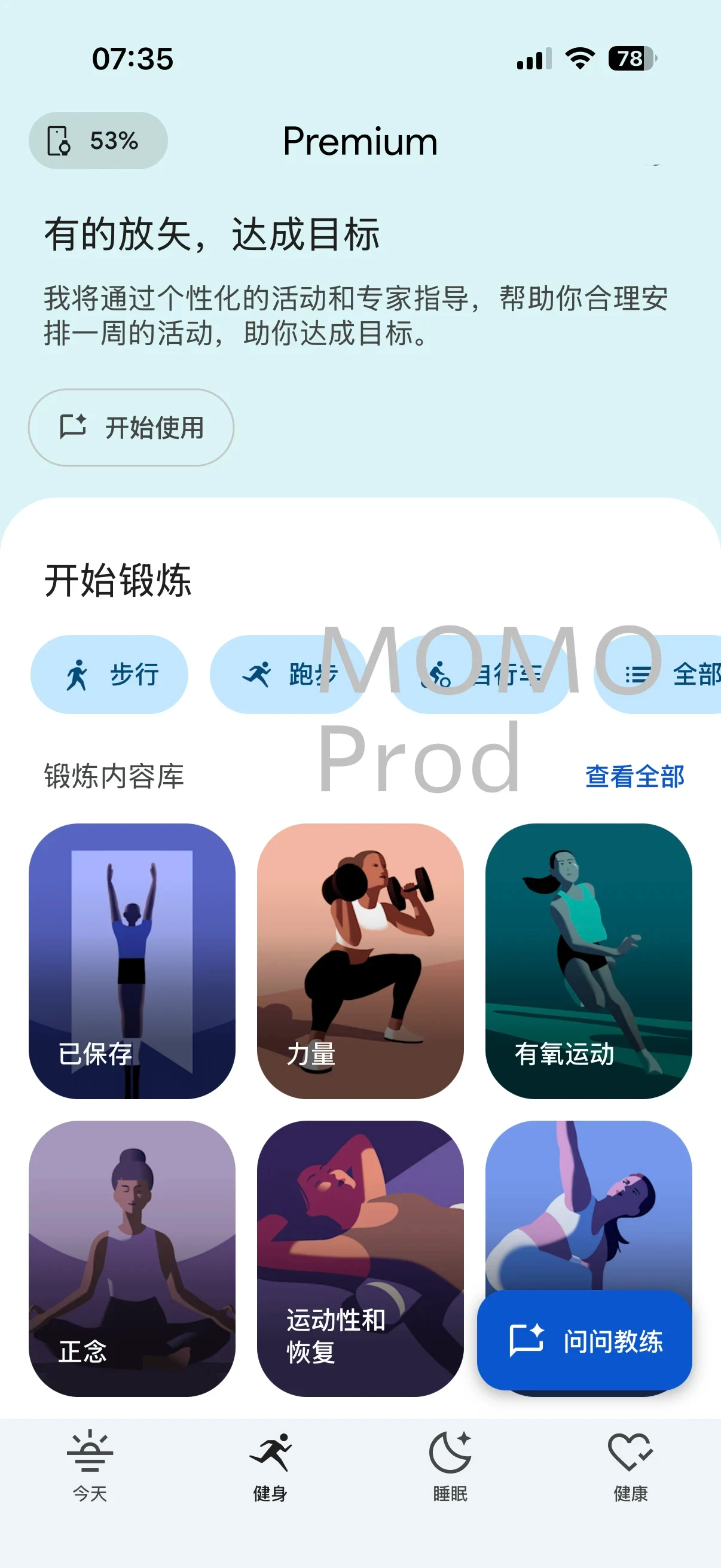
I do not exercise much on workdays, mainly taking walks downstairs at lunchtime and in the evening. The tracker automatically identifies and records walks lasting at least 10 minutes; the default recording duration is 15 minutes, but I can adjust it. After syncing, it creates a summary and detailed data. Besides automatic recognition, it includes many workout types under the Fitness category. AI Coach says that manually starting and ending a workout also records the route. I can view my heart rate in real time in the app during exercise. The app also sends a daily summary and workout suggestions before bed and after I wake up, which is thoughtful.
Cardio load and readiness
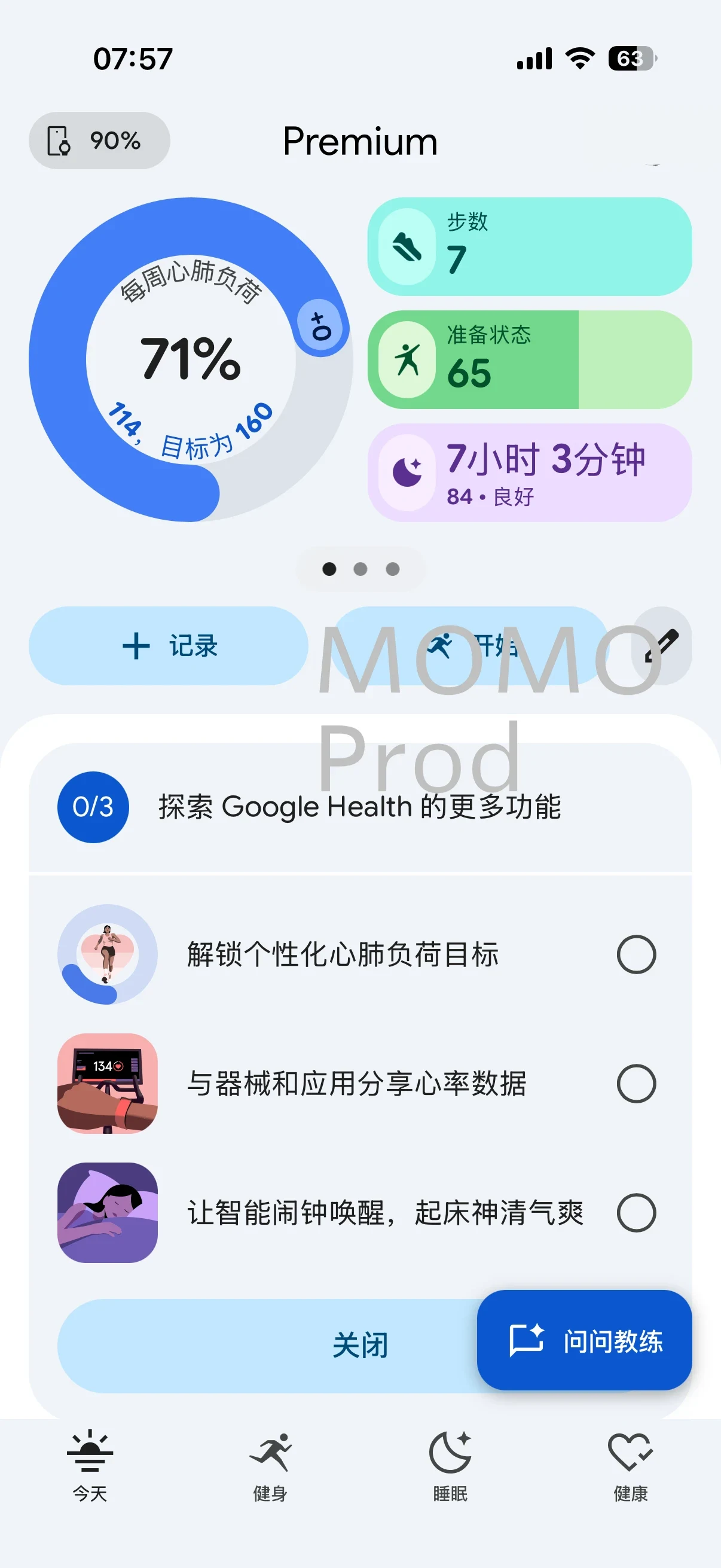
After wearing it overnight for a continuous week, the system used the monitoring data to provide a weekly cardio-load index and a daily readiness score. These are intended to help adjust workout intensity and avoid overexertion.
AI Coach
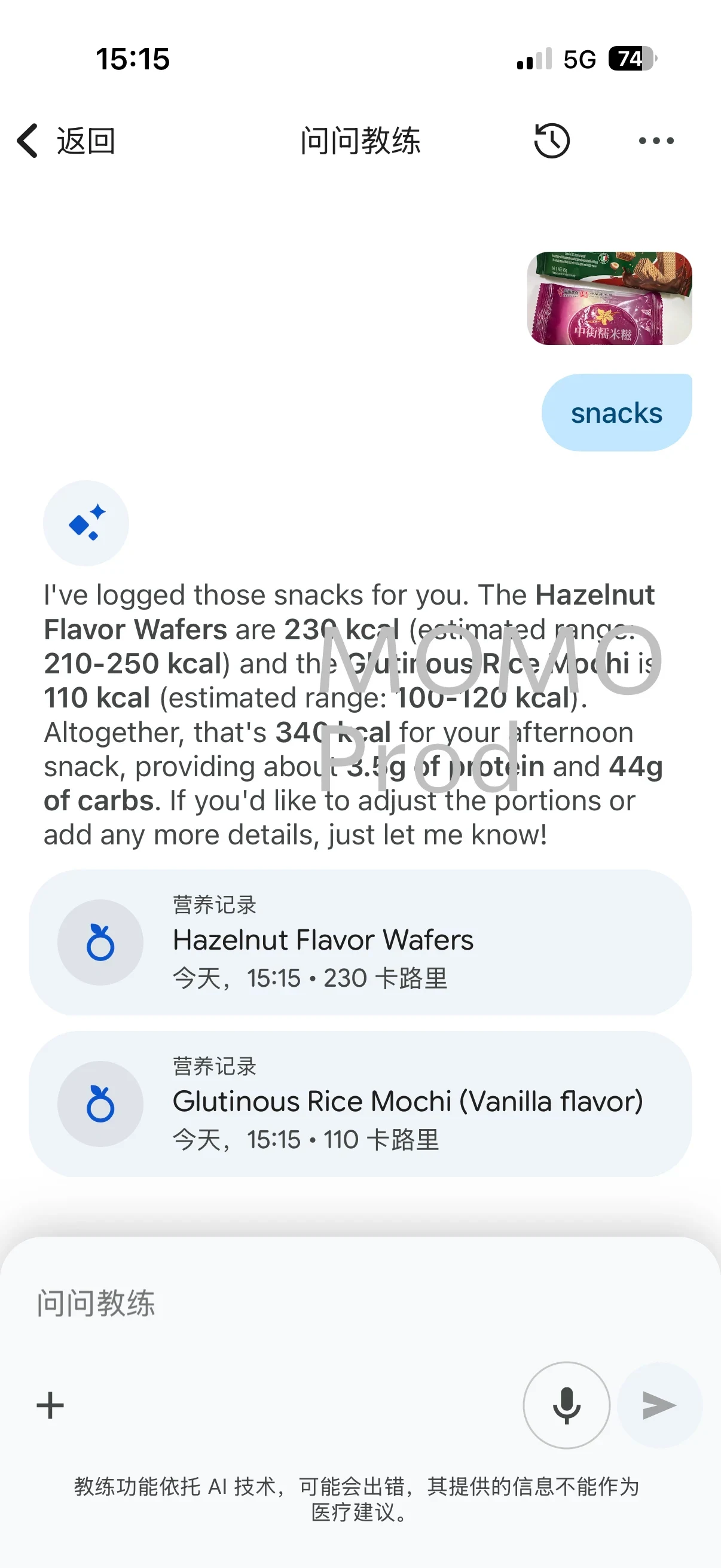
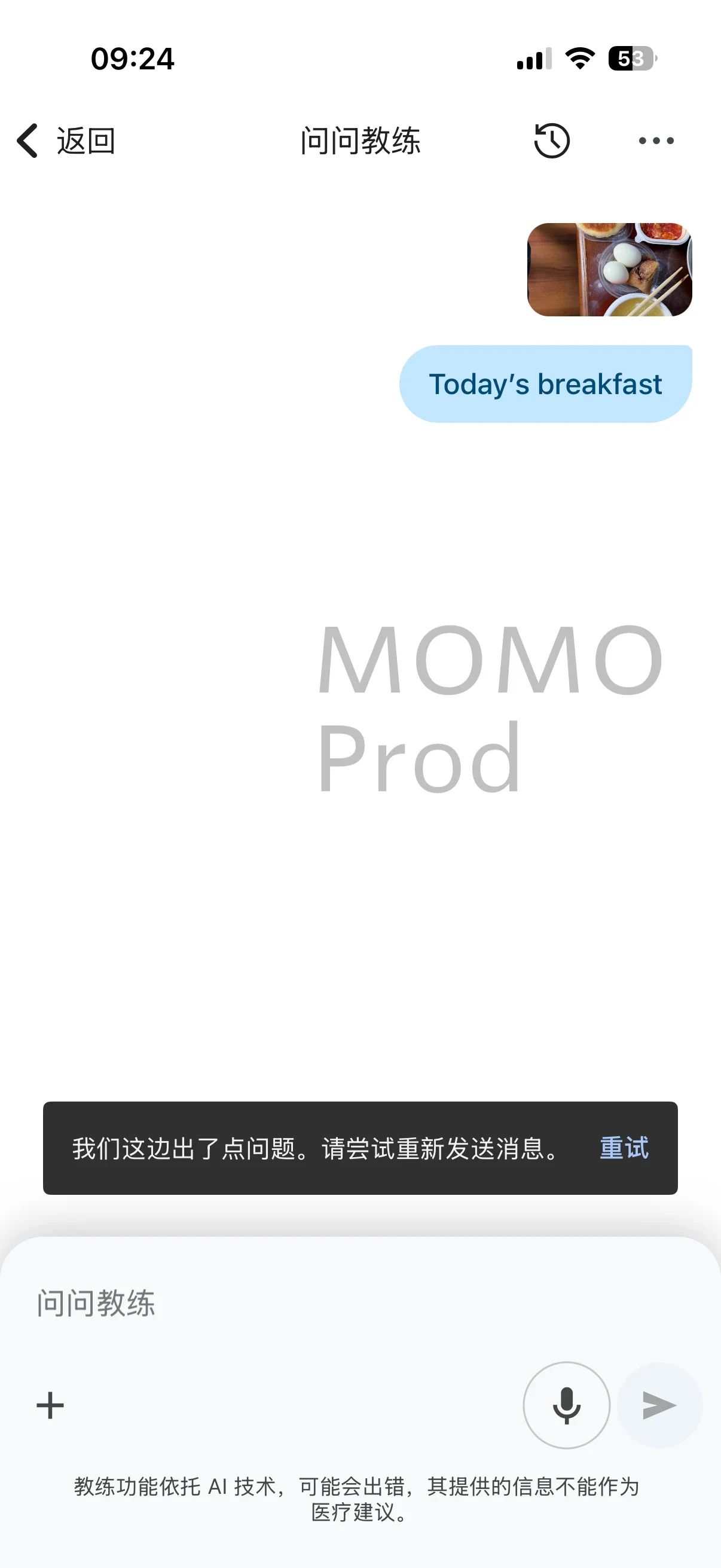
My favorite feature so far is AI Coach. Besides recording calories, fat, protein and other nutritional data for meals and snacks, I can ask it questions about all kinds of health topics. AI Coach uses previous conversations and gives personalized suggestions in its summaries. However, the service is currently unreliable. Even after changing the region setting and turning off location services, it sometimes cannot be used. Data syncing and other functions are unaffected, but the experience feels incomplete without AI Coach, so I will keep watching to see whether I renew it three months from now.
Source: MOMOprod · Xiaohongshu · 2026-06-22 · Fitbit Air 手环使用体验(购入半月小结). Search this Chinese title in Xiaohongshu to find the original post.
Before You Buy
Models in your region
The owner bought and used the tracker in Guangzhou after ordering from Amazon US. Google’s US and UK store pages list the same Google Fitbit Air product name and broadly matching battery, charging, weight and phone requirements, while Google Health Coach is officially listed for several countries but not mainland China; access in the owner’s account therefore should not be assumed from the hardware match alone.
| Model in this review | Related regional model | What to know |
|---|---|---|
| Google Fitbit Air | Google Fitbit Air (US) | The owner ordered Fitbit Air from Amazon US. Google’s US specification lists up to seven days per charge; the owner found frequent syncing shortened that in their routine. |
| Google Fitbit Air | Google Fitbit Air (UK) | The UK listing matches the US headline battery, charging, weight and phone requirements. Check the seller’s accessories and warranty for a cross-border purchase. |
- Model in this review
- Google Fitbit Air
- Related regional model
- Google Fitbit Air (US)
- What to know
- The owner ordered Fitbit Air from Amazon US. Google’s US specification lists up to seven days per charge; the owner found frequent syncing shortened that in their routine.
- Model in this review
- Google Fitbit Air
- Related regional model
- Google Fitbit Air (UK)
- What to know
- The UK listing matches the US headline battery, charging, weight and phone requirements. Check the seller’s accessories and warranty for a cross-border purchase.
Battery claims versus the owner’s routine
Google lists up to seven days of battery life for Google Fitbit Air, with a 90-minute full charge and five minutes of charging for one day of battery. The owner’s frequent-syncing routine produced a shorter result, while more than ten minutes gave them about two days; that personal outcome is not a laboratory battery test and may not represent every usage pattern.
Fitbit Air weighs 12 g with its band in both the US and UK specifications. That compact format appealed to this owner, who found it comfortable enough to wear through the night.
A quiet tracker with phone-dependent setup
The owner’s main interaction trade-off is clear: Google Fitbit Air was used as a passive recorder because it did not provide message or call alerts, and settings depended on the phone app. Buyers who want wrist notifications should confirm the feature set before choosing it; the owner’s account specifically reports only vibrating alarms.
Google says the device requires a Google account, the Google Health app, Android 11 or later or iOS 16.4 or later, Bluetooth LE, internet access and location permission for syncing. The owner’s experience therefore assumes a compatible phone and the required app permissions, even though disabling location later did not stop all other data syncing.
Sleep, naps and activity data
The owner found overnight wear comfortable and reported sleep results that were consistent with their earlier personal records. That supports comfort and repeatability for this individual, not a clinical assessment of sleep accuracy. The owner also reported blood-oxygen, breathing-quality and other vital-sign data, while Google notes that heart-rate accuracy depends on physiology, fit and movement.
Nap detection was the least predictable part of the owner’s sleep experience: a 30-minute nap appeared automatically, but later 20- and 40-minute naps did not. Manual entry through AI Coach provides a fallback, so buyers who need dependable automatic nap logs should treat this account as a reason to verify that workflow rather than as proof of a general failure.
The owner adjusted walking detection to 10 minutes and viewed live heart rate through the app. AI Coach also told them that manually starting and stopping workouts would record the route, but that advice is not confirmation that route recording was tested in this account.
AI Coach availability matters by region
The owner used AI Coach for meal and snack logging, nutrition summaries and health questions, but reported occasional failures even after changing the region setting and disabling location. Google officially describes Health Coach as a premium feature for adults with a Fitbit or Pixel Watch, supports meal and workout logging, and warns that its guidance is informational rather than medical advice and that AI can make mistakes.
Google’s supported-country list includes the US, Canada, the UK, Germany, France, Italy and other listed markets, but not Hong Kong or mainland China. That means a mainland-China buyer should confirm current account and subscription availability before treating AI Coach as a dependable part of the purchase; changing settings or using network workarounds is not proof of official support.
Care and daily wear
Google lists 50 m water resistance and advises removing and completely drying the band after it becomes wet or sweaty. The owner’s habit of charging during a shower describes their charging routine, not a test or endorsement of wearing the tracker in the shower, so buyers should follow the manufacturer’s drying guidance.
Related Reading
Reviews & Guides · Wearables
Google Fitbit Air: three-day owner notes on fit, sleep and regional AI Coach access
My Fitbit Air battery fell from 100% to 76% in three days. Cycling and walking were detected automatically, but strength training needed manual entry.
Reviews & Guides · Wearables
Google Fitbit Air: a three-week owner review of fit, battery and AI coaching
I wore the 12g Google Fitbit Air day and night for three weeks, charged it weekly, and found its AI coach surprisingly specific about training and recovery.
Reviews & Guides · Wearables
Google Fitbit Air owner review: light, screen-free tracking with slow responses
I liked Fitbit Air's light fit and interactive logging enough to order a Timex Weekender, but slow replies and incomplete split-sleep records frustrated me.