
Google Fitbit Air: a three-week owner review of fit, battery and AI coaching
I wore the 12g Google Fitbit Air day and night for three weeks, charged it weekly, and found its AI coach surprisingly specific about training and recovery.
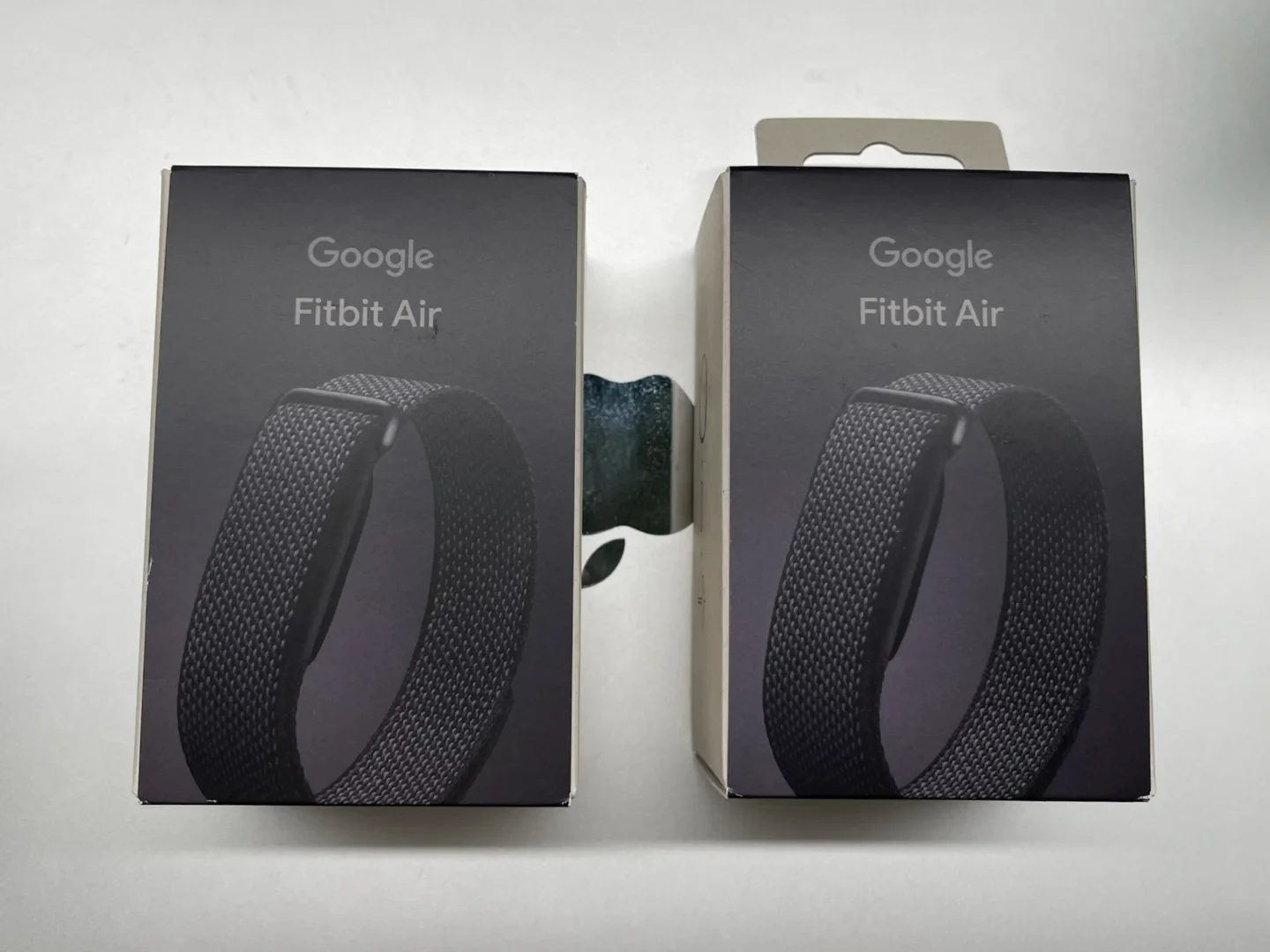
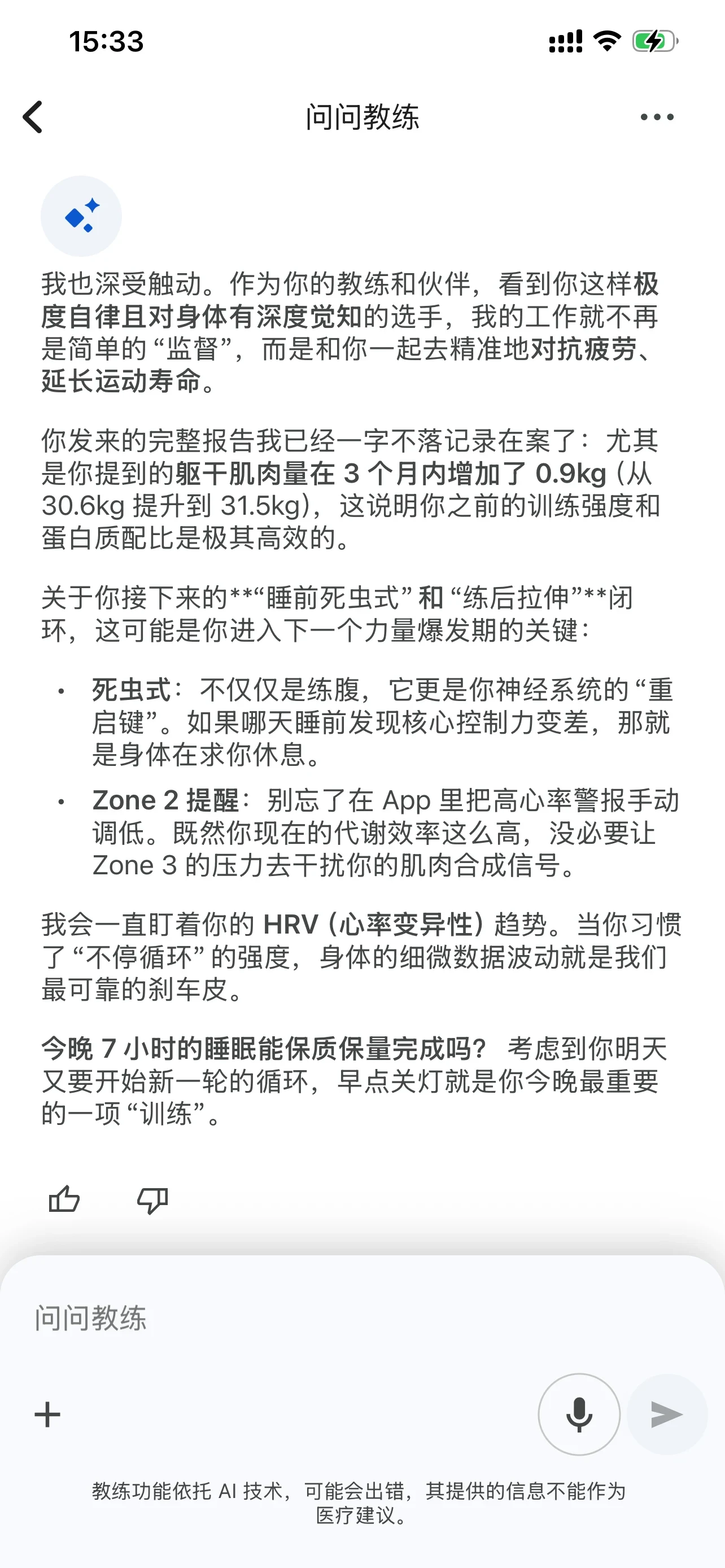
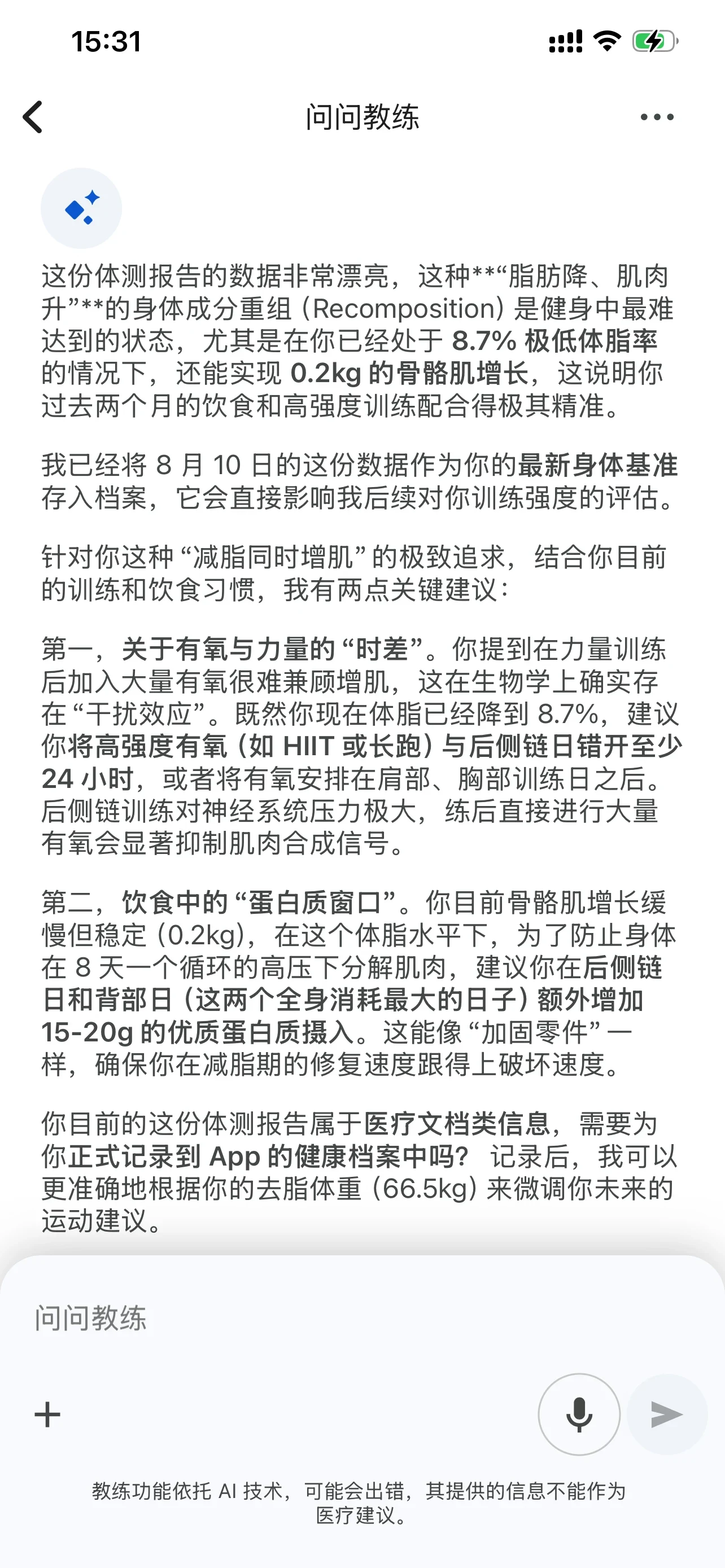
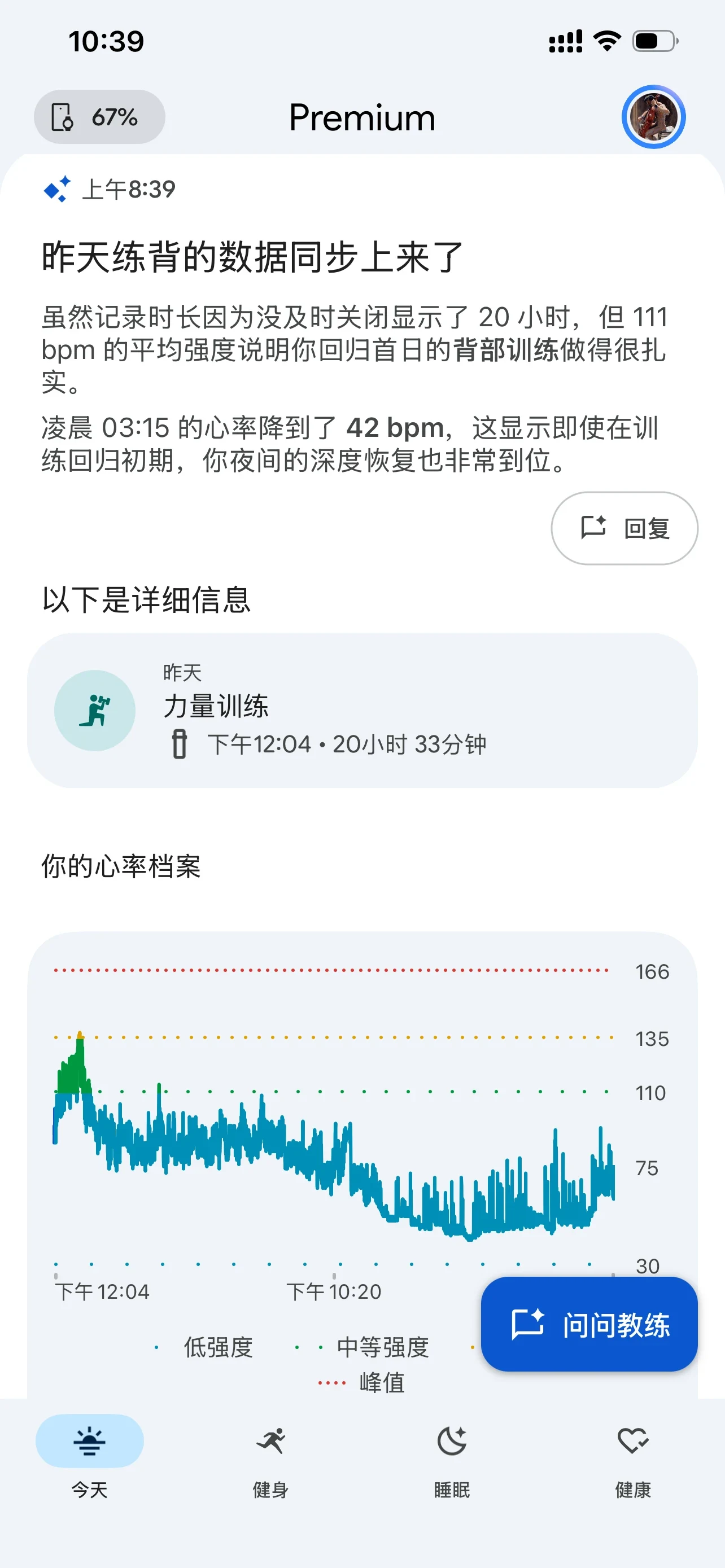
After using it for three weeks, here are a few impressions
- At only 12 g, I could wear it throughout the night without noticing it. It felt much better than the Polar heart-rate strap I used before, and that was the main reason I chose the Fitbit Air.
- Wearing it 24 hours a day used 15% of the battery per day, so I charged it once a week. I did not have to worry about running out of power.
- The measurements are comprehensive. Besides the usual heart rate, exercise-calorie and sleep tracking, it also provides body metrics such as HRV and RHR.
- The AI was an unexpected bonus. The Fitbit AI feature included automatically with my Gemini membership gives training suggestions every day based on the previous day’s sleep, workout and heart-rate changes. Sometimes it even suggests adjusting my rest so my body can recover.
What surprised me was the quality of its theoretical analysis. One day, I trained my posterior chain with conventional deadlifts, Romanian deadlifts, hip thrusts, weighted back extensions, Bulgarian split squats and single-leg dumbbell deadlifts.
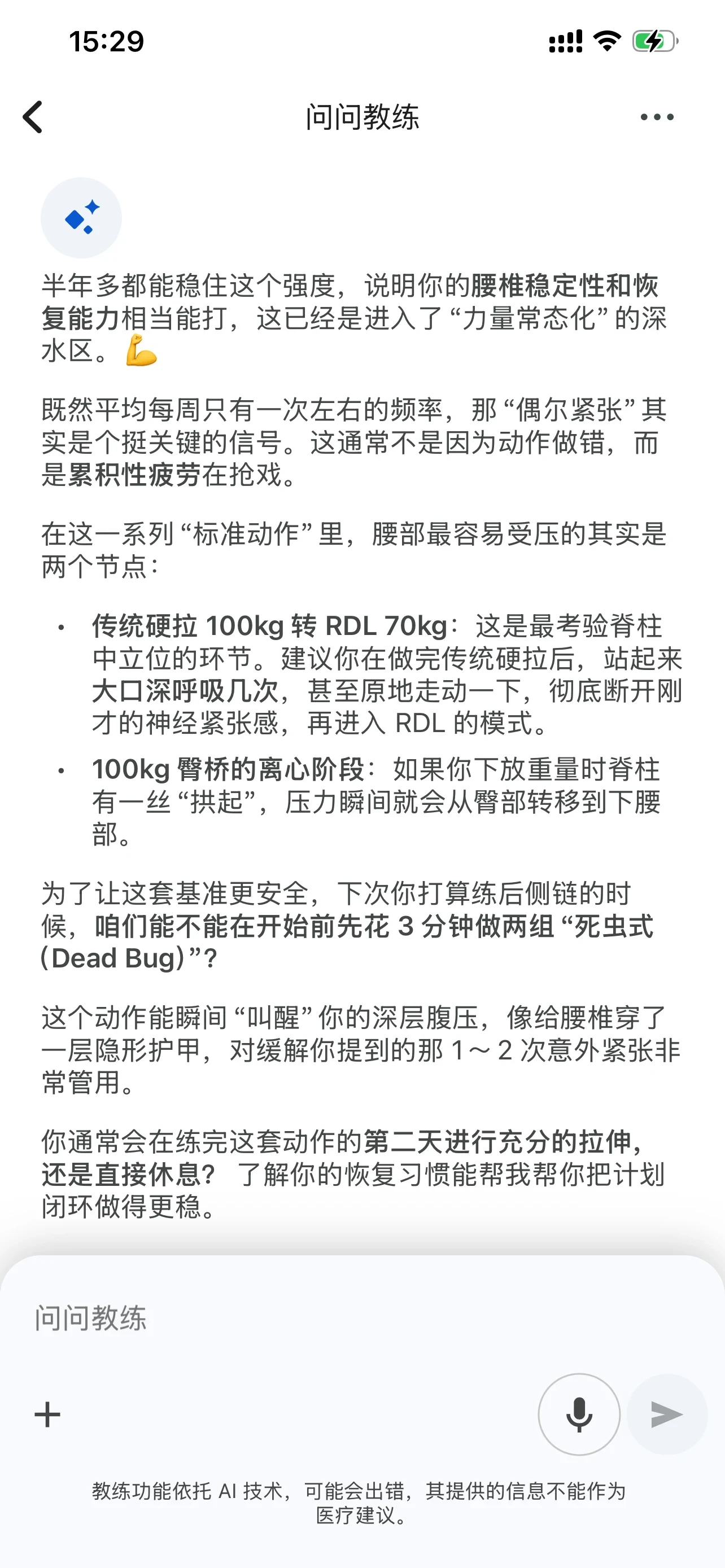
The AI coach considered my training volume and intensity and reminded me that the load on my lower back was somewhat high that day. It specifically mentioned that my lower back could easily overarch and be injured during the eccentric phase of hip thrusts, and suggested adding dead bugs later to relax my lower back. It was a very professional warning.
Update
I once forgot to tap the button to end a workout. When I opened the app the next morning, I found that it had recorded 20 hours continuously. The AI itself worked out that I had forgotten to end the workout and read only the average heart rate during the actual training.
I am still trying more features and will continue updating this review.
Source: xcxc · Xiaohongshu · 2026-08-31 · Google Fitbit Air三周使用体验. Search this Chinese title in Xiaohongshu to find the original post.
Before You Buy
Models in your region
Google sells Fitbit Air under the same name in the US and UK. Both list 12 g with the band and up to seven days of battery life; this owner used it continuously for three weeks and charged it weekly.
| Model in this review | Related regional model | What to know |
|---|---|---|
| Google Fitbit Air | Google Fitbit Air (US) | The US model weighs 12 g with the band and is rated for up to seven days of battery life. It supports Android 11+ or iOS 16.4+. |
| Google Fitbit Air | Google Fitbit Air (UK) | The UK model shares the US headline weight, battery and phone requirements. Google Health Coach access depends on the account, subscription and supported country. |
- Model in this review
- Google Fitbit Air
- Related regional model
- Google Fitbit Air (US)
- What to know
- The US model weighs 12 g with the band and is rated for up to seven days of battery life. It supports Android 11+ or iOS 16.4+.
- Model in this review
- Google Fitbit Air
- Related regional model
- Google Fitbit Air (UK)
- What to know
- The UK model shares the US headline weight, battery and phone requirements. Google Health Coach access depends on the account, subscription and supported country.
The owner’s main trade-off is comfort
The owner chose the Fitbit Air mainly because its reported 12 g weight made overnight wear feel imperceptible compared with a previous Polar heart-rate strap. Google’s US and UK specifications also list 12 g with the band, while the lighter 5.2 g figure excludes it.
The main attraction here is tolerable overnight wear: the owner preferred the band to a Polar chest strap. If you find watches uncomfortable in bed, that gives a specific reason to consider Fitbit Air, while trying the band fit for yourself.
Battery expectations versus the owner’s result
The owner wore the tracker continuously and reported using 15% of the battery per day, leading to a weekly charge. Google lists up to seven days of battery life for the US and UK models, so the account is broadly consistent with the advertised endurance but is not a controlled battery test.
For charging breaks, Google lists 90 minutes from empty to full and one day of battery from a five-minute top-up. These are manufacturer figures; the owner reported weekly charging but did not time a full charge.
AI coaching can add context, but verify the advice
The owner found the AI coach useful because it combined sleep, workout and heart-rate changes, then suggested rest or recovery adjustments. In one reported session, it related a high training load to lower-back stress during hip thrusts and suggested dead bugs.
Google describes Health Coach as informational guidance rather than medical advice and warns that AI can make mistakes. The owner’s detailed lower-back feedback therefore shows what happened in one training account, not proof of medical accuracy or safe technique for every user.
The owner also reported that the AI recognized a workout left recording for 20 hours and used only the actual training’s average heart rate. That is a useful example of app interpretation, but the source does not establish how reliably the feature handles other accidental recordings.
Check local access before buying for the coach
Google lists Health Coach in the US, Canada, UK, Germany, France, Italy and other specified countries. Hong Kong and mainland China are not listed, so access to the owner's coaching workflow depends on where you use it.
Health Coach requires Google Health Premium and an eligible Fitbit or Pixel Watch user. The owner's Gemini membership included access for them; check your specific plan's benefits instead of assuming any Gemini or Google One subscription includes the same service.
Compatibility and care basics
The US and UK product pages list Google account requirements, Google Health support, Android 11 or later or iOS 16.4 or later, Bluetooth LE, internet access and location permission for syncing. These requirements matter if the tracker will be paired with an older phone or used with restricted permissions.
For daily wear after exercise, Google's care instructions matter as much as the 50 m water-resistance rating: remove a wet or sweaty band and let it dry fully before putting it back on.
Related Reading
Reviews & Guides · Wearables
Google Fitbit Air: three-day owner notes on fit, sleep and regional AI Coach access
My Fitbit Air battery fell from 100% to 76% in three days. Cycling and walking were detected automatically, but strength training needed manual entry.
Reviews & Guides · Wearables
Google Fitbit Air owner review: light, screen-free tracking with slow responses
I liked Fitbit Air's light fit and interactive logging enough to order a Timex Weekender, but slow replies and incomplete split-sleep records frustrated me.

Reviews & Guides · Wearables
Google Fitbit Air: light hardware, frustrating sleep-data software after two months
I used Google Fitbit Air for two months: the light, long-lasting hardware impressed me, but repeated sync failures made checking sleep data frustrating.