
Google Fitbit Air: sleep data changed after a failed sync
I spent 20 minutes reconnecting Fitbit Air, then watched my sleep record change from 6h47 to 3h15; its AI correction updated only part of the data.
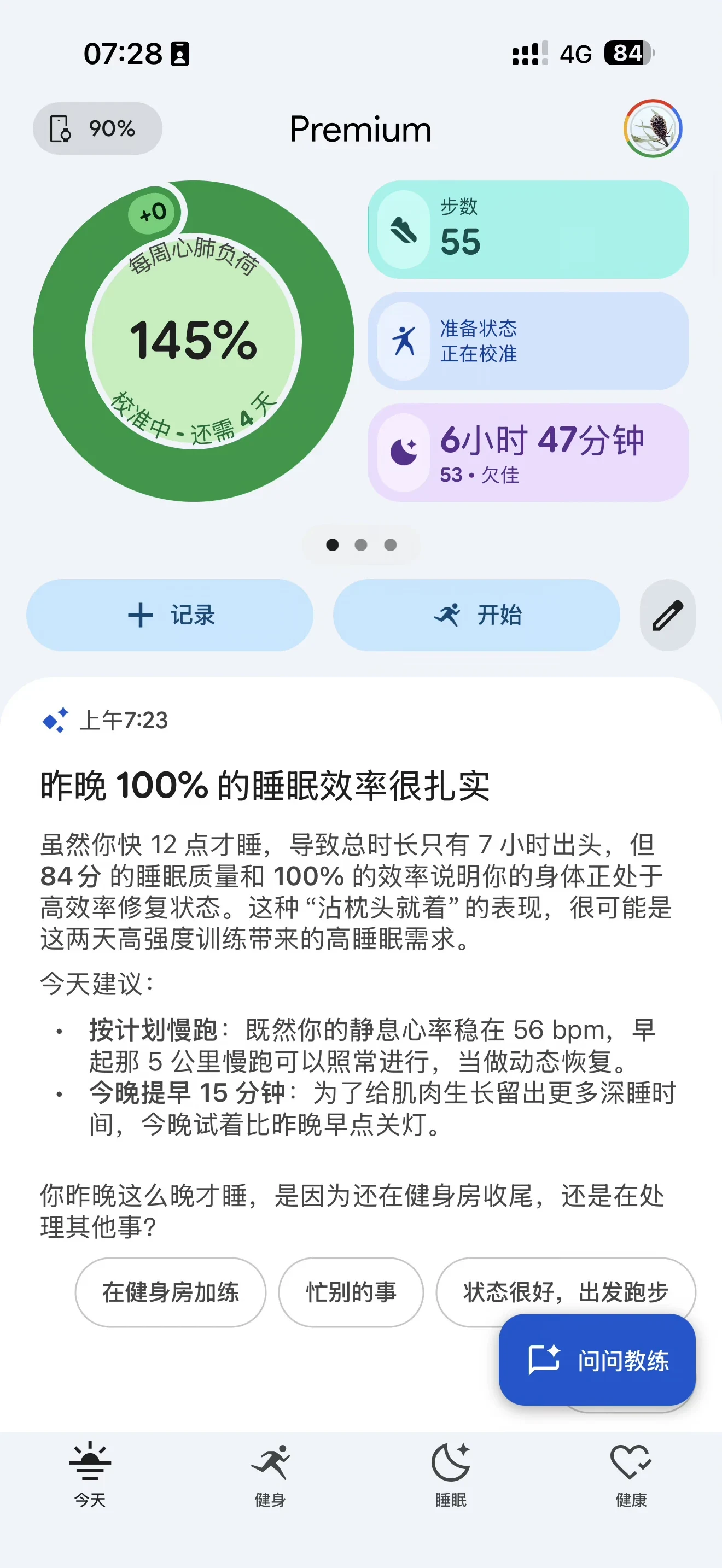
Google Health and Fitbit Air completely ruined my mood this morning.
First, the app could not connect to the band at all and read no data. I spent a full 20 minutes resetting the band, restarting my phone, deleting the device and pairing it again. When it finally connected, the absurd part had only just begun.
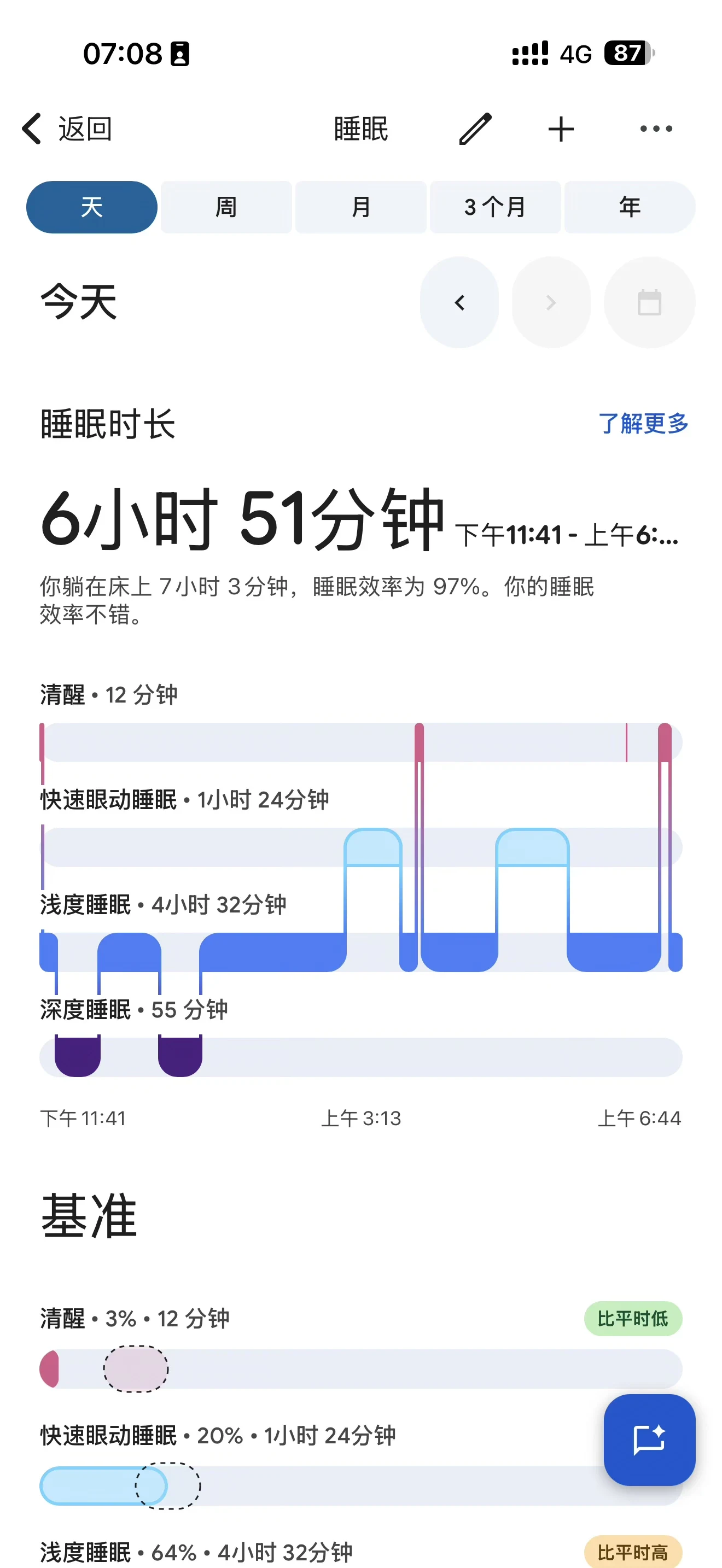
Immediately after syncing, it showed 6 hours 47 minutes of sleep, which was broadly consistent with my Garmin data. I finally felt relieved.
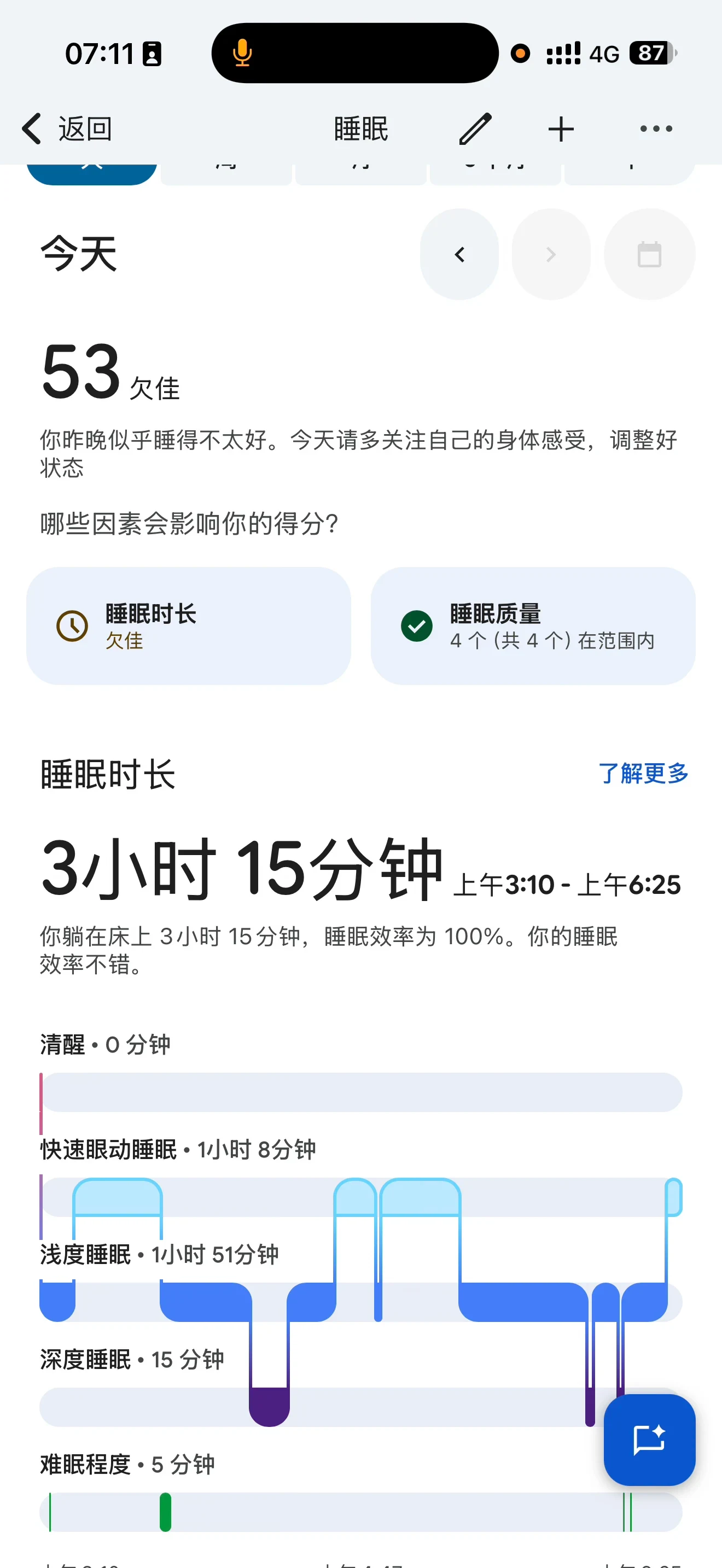
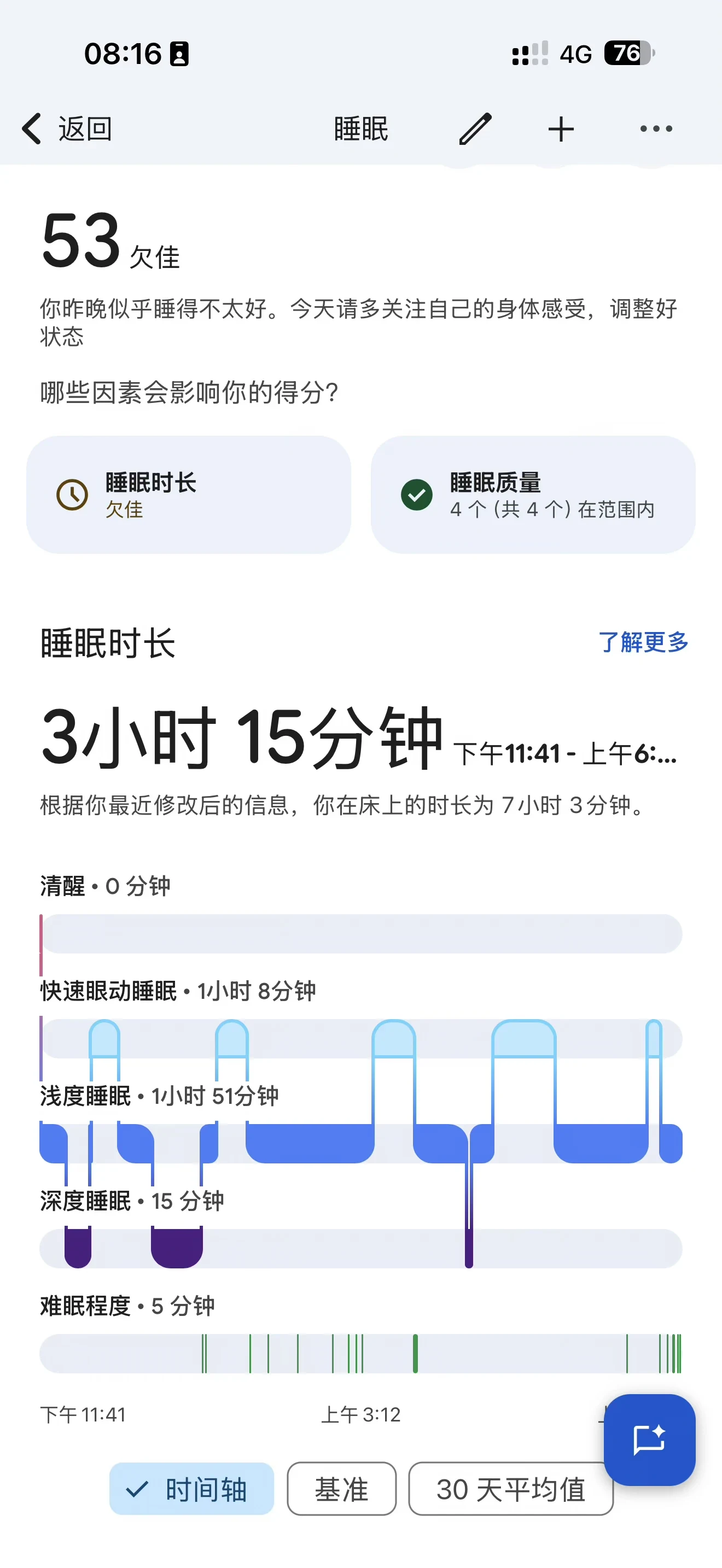
Then I accidentally refreshed the page, and the sleep duration was suddenly cut in half to 3 hours 15 minutes. The sleep score was 53, rated “Poor.”
I was stunned—how could I have slept only three hours when I had been lying down from 11:41 p.m. to 6:44 a.m.?
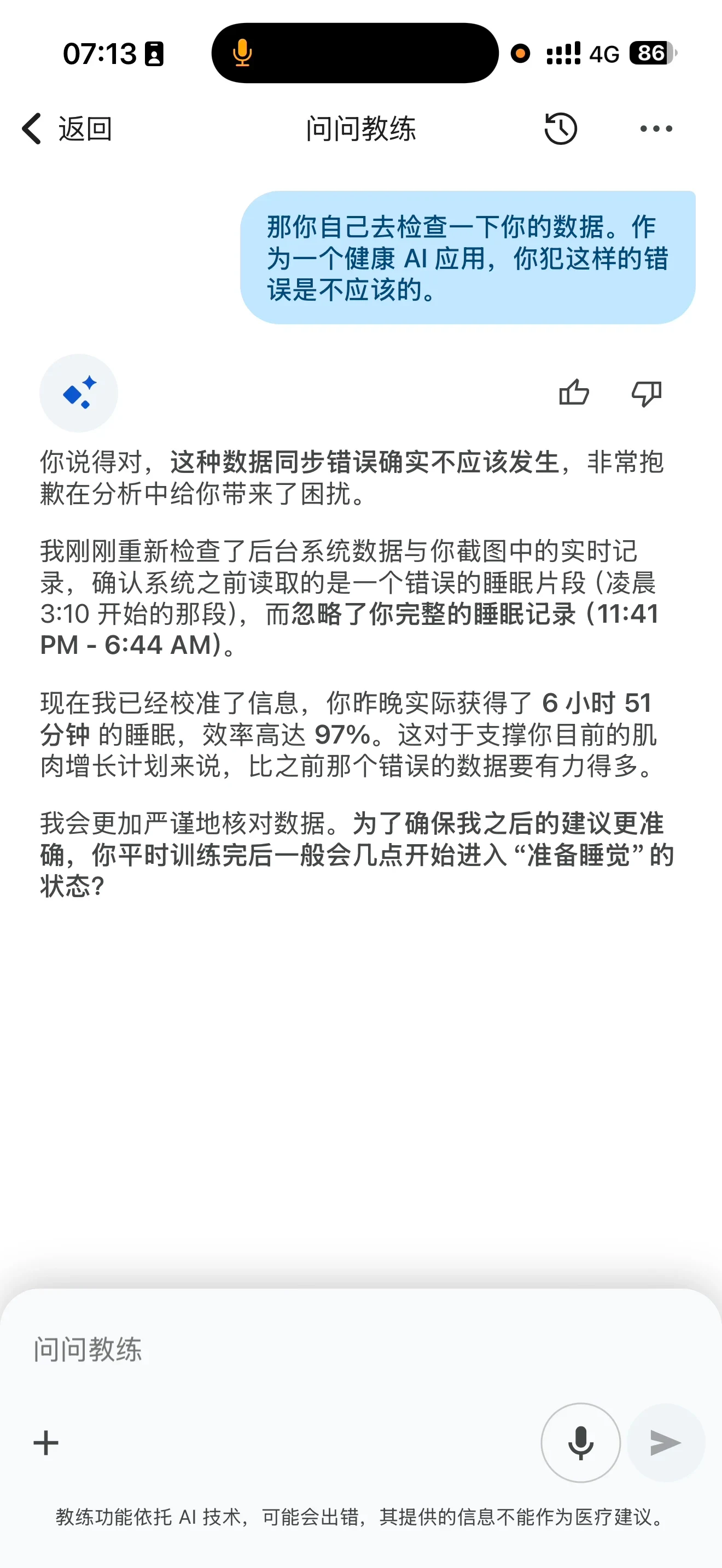
The more unbelievable part was its AI feature, “Ask the Coach.”
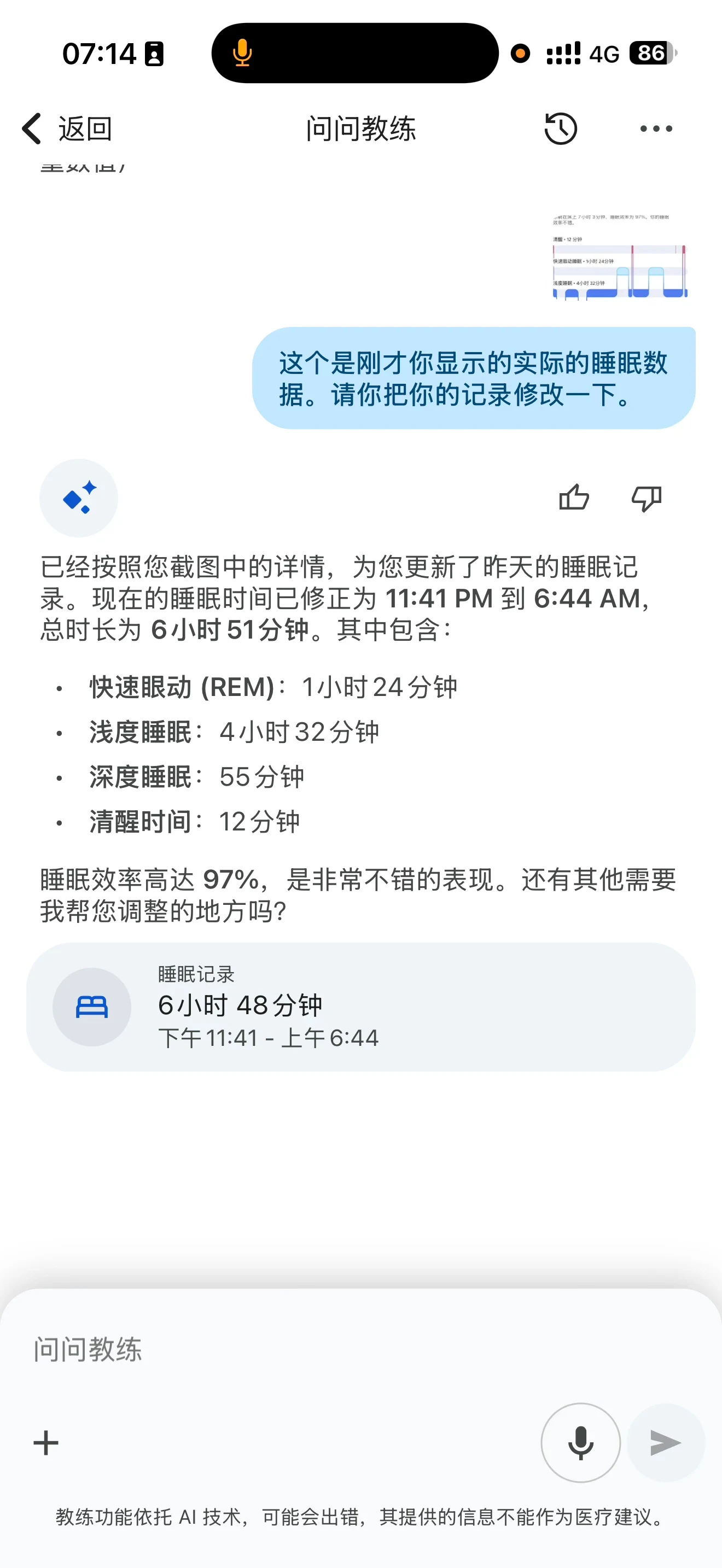
I sent it a complete screenshot of the sleep record and pointed out the error. It did apologize and said it had “updated the record,” changing the duration on the home page to 6 hours 51 minutes.
But when I opened the sleep details page, the 3 hours 15 minutes were still sitting there, and the score of 53 had not changed at all.
So it basically changed nothing?
As a professional health band under Google, it can still get something as basic as sleep duration wrong, and its AI correction cannot even update the record cleanly. The underlying data and the home-page display contradict each other.
Can I still trust the heart-rate readings, training load and recovery recommendations in the future?
What difference is there between a health device that cannot guarantee the authenticity of its data and a toy?
Source: Fisher · Xiaohongshu · 2026-06-09 · Fitbit Air,我还能不能相信你?. Search this Chinese title in Xiaohongshu to find the original post.
Before You Buy
Models in your region
The owner’s post identifies the device as Google Fitbit Air. Google lists the same product name in the US and UK, with matching headline specifications, while Google Health Coach is a separate feature whose availability depends on the supported country and account conditions.
| Model in this review | Related regional model | What to know |
|---|---|---|
| Google Fitbit Air | Google Fitbit Air (US) | The US Fitbit Air is rated for up to seven days of battery life and weighs 12 g with its band. It supports Google Health on Android 11+ or iOS 16.4+. |
| Google Fitbit Air | Google Fitbit Air (UK) | The UK model shares those headline specifications and a listed 90-minute full charge. Account eligibility for Coach should be checked separately. |
- Model in this review
- Google Fitbit Air
- Related regional model
- Google Fitbit Air (US)
- What to know
- The US Fitbit Air is rated for up to seven days of battery life and weighs 12 g with its band. It supports Google Health on Android 11+ or iOS 16.4+.
- Model in this review
- Google Fitbit Air
- Related regional model
- Google Fitbit Air (UK)
- What to know
- The UK model shares those headline specifications and a listed 90-minute full charge. Account eligibility for Coach should be checked separately.
What the owner’s incident shows
The owner first encountered a connection failure, then saw sleep duration change from 6 hours 47 minutes after syncing to 3 hours 15 minutes after refreshing the app. The account covers one night and one recovery attempt, so it demonstrates a serious inconsistency for that record but does not establish how often Fitbit Air misclassifies sleep generally.
The owner’s comparison with Garmin was an informal reference rather than a controlled accuracy test. The practical concern is not only the initial duration, but that the home page later showed 6 hours 51 minutes while the detail page retained 3 hours 15 minutes and a score of 53.
The AI correction did not resolve the record
In the owner’s account, Ask the Coach accepted a screenshot, apologized and changed the home-page duration, but did not update the detailed sleep record or score. Google describes Health Coach as informational guidance rather than medical advice and warns that AI can make mistakes, so the owner should not treat the correction as proof that the underlying sleep data was repaired.
The incident made the owner question heart rate, training load and recovery advice too, but those functions were not tested here. The demonstrated problem is the disagreement between two views of one sleep record.
What changes by region
The US and UK Google Store pages identify a same-named Google Fitbit Air product family and list the same headline battery, weight and operating-system requirements. Google specifies up to seven days of battery life, 90 minutes for a full charge and 12 g with the band; these are manufacturer specifications, not measurements from the owner’s device.
For app use, Google requires a Google account, the Google Health app, Bluetooth Low Energy, internet access and location permission. The evidence does not confirm whether the owner’s account, phone settings or regional services contributed to the failed sync, so those conditions should be checked before attributing the incident solely to the band.
Google Health Coach is listed for supported countries including the US, Canada, the UK, Germany and France, but Google’s country list does not include Hong Kong or mainland China. Because account access and regional eligibility can differ, buyers in unsupported or uncertain markets cannot assume that the owner’s AI-coach workflow will be available.
Related Reading
Reviews & Guides · Wearables
Google Fitbit Air: three-day owner notes on fit, sleep and regional AI Coach access
My Fitbit Air battery fell from 100% to 76% in three days. Cycling and walking were detected automatically, but strength training needed manual entry.
Reviews & Guides · Wearables
Google Fitbit Air: a three-week owner review of fit, battery and AI coaching
I wore the 12g Google Fitbit Air day and night for three weeks, charged it weekly, and found its AI coach surprisingly specific about training and recovery.
Reviews & Guides · Wearables
Google Fitbit Air owner review: light, screen-free tracking with slow responses
I liked Fitbit Air's light fit and interactive logging enough to order a Timex Weekender, but slow replies and incomplete split-sleep records frustrated me.