
RingConn Gen 3: a four-day owner review of sleep, exercise and Partner AI
I wore the RingConn Gen 3 for four days: it found even a short nap, while activity detection was debatable and Partner AI felt too generic.
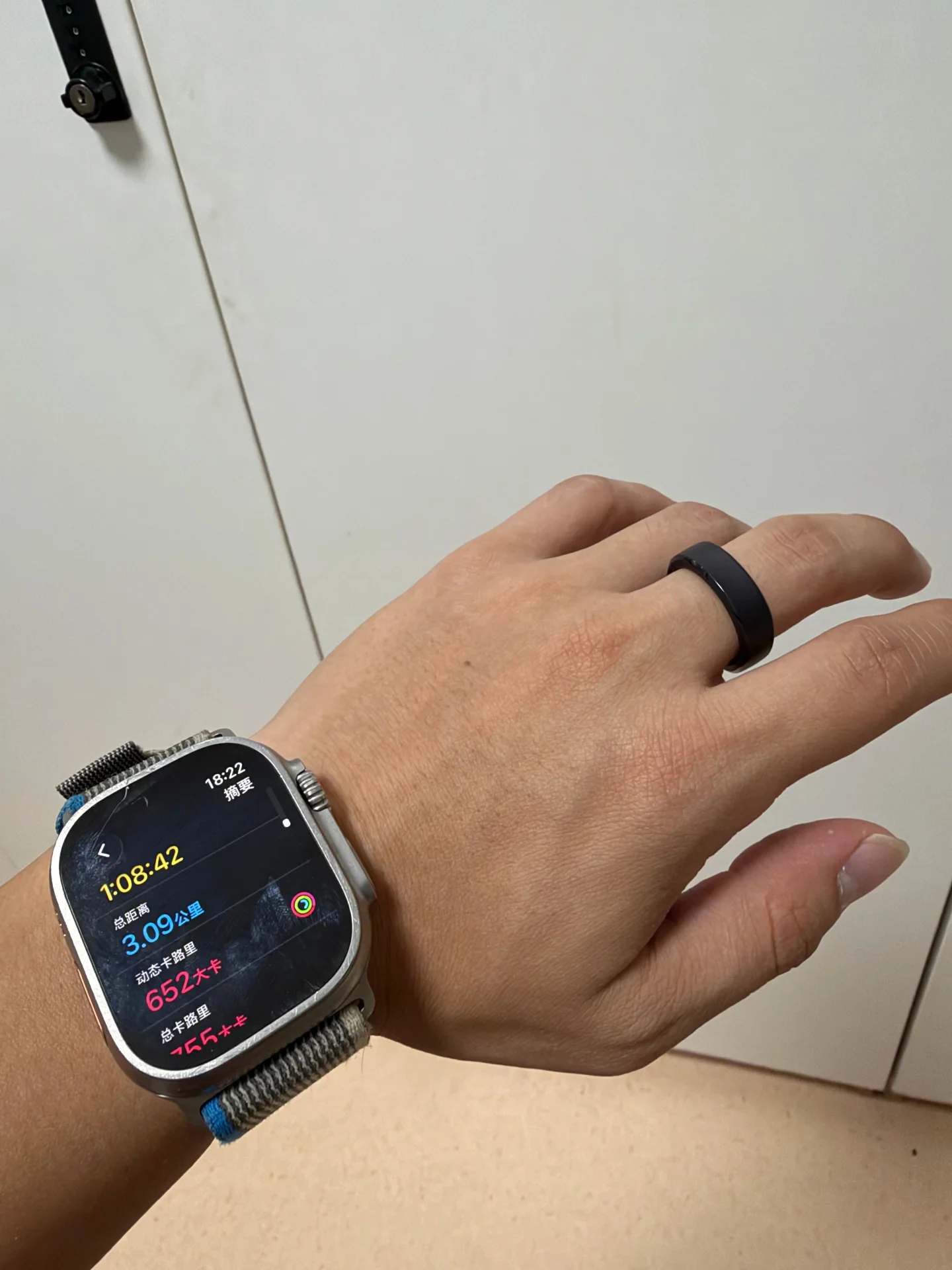
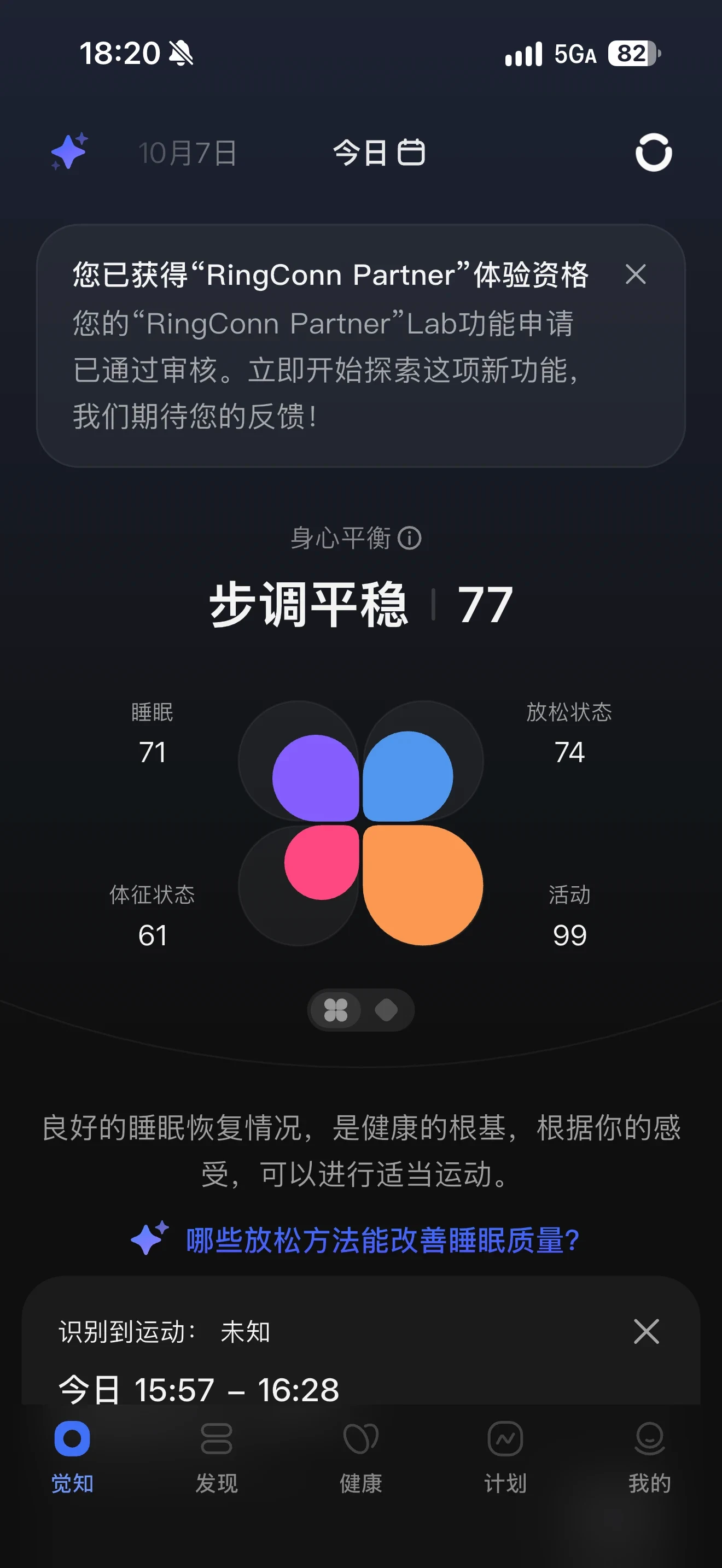
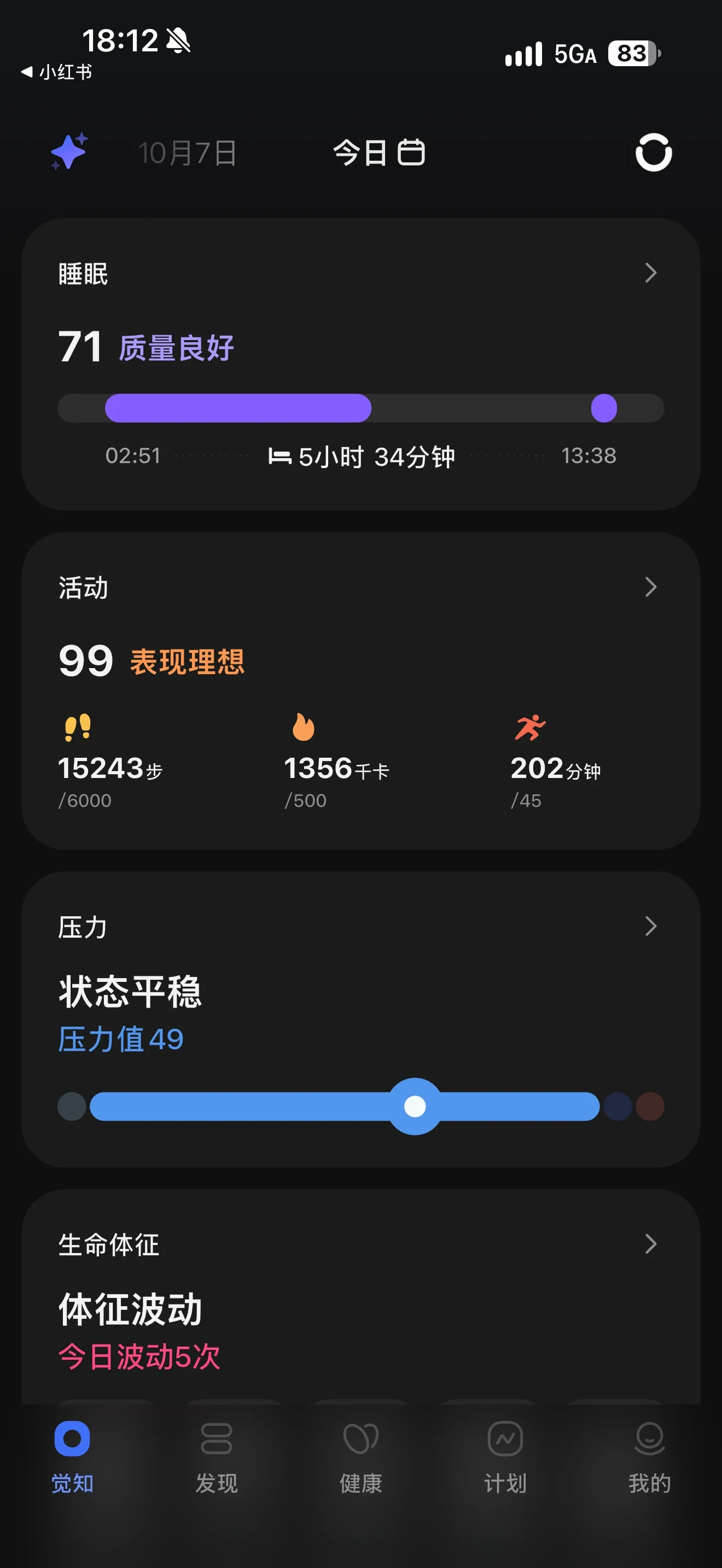
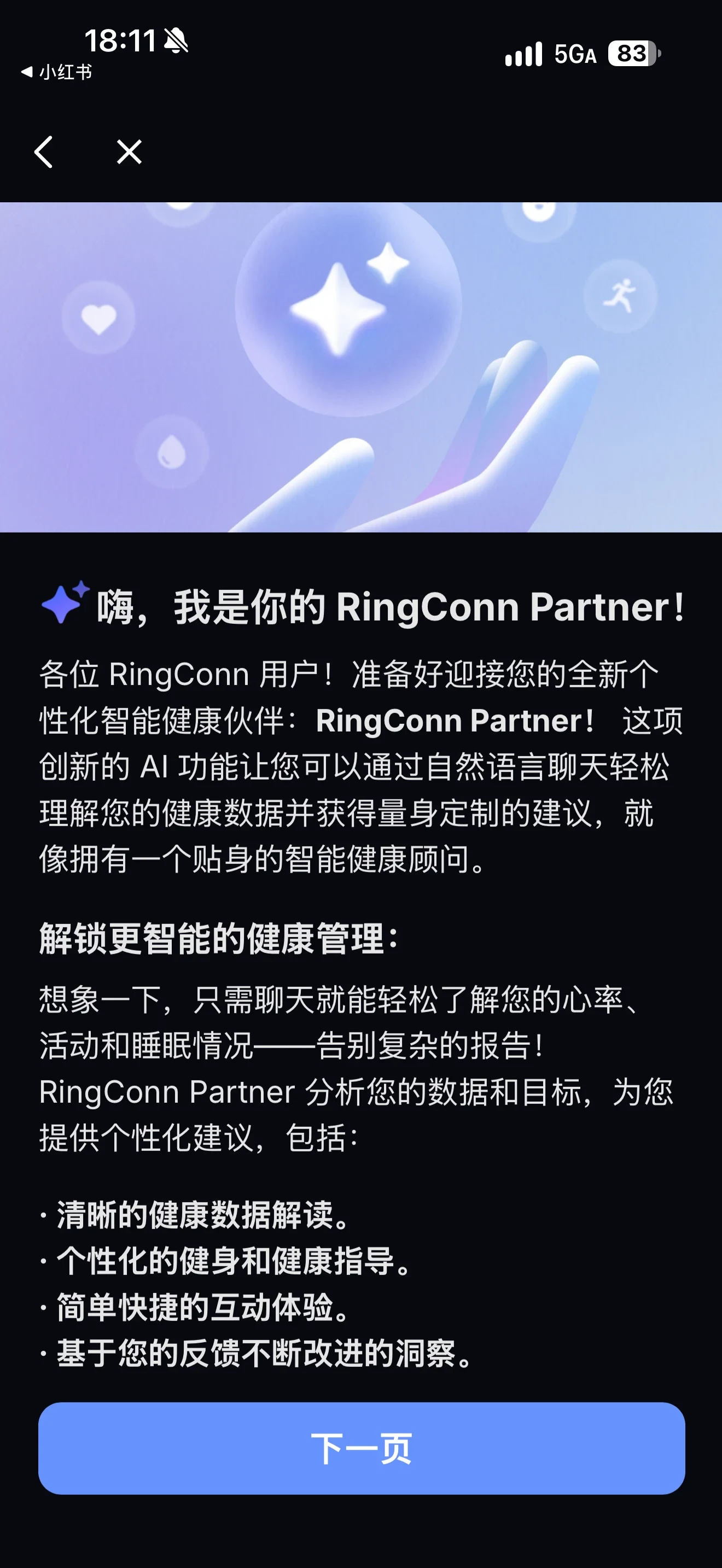
Strictly speaking, today is my fourth day wearing the RingConn. I can feel that its algorithms are gradually becoming more accurate and refined as it collects more usage time, and I am also gradually adapting to the sensation of wearing a ring. Apart from occasionally feeling a little warm, I have mostly reached the point where I barely notice it.
As for the data, its overall accuracy seems to be holding up. I have not seen the kind of issue mentioned in some earlier reviews, such as counting time spent lying down as sleep. It even recognized a short period of sleep during my lunch break. Exercise tracking is relatively weaker. Because I already have a fairly good fitness base and keep everyday activity separate from workouts, I find the ring’s exercise detection somewhat vague. It often identifies ordinary walking or tidying things as exercise and asks whether I want to add it to my workout record. In another sense, that also means it is detecting activity quite precisely, but I do not consider walking from the fifth floor down to the first floor a workout. Since the user decides whether to add it, I think this will depend on personal preference.
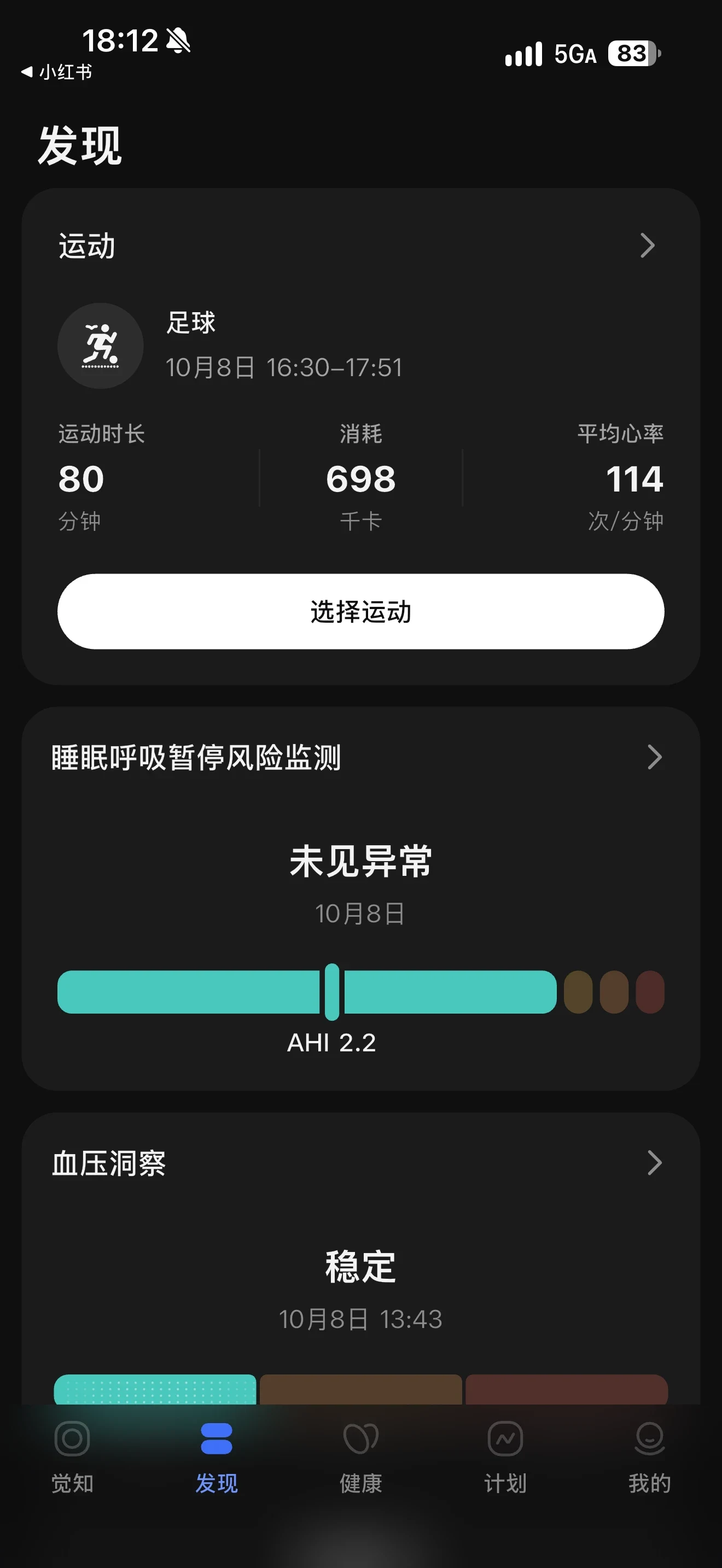
When I compared today’s soccer data, I found some differences between the watch and the ring in estimated calories burned. However, the figures include both calories used during exercise and resting calories, and I did not measure them with enough precision to make a definitive comparison, so I would call the result usable. The exercise options have also become much more comprehensive, with many more ball sports available. I think that is a very good improvement.
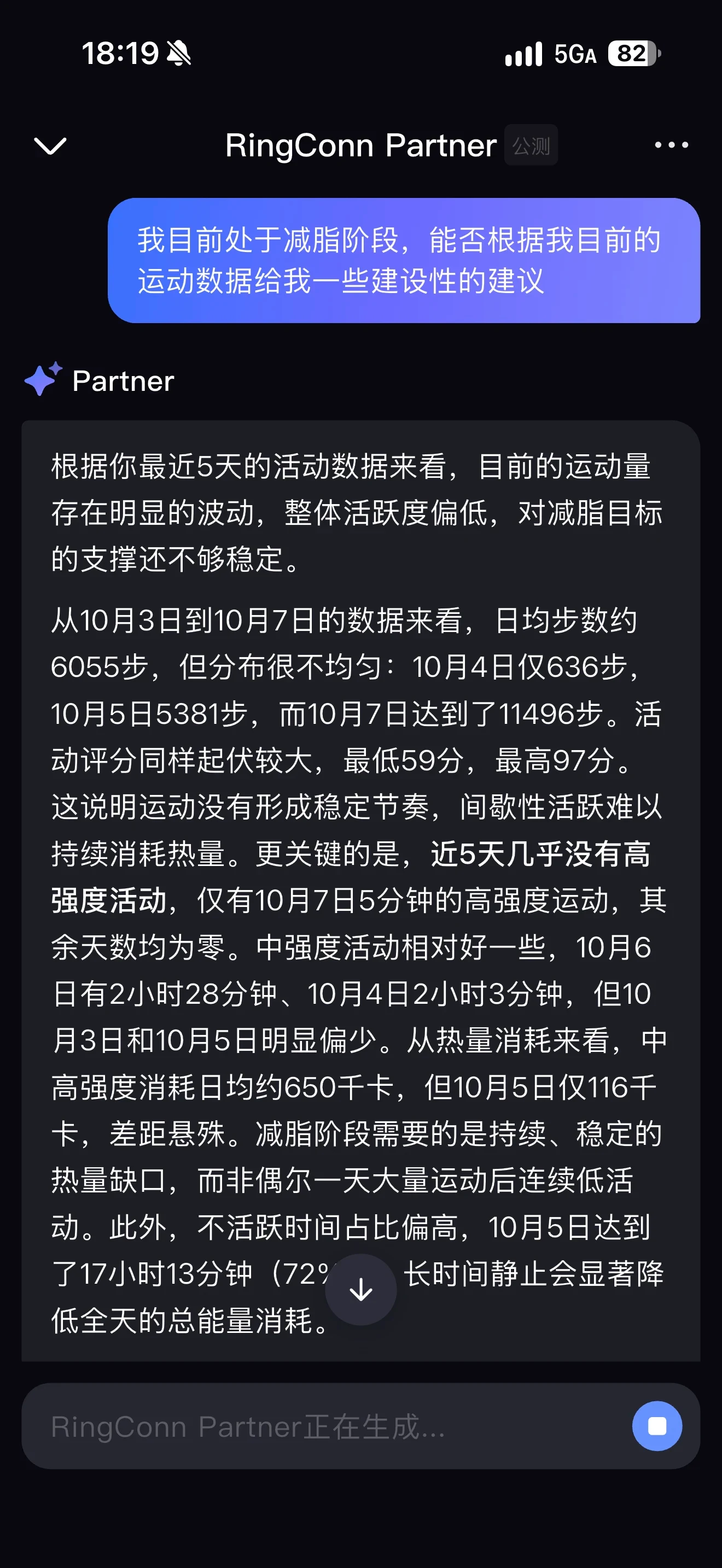
Finally, I want to discuss the Partner Lab AI feature, which is currently in public beta. It is still not very polished. In my view, it is too eager to give users an answer, while the answer can be skewed or overly one-sided when the available data is incomplete. I have already left some suggestions through the feedback channel. If it could ask guiding follow-up questions, its recommendations might become more targeted and specific. For example, I asked today for advice because I want to lose fat. If the AI asked guiding questions during the conversation to build a fuller picture of my data before giving its recommendation, I would find the result more convincing and useful. As it stands, I can only say that the intensity it recommended was too low for my needs and would definitely not meet my fat-loss goal.
Finally, I do not recommend wearing the ring for weightlifting, especially exercises that involve gripping.
That is all for now. I will post again if I have new feedback. If needed, I can also make a short video.
If there is anything you would like to know, you are also welcome to discuss it in the comments.
Source: Me.9 · Xiaohongshu · 2026-10-08 · Ringconn Gen3短期测评回馈. Search this Chinese title in Xiaohongshu to find the original post.
Before You Buy
Models in your region
The owner identifies the device as a RingConn Gen 3, and RingConn’s US/English store lists the same generation. The official page specifies 2.3 mm thickness, 2.5–3.5 g weight, 10–14 days of battery life depending on vibration settings, iOS 17+ or Android 10+ compatibility, and no subscription requirement. Cross-border software, distribution and support are not established by that page.
| Model in this review | Related regional model | What to know |
|---|---|---|
| RingConn Gen 3 | RingConn Gen 3 (US; international shipping subject to destination) | Gen 3 uses its own sizing system and supports iOS 17+ or Android 10+, with Apple Health and Google Health Connect integration. Choose the Gen 3 sizing kit rather than assuming an older RingConn size will fit. |
- Model in this review
- RingConn Gen 3
- Related regional model
- RingConn Gen 3 (US; international shipping subject to destination)
- What to know
- Gen 3 uses its own sizing system and supports iOS 17+ or Android 10+, with Apple Health and Google Health Connect integration. Choose the Gen 3 sizing kit rather than assuming an older RingConn size will fit.
What four days can show
The owner’s main early finding is that sleep recognition was useful in ordinary use: the ring identified a short lunch-break sleep and did not repeat the earlier review problem of treating lying down as sleep. This remains a four-day personal observation, not a controlled accuracy test or a general performance result.
By the fourth day, the owner had mostly adapted to the feeling of wearing a ring, apart from occasional warmth. Try the Gen 3 sizing kit during ordinary tasks and sleep, rather than judging fit from a quick try-on.
Exercise tracking is more interpretive
The ring’s exercise detection may require user filtering. The owner said it proposed recording ordinary walking and tidying as exercise, including a descent from the fifth floor to the first, while still finding the prompts potentially useful because the user can accept or reject them.
For soccer, the owner saw calorie estimates differ between the ring and a watch but did not measure exercise and resting calories precisely enough to identify which device was correct. Treat the result as usable for this owner rather than as proof of comparative accuracy. RingConn’s official page also says the product is not a medical device.
The owner welcomed the expanded selection of ball-sport workout modes. Buyers should still expect to review automatically suggested activities if they want a narrowly defined workout log, because the owner’s account does not establish how often the same prompts occur for other users.
Partner AI needs fuller input
The owner found the public-beta Partner Lab AI too quick to provide advice when its data was incomplete, and considered the fat-loss recommendation too low in intensity for their goal. This is a judgment about one conversation, not evidence that the feature will give the same advice to every user.
RingConn describes Partner as available by application through RingConn Lab, while its general app-features page still calls the AI companion coming soon. Confirm beta access in your own account; buying Gen 3 alone does not establish that the feature is enabled.
RingConn Partner beta · US website; access by application · RingConn App AI Health Companion · US/English website
Fit and training precautions
The owner recommends removing the ring for weightlifting, especially gripping exercises. That matters if you want a tracker you can leave on through every session: consider whether removing and remembering the ring fits your routine.
For the US model, RingConn says Gen 3 requires its own sizing kit and lists 2.3 mm thickness and 2.5–3.5 g weight. Those specifications can help with fit expectations, but they do not determine how the ring will feel during a particular lifting movement.
Related Reading
Reviews & Guides · Wearables
Google Fitbit Air: three-day owner notes on fit, sleep and regional AI Coach access
My Fitbit Air battery fell from 100% to 76% in three days. Cycling and walking were detected automatically, but strength training needed manual entry.
Reviews & Guides · Wearables
Google Fitbit Air: a three-week owner review of fit, battery and AI coaching
I wore the 12g Google Fitbit Air day and night for three weeks, charged it weekly, and found its AI coach surprisingly specific about training and recovery.
Reviews & Guides · Wearables
Google Fitbit Air owner review: light, screen-free tracking with slow responses
I liked Fitbit Air's light fit and interactive logging enough to order a Timex Weekender, but slow replies and incomplete split-sleep records frustrated me.